Manufacturers Can Barely Keep Up With the Data Center Gold Rush
Companies Mentioned

Why It Matters
The surge underscores a massive shift of capital into data‑center infrastructure, reshaping manufacturing priorities and exposing supply‑chain bottlenecks that could affect technology rollout and cost structures industry‑wide.
Key Takeaways
- •Carrier aims to exceed $2.5 billion data‑center sales, $600 million capex.
- •3M projects $600 million data‑center revenue, 10% annual growth in gear sales.
- •3M’s optical‑fiber unit expanding $100 million, growing 50% each quarter.
- •BorgWarner to launch modular turbine generators for data‑centers in 2027.
- •Manufacturers scrambling to double capacity as demand outpaces supply.
Pulse Analysis
The relentless expansion of hyperscale cloud providers and AI workloads is driving an unprecedented demand for data‑center infrastructure. Steel racks, advanced cooling systems, high‑capacity power gear, and next‑generation optical cabling have become essential components, prompting manufacturers to reallocate capital and accelerate production lines. This trend is not a short‑term spike; analysts project double‑digit growth in data‑center construction through the early 2030s, creating a durable revenue stream for industrial firms that can meet the scale and speed required.
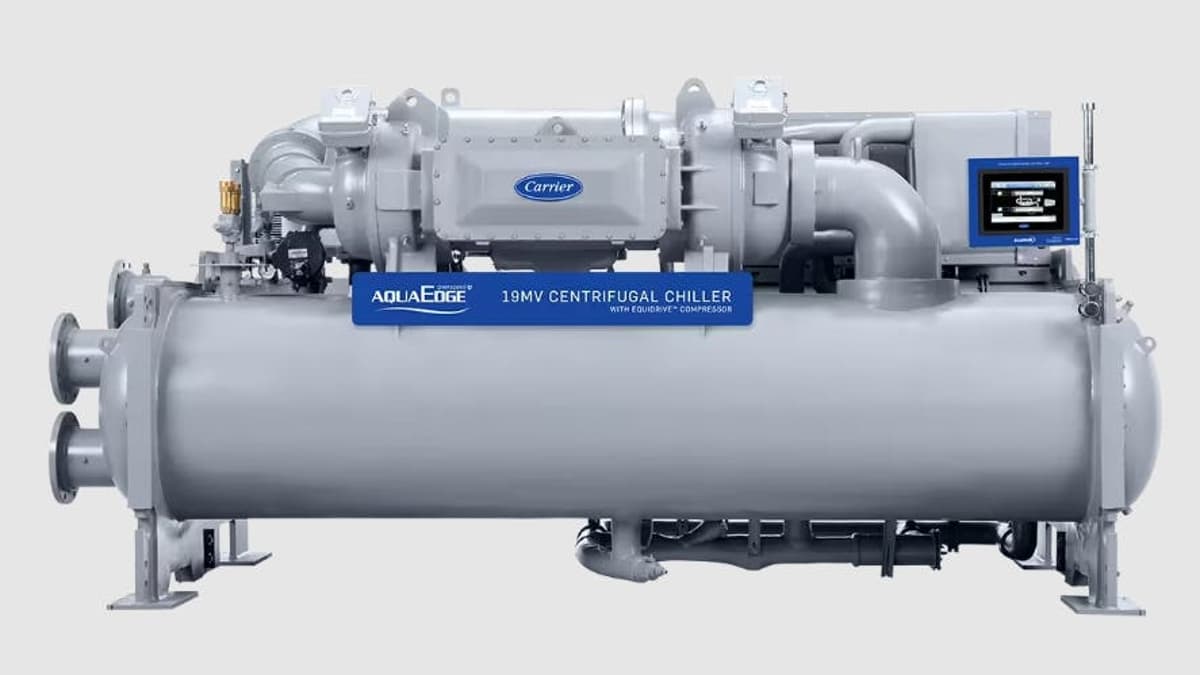
Carrier Global and 3M illustrate how legacy manufacturers are adapting. Carrier’s heat‑management division, originally forecasting $1.5 billion in sales, now eyes $2.5 billion, prompting a $600 million increase in capital spending to expand furnace capacity and cooling‑unit output. Meanwhile, 3M’s data‑center portfolio—spanning cables, insulation, and its fast‑growing Expanded Beam Optical line—targets $600 million this year, with a 10% year‑over‑year rise in ancillary gear sales. The optical‑fiber segment alone, a $100 million business, is scaling at 50% per quarter, highlighting the premium placed on high‑bandwidth, low‑latency connections.
Beyond the incumbents, new entrants like BorgWarner are leveraging automotive power‑electronics expertise to produce modular turbine generators and battery‑storage solutions tailored for data‑centers. Such diversification signals a broader industrial realignment, where firms that can quickly certify high‑quality, high‑volume components will capture market share. However, the rapid pace also strains supply chains, prompting acquisitions—Wesco’s Singapore cooling‑systems buy and Legrand’s power‑solutions purchase—to secure critical inputs. Investors should watch capacity‑expansion announcements and M&A activity as leading indicators of which manufacturers will dominate the data‑center supply ecosystem.
Manufacturers Can Barely Keep Up With the Data Center Gold Rush
Comments
Want to join the conversation?
Loading comments...