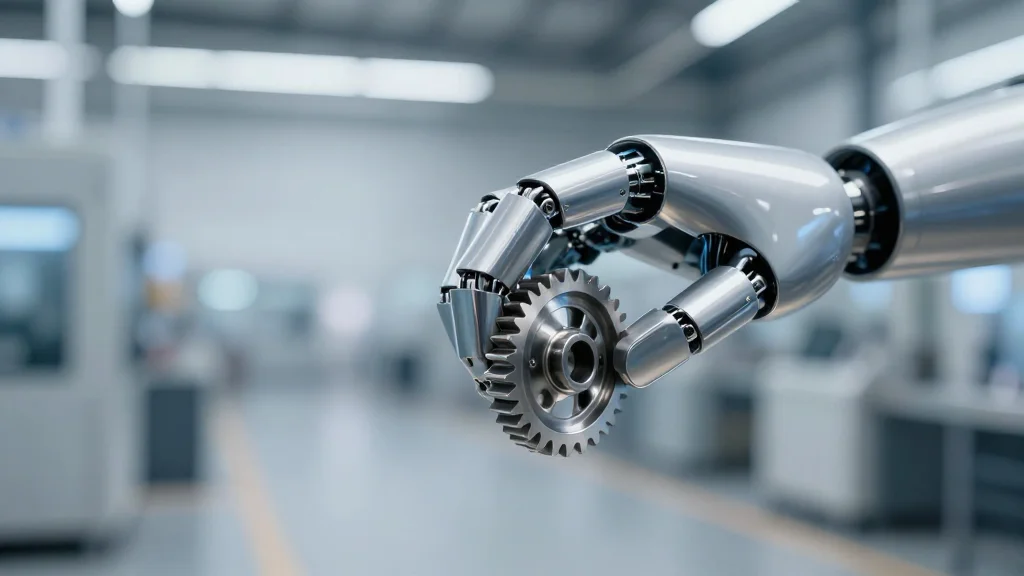
Meta Acquires Assured Robot Intelligence to Accelerate Humanoid Robot Push

Companies Mentioned

Why It Matters
Meta’s entry into humanoid robotics could accelerate the adoption of flexible automation in factories that are currently constrained by rigid, task‑specific machines. By providing a software layer that enables robots to understand and predict human behavior, Meta may lower the barrier for manufacturers to integrate collaborative robots (cobots) into existing production lines, boosting productivity and reducing labor bottlenecks. Moreover, the acquisition signals that large tech firms view robotics as a strategic growth engine, potentially spurring further investment and talent migration into the sector. If Meta succeeds in creating a scalable humanoid platform, it could democratize advanced robotics for mid‑size manufacturers that lack the resources to develop proprietary solutions. This would broaden the competitive landscape, challenge incumbents like FANUC and ABB, and could lead to a wave of new applications ranging from warehouse order‑picking to on‑site assembly in automotive plants.
Key Takeaways
- •Meta completed the acquisition of Assured Robot Intelligence, a San Diego AI startup focused on humanoid robot control.
- •Co‑founders Lerrel Pinto and Xiaolong Wang join Meta’s Superintelligence Labs, bringing expertise from Fauna Robotics and Nvidia.
- •Financial terms were undisclosed; the deal adds roughly 20 engineers to Meta’s robotics effort.
- •Meta’s 2026 AI capital budget was raised by $10 billion to $125‑$145 billion, underscoring the scale of its AI and robotics push.
- •Industry analysts see the move as Meta’s attempt to build a platform akin to Android for the emerging humanoid robot market.
Pulse Analysis
Meta’s acquisition of Assured Robot Intelligence is less about immediate product launches and more about securing a strategic foothold in a nascent market that could become a cornerstone of future manufacturing. Historically, platform plays—Android for smartphones, Linux for servers—have unlocked ecosystems that outsize the original developer’s hardware ambitions. By targeting the AI "brain" of humanoid robots, Meta is positioning itself to become the de‑facto software provider for a new class of machines, potentially licensing its models to OEMs that lack deep AI talent.
The timing is noteworthy. Meta’s recent capital‑expenditure hike and parallel workforce reductions suggest a pivot from growth‑at‑all‑costs to monetizable, high‑margin technologies. Humanoid robots, if they can achieve reliable whole‑body control and dexterous manipulation, promise to address labor shortages in high‑skill manufacturing and logistics—a pain point that has intensified post‑pandemic. However, the path to commercial viability is fraught with engineering challenges, regulatory scrutiny, and the need for massive data to train robust models. Meta’s deep reservoirs of user interaction data could give it an edge in training behavior‑prediction algorithms, but translating that into safe, physical actions will require rigorous testing.
Competitors such as Tesla and Amazon are advancing on the hardware side, yet they lack Meta’s breadth of AI research and cloud infrastructure. If Meta can fuse its AI prowess with reliable hardware from its Robotics Studio, it may set a new standard for robot cognition. The real test will be whether the company can move beyond prototypes to a scalable, cost‑effective product line that manufacturers trust. Success would not only diversify Meta’s revenue streams beyond advertising but could also catalyze a broader shift toward flexible, AI‑driven automation across the manufacturing sector.
Meta Acquires Assured Robot Intelligence to Accelerate Humanoid Robot Push
Comments
Want to join the conversation?
Loading comments...