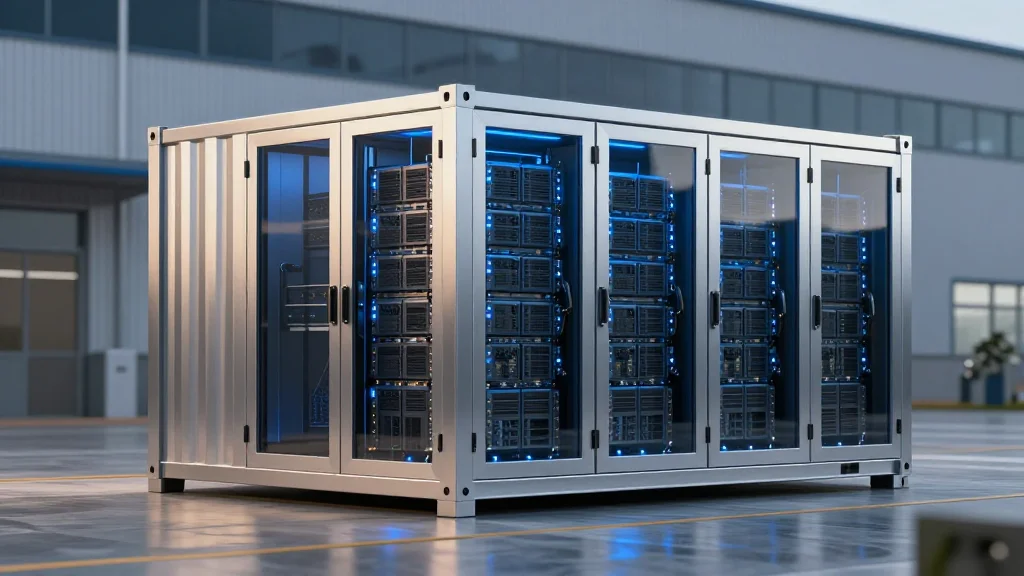
Modular Data Center Market Projected to Reach $79.5 B by 2030, Driven by 17.7% CAGR

Companies Mentioned

Why It Matters
The modular data‑center boom reshapes how manufacturers provision compute power, turning a traditionally capital‑intensive, multi‑year build into a matter of weeks. Faster deployment shortens time‑to‑value for AI‑driven optimization, enabling factories to capture efficiency gains and reduce waste much sooner. Beyond speed, the prefabricated model lowers total cost of ownership by standardizing components, reducing on‑site labor and minimizing disruption to existing operations. As sustainability mandates tighten, the smaller physical footprint and energy‑efficient designs of modular units help manufacturers meet carbon‑reduction targets while maintaining the high‑performance compute needed for next‑generation digital twins and real‑time analytics.
Key Takeaways
- •Modular data‑center market to grow from $29.93 bn (2024) to $79.49 bn (2030), a 17.7% CAGR.
- •Skid‑mounted modules projected to record the highest growth rate among form factors.
- •Indoor deployments hold the largest share, leveraging existing plant infrastructure.
- •Asia leads regional demand, driven by hyperscaler expansion and AI workload growth.
- •Major vendors include Dell, Vertiv, Schneider Electric, Huawei, ABB and Johnson Controls.
Pulse Analysis
The forecasted surge in modular data‑center revenue reflects a broader inflection point where compute infrastructure is becoming as commoditized as the steel or silicon that powers it. Historically, manufacturers built dedicated server rooms on the periphery of their plants, a process that could take 12‑18 months and required specialized civil engineering. The modular model collapses that timeline, turning a multi‑year capital project into a logistics exercise akin to ordering a container ship. This shift reduces the financial risk of over‑building capacity—a common pitfall when demand forecasts miss the rapid adoption curve of AI and edge analytics.
From a competitive standpoint, the market is fragmenting. Legacy data‑center integrators are being challenged by pure‑play modular specialists who can offer end‑to‑end solutions—from factory assembly to on‑site commissioning—under a single contract. Companies that can bundle modular hardware with managed services, such as remote monitoring and AI‑driven workload orchestration, will capture the higher‑margin segment of the market. Conversely, manufacturers that cling to traditional builds risk both cost overruns and slower innovation cycles, potentially ceding market share to more agile rivals.
Looking forward, the convergence of modular data centers with micro‑grid and renewable‑energy technologies could create a self‑contained, low‑carbon compute enclave for factories. As battery storage costs fall and policy incentives for on‑site clean power increase, we may see bundled offerings where a single vendor supplies the modular IT pod, the micro‑grid controller and the renewable generation package. Such integrated solutions would not only meet ESG goals but also provide resilience against grid instability—a growing concern for manufacturers operating in regions with volatile power supplies. The next three years will likely see pilots of these combined systems, setting the stage for a new standard in industrial digital infrastructure.
Modular Data Center Market Projected to Reach $79.5 B by 2030, Driven by 17.7% CAGR
Comments
Want to join the conversation?
Loading comments...