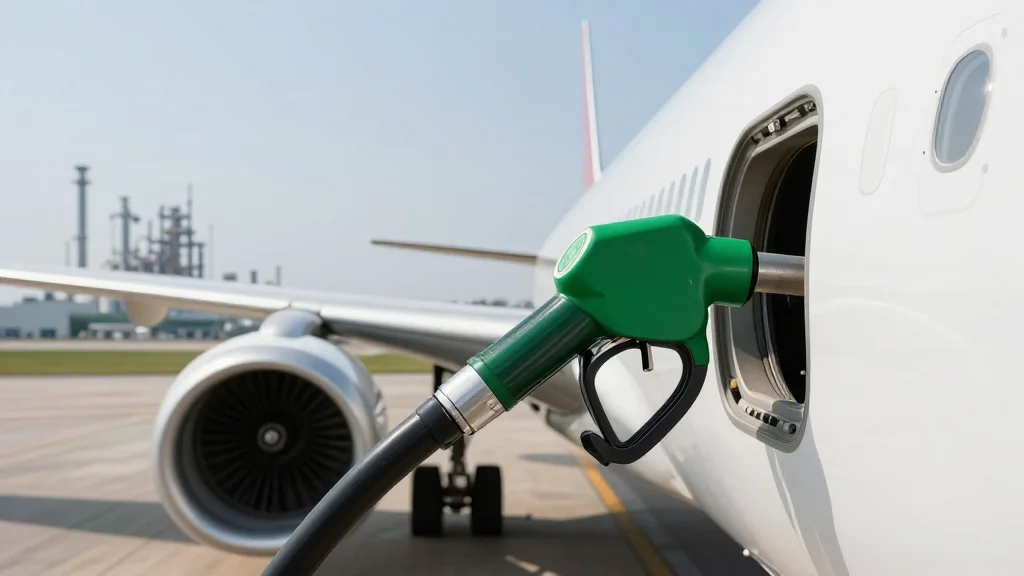
Uzbekistan Airports and Allied Biofuels Ink $6.1 Billion SAF Deal to Launch 160k‑tonne Plant by 2030

Companies Mentioned
Why It Matters
The Uzbekistan‑Allied Biofuels partnership marks the first large‑scale SAF production effort in Central Asia, a region that has lagged behind Europe and North America in clean‑fuel infrastructure. By coupling renewable power, battery storage and green hydrogen, the refinery creates a replicable model for integrated low‑carbon fuel hubs that can serve both aviation and broader industrial sectors. Successful execution could accelerate the global SAF market, reduce aviation’s carbon footprint, and stimulate local job creation and technology transfer. Moreover, the project aligns with Uzbekistan’s broader economic diversification goals, reducing dependence on traditional fossil‑fuel imports and positioning the country as a logistics and energy corridor between Europe and Asia. The involvement of Plug Power and state investment agencies signals confidence in the commercial viability of e‑SAF, potentially unlocking further private capital for similar projects across the region.
Key Takeaways
- •Uzbekistan Airports and Allied Biofuels sign MOU for a $6.1 bn SAF refinery.
- •Planned annual output: 160,400 t SAF, 257,000 t e‑SAF, 5,040 t green diesel.
- •Facility will include 4.45 GW renewable power, 1,600 MWh battery storage, and 2.4 GW electrolyzers.
- •Plug Power selected as preferred electrolyzer technology provider.
- •Project aims to be operational by 2030, creating a Central Asian hub for sustainable aviation fuel.
Pulse Analysis
The Uzbekistan‑Allied Biofuels deal is a strategic gamble that could reshape the SAF supply chain in a region traditionally dependent on imported jet fuel. By embedding renewable electricity and green hydrogen into the refinery’s core, the project sidesteps the feedstock constraints that have hampered SAF rollout elsewhere. If the 4.45 GW renewable portfolio can secure stable power purchase agreements, the economics of e‑SAF could become competitive with conventional jet fuel, especially as carbon pricing mechanisms tighten.
Historically, SAF projects have struggled with financing due to high upfront capex and uncertain offtake. Here, state backing from Uzbekistan’s Ministry of Investment and Foreign Trade mitigates some of that risk, while the involvement of a known electrolyzer supplier like Plug Power adds credibility to the technology stack. The project's scale—over $6 bn in capital—places it among the world’s largest SAF investments, suggesting that investors see a long‑term market opportunity in emerging economies.
Looking ahead, the refinery’s success will depend on securing airline contracts well before 2030. Regional carriers such as Uzbekistan Airways and foreign airlines operating through Tashkent could become anchor customers, providing the volume needed to amortise the massive infrastructure costs. If the hub proves viable, it may trigger a cascade of similar projects across the Belt and Road corridor, turning Central Asia into a key node in the global low‑carbon aviation network.
Uzbekistan Airports and Allied Biofuels Ink $6.1 Billion SAF Deal to Launch 160k‑tonne Plant by 2030
Comments
Want to join the conversation?
Loading comments...