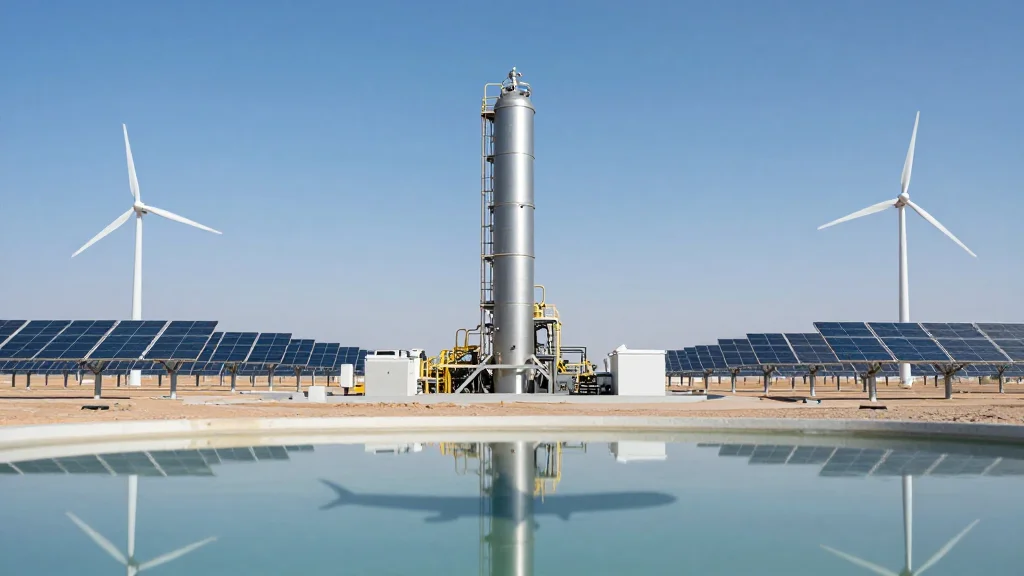
Uzbekistan Secures $6.08 Billion Deal to Build 160,000‑Tonne SAF Hub

Companies Mentioned
Why It Matters
The Uzbekistan SAF hub represents a watershed for Central Asian manufacturing, introducing a high‑tech, low‑carbon fuel supply chain that could reshape regional logistics and energy markets. By producing SAF domestically, the country reduces reliance on imported jet fuel, improves energy security, and creates a new export commodity that aligns with global aviation decarbonization mandates. The project also demonstrates how integrated renewable power and carbon‑capture technologies can be scaled to industrial levels. If the hub achieves its near‑zero‑emission targets, it will provide a proof point for other emerging economies seeking to leapfrog traditional fossil‑fuel pathways and accelerate the transition to sustainable manufacturing.
Key Takeaways
- •Uzbekistan and Allied Biofuels FE LLC signed a $6.08 billion SAF agreement in Perth on April 2, 2026.
- •The Khorezm complex will produce >160,000 tonnes of SAF, 257,000 tonnes of e‑SAF and 5,040 tonnes of green diesel annually.
- •A 4.45 GW renewable‑energy system, including 1,600 MWh storage and 2,400 MW electrolyzers, will power the facility.
- •Plug Power was selected to supply electrolyzer technology for green hydrogen production.
- •The project aims for near‑zero carbon emissions through feedstock processing, carbon capture and renewable power.
Pulse Analysis
Uzbekistan’s SAF hub is more than a single plant; it is a strategic bet on a manufacturing model that couples renewable electricity with chemical synthesis. Historically, SAF production has been concentrated in Europe and North America, where feedstock logistics and carbon‑pricing mechanisms are more mature. By embedding a 4.45 GW renewable grid and a large electrolyzer fleet, Uzbekistan sidesteps the need for imported electricity and positions green hydrogen as a core feedstock, a move that could lower operating costs over the plant’s lifespan.
The partnership also reflects a broader shift in the aviation sector toward supply‑side solutions. As ICAO’s Carbon Offsetting and Reduction Scheme for International Aviation (CORSIA) tightens, airlines are under pressure to secure verifiable SAF volumes. A regional hub in Central Asia could serve not only domestic carriers but also airlines transiting through the region, creating a new trade corridor for low‑carbon jet fuel. This could stimulate ancillary industries—logistics, storage, and certification services—further embedding advanced manufacturing capabilities in Uzbekistan’s economy.
However, the project’s success hinges on policy stability and market demand. Without clear long‑term SAF mandates or price support mechanisms, the high capital outlay may struggle to attract private financing beyond the sovereign partnership. Moreover, the technical challenge of operating a 2,400 MW electrolyzer fleet at scale remains significant; any performance shortfall could erode the projected emissions benefits. Monitoring the plant’s commissioning schedule, fuel certification outcomes, and early commercial contracts will be essential to gauge whether this ambitious venture can deliver on its promise of turning Central Asia into a clean‑fuel manufacturing hub.
Uzbekistan Secures $6.08 Billion Deal to Build 160,000‑Tonne SAF Hub
Comments
Want to join the conversation?
Loading comments...