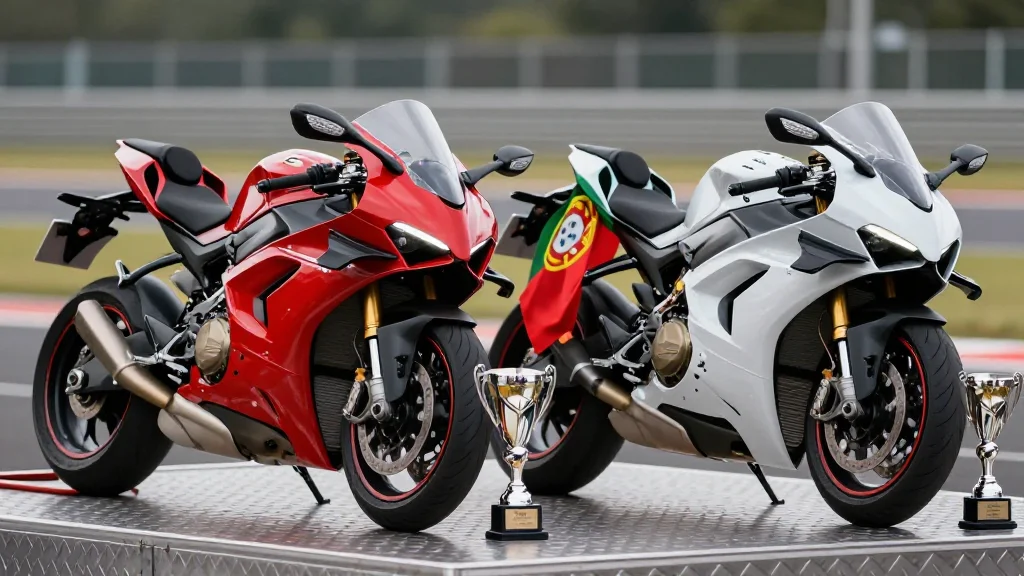
ZXMOTO’s Double WSBK Win Highlights China’s Shift to Premium Motorcycles

Companies Mentioned
Why It Matters
The double victory not only validates China’s ability to produce world‑class performance motorcycles but also signals a structural shift in the global supply chain. As Chinese firms achieve full‑chain manufacturing, they can undercut traditional brands on price while matching or exceeding performance, reshaping competitive dynamics in emerging markets and high‑end segments alike. For manufacturers worldwide, the rise of a cost‑efficient, innovation‑driven Chinese ecosystem forces a reassessment of sourcing strategies, joint‑venture opportunities, and the future of premium motorcycle branding. Furthermore, the surge in R&D spending—now approaching 10% of sales for leading firms—suggests a sustained commitment to technology such as advanced electronics, lightweight materials, and electric powertrains. This could accelerate the transition to higher‑displacement and electric motorcycles, expanding the market beyond utilitarian transport to recreational and premium use cases, and potentially redefining regulatory standards for emissions and safety globally.
Key Takeaways
- •ZXMOTO won two races at the Portuguese WSBK round, the first Chinese victories over European/Japanese brands.
- •China’s motorcycle output hit 22.11 million units in 2025, up 10.6% YoY; exports rose 21.3% to 13.37 million units.
- •ZXMOTO’s 2025 R&D spend was 69.58 million yuan (~$10 M), giving a 9.33% R&D‑to‑sales ratio.
- •Mid‑to‑high‑end Chinese models are growing >50% annually, priced at roughly 70% of global rivals.
- •Chongqing hosts >50 manufacturers and 400 parts suppliers, enabling a three‑month design‑to‑production cycle.
Pulse Analysis
ZXMOTO’s breakthrough illustrates a broader strategic pivot in Chinese manufacturing: leveraging massive domestic supply chains to leapfrog traditional incumbents. Historically, Chinese two‑wheelers were confined to low‑cost, low‑tech segments, but the convergence of government‑backed R&D incentives and a mature component ecosystem has compressed development cycles dramatically. The three‑month turnaround from design to mass production, cited by Wang Yao, rivals the lead times of established European firms and gives Chinese brands a competitive edge in responding to niche market demands.
The pricing advantage—Chinese premium bikes costing about 30% less than comparable BMW or Yamaha models—creates a disruptive force in price‑sensitive markets such as Southeast Asia, Latin America, and increasingly, Western hobbyist circles. As consumers seek higher performance without the premium price tag, Chinese manufacturers can capture market share faster than before. This dynamic also pressures legacy brands to accelerate their own cost‑reduction and innovation programs, potentially spurring a wave of strategic alliances or acquisitions.
Looking ahead, the next inflection point will be the integration of electric powertrains. China’s push for electric motorcycles aligns with its broader carbon‑reduction goals, and firms like ZXMOTO are already positioning themselves to transition from internal‑combustion to electric platforms without sacrificing performance. If they can replicate their rapid‑prototype model for electric bikes, the global premium motorcycle market could see a new wave of affordable, high‑tech offerings within the next five years, reshaping consumer expectations and regulatory landscapes worldwide.
ZXMOTO’s Double WSBK Win Highlights China’s Shift to Premium Motorcycles
Comments
Want to join the conversation?
Loading comments...