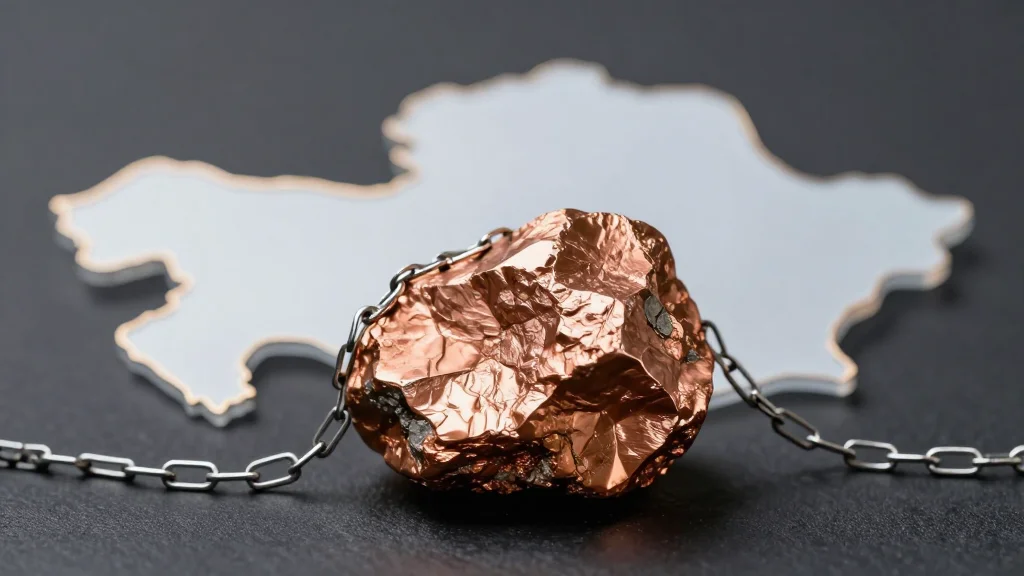
As World Clamors for Its Critical Minerals, Kazakhstan Ups Control and Seeks Bigger Cut
Companies Mentioned
Why It Matters
The reforms boost state revenue and strategic leverage but risk alienating foreign investors, potentially slowing the flow of capital needed for Kazakhstan’s critical‑minerals expansion. This balance will shape the country’s role in the global supply chain for batteries and clean‑energy technologies.
Key Takeaways
- •Kazakhstan introduces higher royalties for new mining projects starting 2027.
- •State-owned Tau‑Ken Samruk may receive first licensing priority.
- •Government allocated $500 million for exploration of 20 national projects.
- •Royalty rates double those in Western Australia, raising cost concerns.
- •Investors warn that shifting rules could erode Kazakhstan’s investment appeal.
Pulse Analysis
Global demand for critical minerals such as lithium, copper and rare earths is surging as the United States, Europe and China race to secure supply chains for clean‑energy technologies. Kazakhstan, sitting on vast deposits, has become a focal point for Western mining firms attracted by its relatively transparent legal framework. Recent amendments to the country’s tax code and sub‑soil use law reflect a strategic shift: the state seeks to capture a larger slice of the upside while still courting foreign capital.
The new regime introduces a royalty system that applies only to licences issued after 2027, but the rates are roughly twice those levied in Western Australia, making projects more expensive for newcomers. Simultaneously, the government is revisiting the first‑come‑first‑served licensing model, giving priority to firms that commit to building processing facilities and potentially to the state‑owned miner Tau‑Ken Samruk. A $500 million budget for exploring 20 national projects underscores a more interventionist stance, blurring the line between regulator and competitor. These moves have raised eyebrows among investors who fear an unpredictable policy environment could erode Kazakhstan’s reputation as a reliable jurisdiction.
If the balance tips too far toward state control, capital inflows may slow, limiting the country’s ability to develop its critical‑minerals sector at the pace required by global markets. Conversely, a well‑calibrated approach could generate substantial fiscal revenue while still attracting the expertise and financing of multinational miners. The coming months will test whether Kazakhstan can maintain the delicate equilibrium between sovereign interests and the confidence of the private sector, a factor that will determine its long‑term standing in the worldwide minerals supply chain.
As world clamors for its critical minerals, Kazakhstan ups control and seeks bigger cut
Comments
Want to join the conversation?
Loading comments...