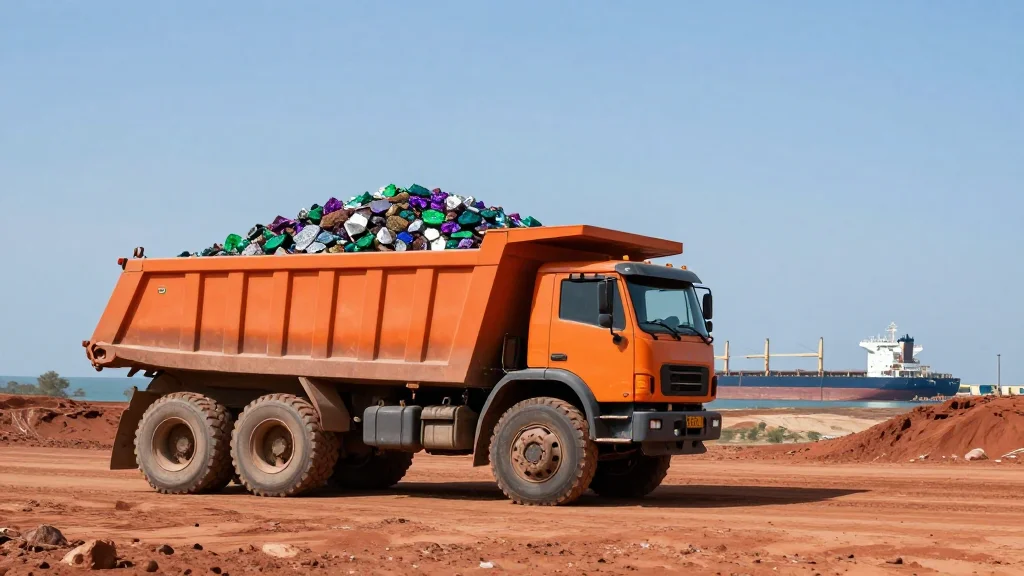
Brazil Seeks Rare‑Earth Role in US Market as Lula Visits Washington

Companies Mentioned
Why It Matters
Brazil’s push to become a rare‑earth supplier could reshape the geopolitical balance of the critical‑minerals market, reducing U.S. dependence on China and offering a new source of supply for the clean‑energy transition. The move also tests Brazil’s ability to balance economic growth with environmental stewardship, a tension that will influence future mining policy across Latin America. For investors and policymakers, the development signals a potential shift in capital flows toward Brazilian mining projects, while also highlighting the strategic importance of downstream processing capabilities. The outcome will affect pricing dynamics for high‑tech components and could accelerate the adoption of electric vehicles and renewable‑energy technologies in the United States.
Key Takeaways
- •President Lula used his May 10, 2026 Washington visit to promote Brazil as a rare‑earth supplier for the U.S.
- •U.S. recently raised tariffs on Chinese rare‑earth imports, creating demand for alternative sources.
- •Brazil possesses significant deposits of neodymium, dysprosium and other critical metals, but lacks large‑scale processing facilities.
- •Domestic mining firms show interest, while environmental groups warn of ecological risks in the Amazon.
- •Next milestone: expected announcement of formal Brazil‑U.S. rare‑earth agreements in the coming months.
Pulse Analysis
The Lula‑Washington outreach marks a strategic inflection point for Brazil’s mining sector. Historically, Brazil’s mineral export portfolio has been dominated by iron ore and nickel; rare‑earths represent a high‑value, high‑tech niche that could diversify revenue streams and attract foreign direct investment. The United States’ tariff policy is a clear catalyst, but the success of Brazil’s ambition hinges on closing the processing gap. Downstream capabilities are capital‑intensive and require technology transfer, which the U.S. appears ready to facilitate through joint ventures and loan guarantees. If Brazil can secure such partnerships, it could achieve a rapid scale‑up, positioning itself as the second‑largest non‑Chinese source of rare‑earths within a decade.
However, the environmental dimension cannot be ignored. Brazil’s track record on enforcing mining regulations in the Amazon has been mixed, and any perception of lax oversight could trigger international backlash, jeopardizing financing from environmentally conscious investors. The administration’s pledge to enforce strict standards will be tested as project pipelines move from exploration to production. A balanced approach that couples robust environmental safeguards with clear incentives for processing investment will be essential to sustain credibility.
From a market perspective, the entry of Brazil into the rare‑earth supply chain could dampen price volatility that has plagued the sector since China’s export curbs in 2010. A more diversified supply base would lower risk premiums for manufacturers of electric‑vehicle motors, wind‑turbine generators, and defense electronics, potentially accelerating the rollout of clean‑energy infrastructure in the United States. Investors should monitor the timeline of any Brazil‑U.S. agreements, the allocation of financing for processing plants, and the regulatory outcomes of upcoming Brazilian legislation, as these factors will dictate the pace and scale of Brazil’s impact on the global rare‑earth market.
Brazil Seeks Rare‑Earth Role in US Market as Lula Visits Washington
Comments
Want to join the conversation?
Loading comments...