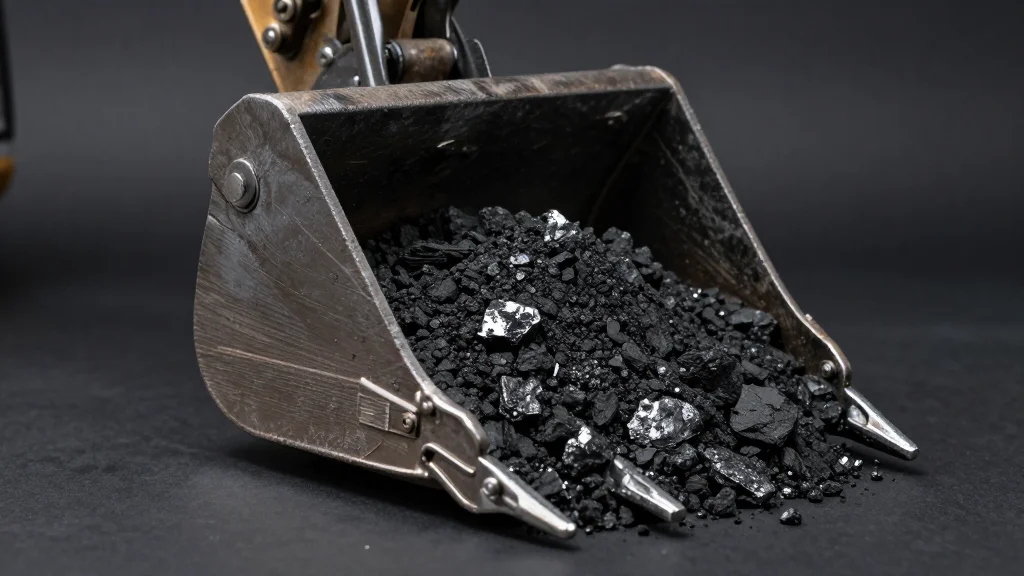
China Rolls Out 79‑Article Mineral Security Framework to Tighten Rare‑Earth Supply

Why It Matters
The new framework transforms China’s approach to critical minerals from ad‑hoc export controls to a systematic, state‑driven supply‑chain model. By integrating exploration, production and stockpiling under a single legal umbrella, Beijing aims to insulate its high‑tech industries from external shocks and to wield mineral assets as a geopolitical tool. For the global mining sector, the policy raises the stakes of supply‑chain diversification, prompting governments and corporations to accelerate investments in alternative sources and to reconsider reliance on Chinese processing hubs. Furthermore, the regulations embed environmental safeguards alongside strategic objectives, setting a precedent for how resource‑rich nations might balance economic security with sustainability. The outcome will influence commodity pricing, investment flows, and the geopolitical calculus of countries that depend on rare‑earths for defense and clean‑energy technologies.
Key Takeaways
- •China issued a 79‑article regulatory framework on May 18, effective June 15.
- •Premier Li Qiang signed the rules, giving the State Council authority over critical‑mineral planning and licensing.
- •The law covers the full lifecycle of minerals—exploration, mining, processing, storage and sales.
- •Export controls on rare earths have been in place since April 2025, intensifying US‑China tech rivalry.
- •Analyst Zhuang Wenyue highlighted the shift to a national‑security‑level approach and the goal of whole‑process coordination.
Pulse Analysis
China’s decision to codify mineral security reflects a broader trend of resource nationalism that has accelerated since the pandemic disrupted global supply chains. By moving from reactive export bans to a proactive, integrated framework, Beijing is attempting to lock in a strategic advantage while mitigating the risk of sudden market shocks. Historically, rare‑earth dominance has given China leverage in negotiations, but the new law could also backfire if it stifles foreign investment and drives partners toward competing hubs.
From a market perspective, the framework is likely to tighten the supply of processed rare‑earth products, at least in the short term, as foreign firms scramble for the limited licences that will be issued. This could push prices higher, benefitting miners in Australia and the United States that produce raw concentrates, but hurting downstream manufacturers that rely on Chinese refining capacity. The strategic reserve component adds a layer of price stability, yet it also signals that China intends to retain a sizable domestic stock, potentially curbing export volumes.
Looking ahead, the success of the policy will hinge on implementation details—how transparent the licensing process is, the rigor of environmental enforcement, and the flexibility of the reserve system during crises. If Beijing can balance security with openness, it may set a new global standard for critical‑mineral governance. Conversely, overly restrictive controls could accelerate the fragmentation of the rare‑earth market, prompting a new wave of bilateral agreements and regional supply‑chain alliances aimed at reducing dependence on China.
China Rolls Out 79‑Article Mineral Security Framework to Tighten Rare‑Earth Supply
Comments
Want to join the conversation?
Loading comments...