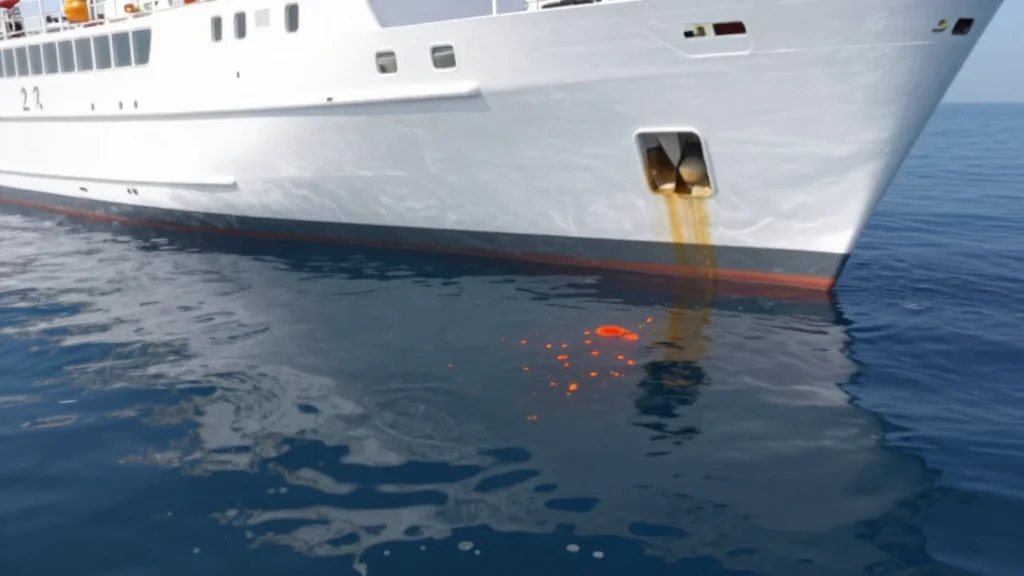
Chinese Deep‑Sea Vessels Log 800 Days Mining While Mapping Strategic Waters

Why It Matters
The push to mine polymetallic nodules directly challenges China’s current monopoly over critical minerals, a strategic lever in global supply chains for clean‑energy technologies and defense systems. At the same time, the deep sea hosts ecosystems that are still poorly understood; large‑scale disturbance could trigger cascading losses of biodiversity that are difficult, if not impossible, to reverse. Balancing national security, economic independence, and environmental stewardship will shape policy frameworks for decades. If the United States succeeds in establishing a domestic processing capability, it could reduce Beijing’s leverage over battery and weapon‑grade metals. Conversely, unchecked mining could set a precedent for exploiting other vulnerable marine habitats, eroding international norms and sparking legal battles over the high seas. The outcome will influence not only mineral markets but also the future of ocean governance.
Key Takeaways
- •Eight Chinese research vessels logged >800 days in deep‑sea mining zones, covering a distance >2× Earth's circumference.
- •U.S. aims to fast‑track seabed mining of polymetallic nodules ~2.5 miles deep to cut reliance on China.
- •RAND study warns lack of domestic processing could keep the U.S. dependent on Chinese refineries.
- •Hydrothermal vent field Solwara I hosts unique species; mining could irreversibly damage these ecosystems.
- •Powerful echosounders used by Chinese ships risk harming whales, octopuses and other deep‑sea fauna.
Pulse Analysis
The deep‑sea mining race is a textbook case of technology intersecting with geopolitics. Historically, mineral supply chains have been reshaped by territorial control—think of oil in the Middle East or rare earths in China. The ocean floor now offers a new, largely unregulated frontier. The United States’ decision to sidestep the International Seabed Authority reflects a willingness to prioritize speed over multilateral consensus, a move that could undermine the nascent regime governing the high seas. If Washington proceeds without a clear, enforceable environmental framework, it risks a race to the bottom where ecological costs are ignored in favor of strategic gain.
China’s dual‑use approach—combining mineral prospecting with potential intelligence gathering—adds a layer of complexity. The presence of research vessels in proximity to U.S. submarine routes and undersea cables suggests that the ocean is becoming a contested domain, echoing the militarization of space. This blurs the line between scientific exploration and national security, prompting a need for clearer rules of engagement.
Looking ahead, the decisive factor will be processing capability. Even if the U.S. secures a steady supply of nodules, without domestic smelting and refining infrastructure the metal flow will likely revert to Chinese facilities, preserving Beijing’s leverage. Investment in processing plants, coupled with stringent environmental standards, could create a truly independent supply chain. Failure to do so may leave the United States dependent on the very power it seeks to circumvent, while the deep sea bears the ecological scars of a hurried extraction boom.
Chinese Deep‑Sea Vessels Log 800 Days Mining While Mapping Strategic Waters
Comments
Want to join the conversation?
Loading comments...