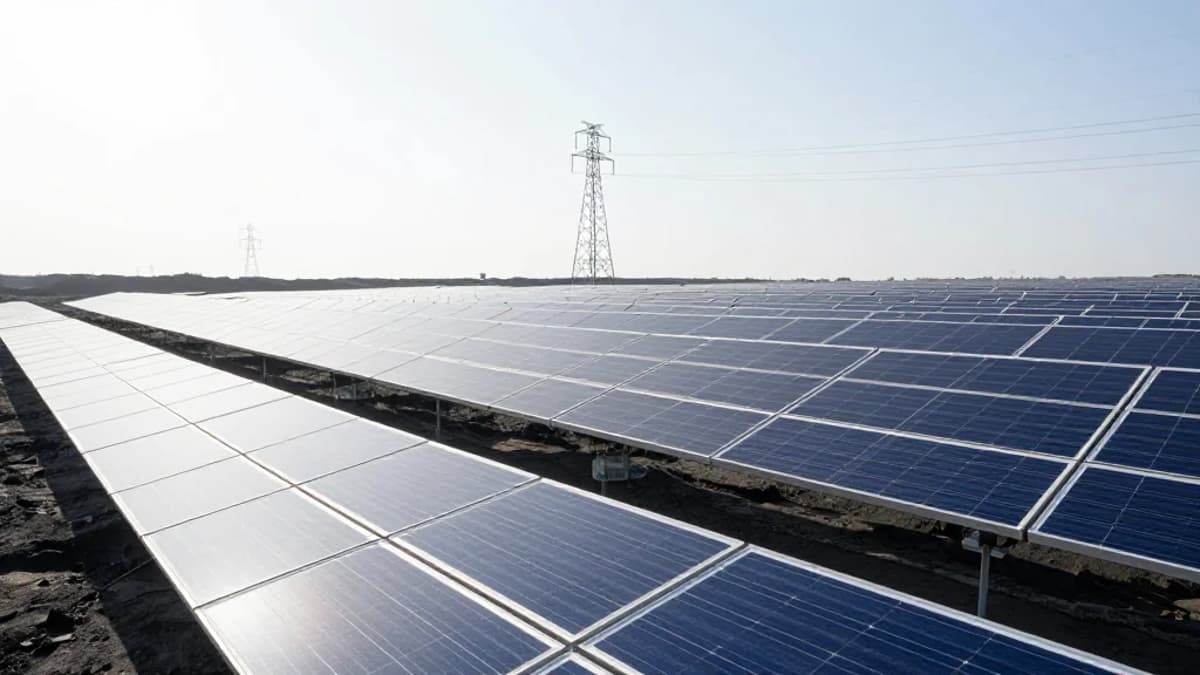
CHN Energy Switches on 2 GW Solar Plant at Coal-Mining Subsidence Area
•March 2, 2026
0
Why It Matters
The development demonstrates how China can accelerate renewable capacity while reutilizing degraded land and leveraging existing thermal assets, a model that could reshape the nation’s coal‑to‑clean‑energy transition and long‑distance power trade.
Key Takeaways
- •2 GW Phase II adds to 4 GW Lingwu capacity
- •Base will generate ~10.8 TWh annually, powering 7.2 M homes
- •Includes 600 MW/1,200 MWh storage, 400 MW already built
- •Uses existing coal substation for renewable export
- •Repurposes 120 km² mining subsidence land for solar
Pulse Analysis
China’s push to convert former coal‑mining subsidence zones into utility‑scale solar farms marks a strategic shift in land use policy. By turning 120 square kilometres of unstable terrain into a 6 GW photovoltaic hub, CHN Energy not only restores ecological value but also taps a vast, low‑cost footprint for renewable generation. This approach aligns with the government’s “desert, Gobi and wasteland” initiative, offering a template for other regions where mining has left behind scarred landscapes that are otherwise unsuitable for conventional development.
The Lingwu project’s hybrid grid architecture showcases technical ingenuity. Integrating a 600 MW/1,200 MWh battery system with existing coal‑fired generators creates a “solar‑coal‑storage‑hydrogen” nexus that smooths intermittency and maximises asset utilization. Moreover, the domestic‑first transmission strategy—expanding a nearby 750 kV coal substation—cuts capital expenditures and accelerates power export via the 800 kV UHVDC corridor to eastern demand centers. Such grid‑forming storage and bundled transmission models are poised to become benchmarks for future large‑scale renewables in China’s western provinces.
From a market perspective, the project signals a scalable pathway for China’s coal‑to‑renewable transition. Delivering 10.8 TWh annually, the base can offset roughly 3.24 million tons of coal each year, directly supporting national carbon‑reduction targets. The successful deployment of mixed mounting structures, geological monitoring, and drone‑based inspections also reduces operational risk in challenging terrains. As investors seek projects that combine high capacity factors with policy‑friendly land reuse, the Lingwu model offers a compelling blueprint for replicating clean‑energy hubs that balance ecological restoration, grid stability, and long‑distance power delivery.
CHN Energy switches on 2 GW solar plant at coal-mining subsidence area
0
Comments
Want to join the conversation?
Loading comments...