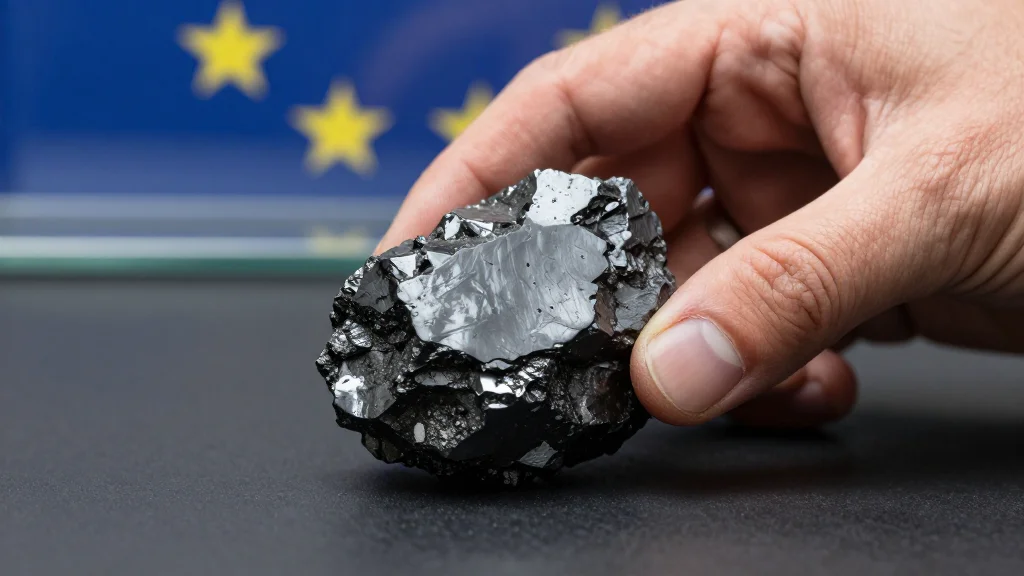
Germany Evaluates Madagascar’s Molo Graphite Mine to Curb China Reliance

Companies Mentioned
Why It Matters
Securing a stable supply of natural graphite is essential for Europe’s electric‑vehicle ambitions, as the metal is a key component of lithium‑ion battery anodes. By diversifying away from China, the EU aims to mitigate supply‑chain risks that could disrupt production targets and inflate costs for automakers. Beyond battery manufacturing, a reliable African graphite source could stimulate local economies, attract further foreign investment, and encourage the development of downstream processing capabilities on the continent, reshaping global trade flows in critical minerals.
Key Takeaways
- •German BGR officials visited NextSource’s Molo mine in Madagascar to assess its suitability as a European graphite supplier.
- •Molo’s design capacity is 17,000 tonnes per year; current output is about 11,000 tonnes due to technical limits.
- •Madagascar produced ~85,000 tonnes of graphite in 2024, becoming Africa’s top producer.
- •Berlin’s €1 bn (≈$1.08 bn) raw‑materials fund and a €2.5 bn (≈$2.7 bn) EU investment framework back overseas mineral projects.
- •A positive assessment could lead to contracts that reduce Europe’s reliance on Chinese graphite for EV batteries.
Pulse Analysis
Europe’s push to secure graphite outside China reflects a broader strategic pivot toward resource sovereignty that began after the pandemic exposed vulnerabilities in critical mineral supply chains. The German‑led assessment of Madagascar’s Molo mine is emblematic of a pragmatic approach: rather than building new mines from scratch, the EU is leveraging existing assets that can be quickly integrated into its supply network. This reduces lead times and capital exposure, but it also places a premium on operational reliability—something Molo must demonstrate to convert interest into long‑term contracts.
Historically, China’s dominance has been reinforced by its control over both extraction and downstream processing, giving it leverage over pricing and technology standards. By fostering a European‑centric graphite ecosystem, the EU hopes to create a parallel value chain that can compete on cost and quality. The €1 bn fund, while sizable, is modest compared with China’s state‑backed investments, suggesting that Europe will need to attract private capital and perhaps partner with Asian processors willing to diversify their feedstock sources.
Looking ahead, the success of the Molo evaluation could trigger a cascade of similar missions across Africa’s mineral‑rich regions. If Madagascar can scale up to full capacity and address technical bottlenecks, it may become a hub for not only raw graphite but also for anode‑material production, a step that would add significant value locally. For European automakers, a diversified supply base could translate into more predictable battery costs, supporting the aggressive EV rollout targets set for 2030. However, the outcome hinges on the forthcoming German report and the ability of NextSource and its partners to meet the performance standards demanded by a market that is increasingly sensitive to both price and geopolitical risk.
Germany evaluates Madagascar’s Molo graphite mine to curb China reliance
Comments
Want to join the conversation?
Loading comments...