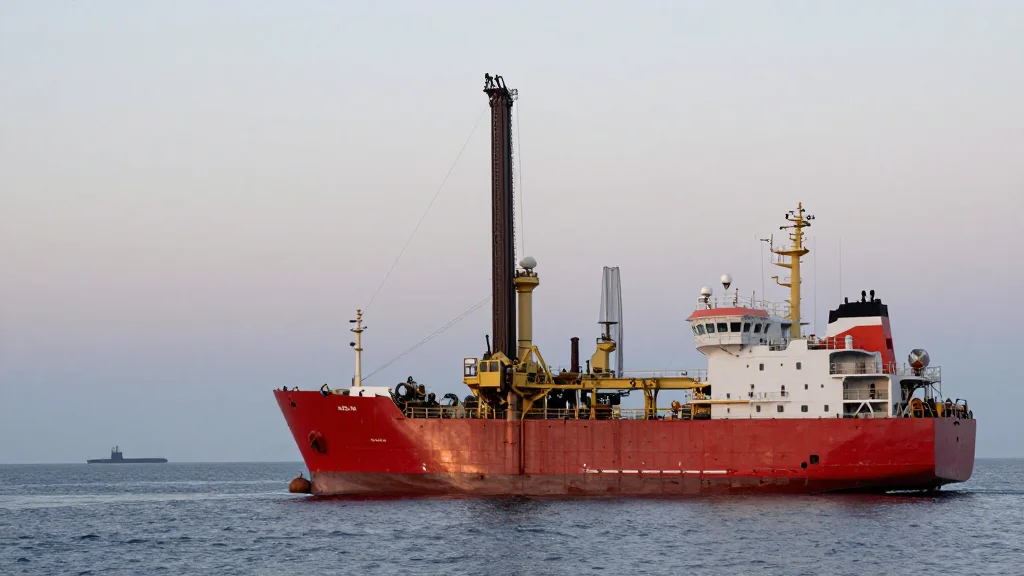
Investigators Identify Eight Chinese Deep‑Sea Mining Vessels, Exposing Dual‑Use Fleet

Companies Mentioned
Why It Matters
The identification of eight Chinese deep‑sea mining vessels spotlights a strategic convergence of resource extraction and maritime surveillance that could reshape the balance of power in the Pacific. By leveraging a fleet that doubles as a data‑gathering platform, China can secure critical minerals for its tech sector while simultaneously extending its intelligence reach into contested waters. For the broader mining industry, the findings raise urgent questions about the governance of seabed resources. The ISA’s mandate to ensure environmentally responsible mining is now intersecting with national security concerns, prompting calls for tighter transparency standards and possibly new international rules to separate civilian mining activities from military objectives.
Key Takeaways
- •Investigators pinpoint eight Chinese deep‑sea mining vessels within a 40‑ship fleet.
- •China holds the most ISA exploration contracts and is the regulator’s largest financial contributor.
- •February 2025: China signs deep‑sea mining research deals with the Cook Islands and Kiribati.
- •March 2025: The Metals Company files a U.S. deep‑sea mining application, sparking legal debate.
- •April 2025: Trump administration orders accelerated U.S. seabed mining to counter China’s influence.
Pulse Analysis
China’s deep‑sea mining program is evolving from a purely scientific endeavor into a multifaceted instrument of state power. By embedding mineral‑extraction capabilities within vessels that can also conduct strategic surveillance, Beijing creates a low‑profile platform that sidesteps traditional naval deployment constraints. This dual‑use model mirrors earlier Chinese practices in the Arctic and Indian Ocean, where research ships have been repurposed for intelligence gathering. The advantage is clear: Beijing can amass critical rare‑earths and other battery‑grade minerals while simultaneously mapping the seabed, monitoring foreign vessel traffic, and testing undersea communication technologies.
The United States’ response—an executive order to fast‑track its own deep‑sea mining agenda—signals a shift from diplomatic protest to proactive competition. By framing its policy as a countermeasure to Chinese influence, the Trump administration is effectively opening a new front in the great‑power rivalry that extends beyond surface naval forces. This escalation could pressure the ISA to tighten its oversight mechanisms, potentially leading to stricter environmental assessments and clearer demarcations between civilian and military maritime activities.
Looking ahead, the next ISA contract cycle will be a litmus test for how the international community balances resource security with geopolitical stability. If China continues to expand its fleet and deepen partnerships with vulnerable Pacific island states, it may force a recalibration of existing maritime norms. Conversely, heightened U.S. activity could provoke a race for seabed dominance, increasing the risk of accidental encounters and environmental damage. Stakeholders—from mining firms to environmental NGOs—must therefore prepare for a more contested and regulated deep‑sea mining landscape.
Investigators Identify Eight Chinese Deep‑Sea Mining Vessels, Exposing Dual‑Use Fleet
Comments
Want to join the conversation?
Loading comments...