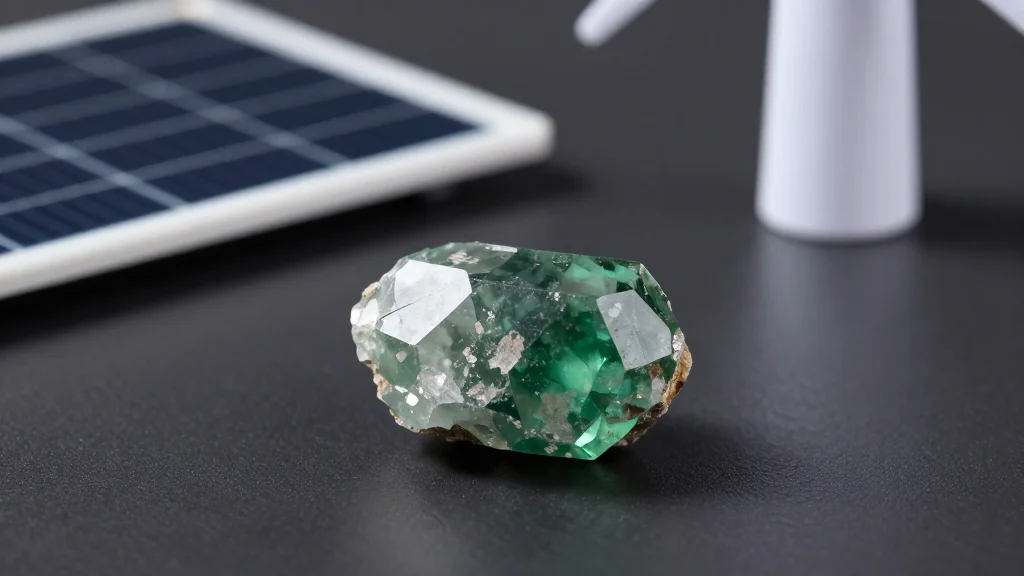
Kenya’s President Ruto Rejects Raw Mineral Exports, Pushes Value‑Added Processing in Africa

Why It Matters
Ruto’s rejection of a raw‑export model challenges the status quo of African mining, where most value is captured abroad. By pushing for downstream processing, the continent could retain a larger share of the economic benefits from the clean‑energy transition, creating jobs and fostering industrial diversification. The policy shift also signals to global investors that Africa seeks more sustainable, partnership‑based development rather than a race‑to‑extract approach, potentially reshaping capital flows toward value‑adding projects. If successful, the move could reduce Africa’s vulnerability to commodity price swings and mitigate environmental and social harms associated with unregulated mining. It also positions the continent as a strategic player in the global supply chain for batteries and renewable‑energy technologies, giving African nations greater leverage in negotiations with major powers such as the United States, China and the European Union.
Key Takeaways
- •President William Ruto announced at the Africa Forward Summit that Africa will stop exporting raw green minerals without local processing.
- •Africa holds over 30% of the world’s critical minerals; demand is projected to double by 2040.
- •Ruto warned against the “raw mineral export” model, calling it a relic of the past.
- •Civil‑society spokesperson Jean‑Claude Mputu warned the race for minerals could leave African states as losers.
- •The policy shift could redirect foreign investment toward downstream smelting, battery‑cell and manufacturing facilities.
Pulse Analysis
Ruto’s declaration marks a strategic pivot that could redefine Africa’s role in the global clean‑energy supply chain. Historically, the continent has been a source of raw inputs while downstream manufacturing has clustered in Europe, the United States and China, limiting African value capture. By demanding local processing, Kenya is signaling a broader continental ambition to climb the value chain, a move that aligns with the African Union’s Green Mineral Strategy but requires massive capital, reliable power and skilled labor.
The immediate market reaction is likely to be mixed. Mining majors may view the policy as a risk, fearing higher operating costs and longer project timelines. Conversely, ESG‑focused investors and climate‑finance institutions could see an opportunity to fund integrated projects that combine renewable energy generation with mineral processing, thereby meeting both climate and development goals. The success of this shift will depend on the speed of regulatory reforms, the availability of affordable clean electricity, and the ability of African governments to negotiate fair terms with multinational partners.
In the longer term, if African states can establish competitive processing hubs, they could command a larger slice of the projected $1.5 trillion critical‑minerals market by 2040. This would not only boost export revenues but also create a domestic industrial base capable of producing batteries, electric‑vehicle components and renewable‑energy equipment. Such an outcome would mitigate the resource‑curse narrative and position Africa as a genuine leader in the global energy transition.
Kenya’s President Ruto Rejects Raw Mineral Exports, Pushes Value‑Added Processing in Africa
Comments
Want to join the conversation?
Loading comments...