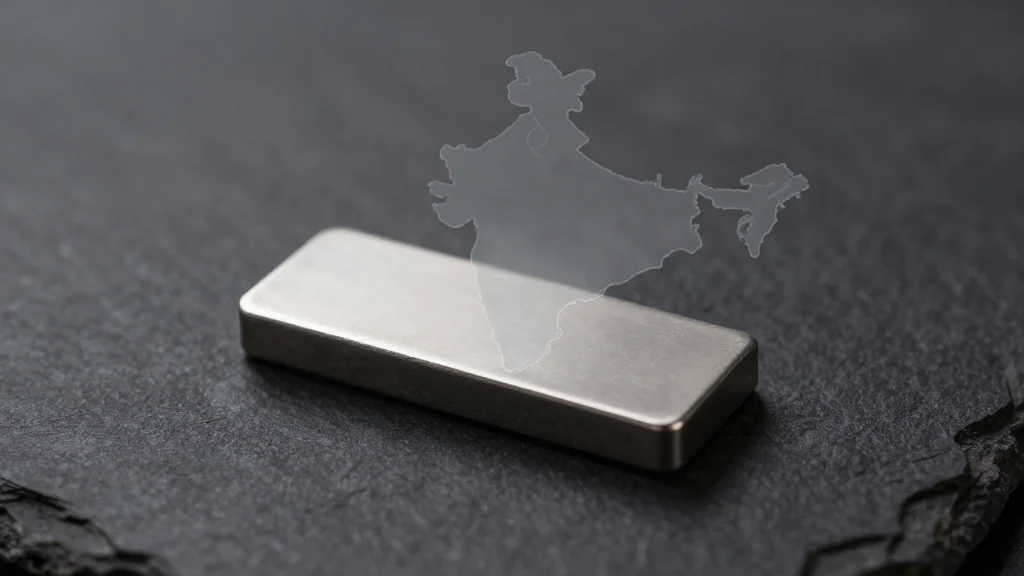
Proterial Ltd. Targets India's Rare‑Earth Magnet Incentive to Cut China Dependence

Companies Mentioned
Why It Matters
Diversifying rare‑earth magnet production away from China is a strategic priority for many nations seeking supply‑chain resilience. Proterial’s potential entry into India could catalyze the development of a domestic manufacturing base, reducing import exposure for Indian industries and creating new export opportunities. The move also signals confidence in India’s policy environment, encouraging other foreign investors to consider similar projects. Beyond the immediate commercial implications, the shift could influence geopolitical dynamics. A more distributed rare‑earth ecosystem would dilute China’s leverage over high‑tech sectors that rely on permanent magnets, from electric vehicles to renewable energy, thereby reshaping global trade patterns and security calculations.
Key Takeaways
- •Proterial Ltd., backed by Bain Capital, is evaluating participation in India’s rare‑earth magnet incentive program.
- •The company confirmed it is "considering applying for the Indian government’s support scheme for rare earth magnets manufacturing."
- •India’s scheme aims to reduce reliance on Chinese imports by offering fiscal and infrastructure support to magnet producers.
- •Success could create a new manufacturing hub for EVs, wind turbines, and other magnet‑intensive industries.
- •Proterial’s decision in the coming weeks will signal market confidence in India’s policy framework.
Pulse Analysis
Proterial’s tentative move into India underscores a strategic pivot that could accelerate the re‑balancing of rare‑earth supply chains. Historically, China has controlled upwards of 80% of global rare‑earth output, giving it outsized influence over downstream markets. By leveraging India’s incentive scheme, Proterial not only gains potential cost advantages but also positions itself as a bridge between Japanese technology expertise and Indian manufacturing capacity.
The timing is noteworthy. Recent export curbs and diplomatic frictions have heightened the urgency for alternative sources. While Proterial’s exact investment size remains undisclosed, the mere fact that a Bain‑backed entity is probing the market suggests that private‑equity capital is ready to fund the high‑upfront costs of rare‑earth processing. If the firm proceeds, it may adopt a phased approach—starting with pilot lines, then scaling to full‑capacity plants—mirroring the playbook of other mineral‑focused investors.
Looking ahead, the success of Proterial’s venture will hinge on three variables: the clarity of India’s policy incentives, the availability of domestic or imported ore suitable for magnet production, and the ability to meet stringent environmental standards. Should these align, India could emerge as a credible second‑tier supplier, diluting China’s monopoly and reshaping the competitive landscape for high‑tech manufacturers worldwide.
Proterial Ltd. Targets India's Rare‑Earth Magnet Incentive to Cut China Dependence
Comments
Want to join the conversation?
Loading comments...