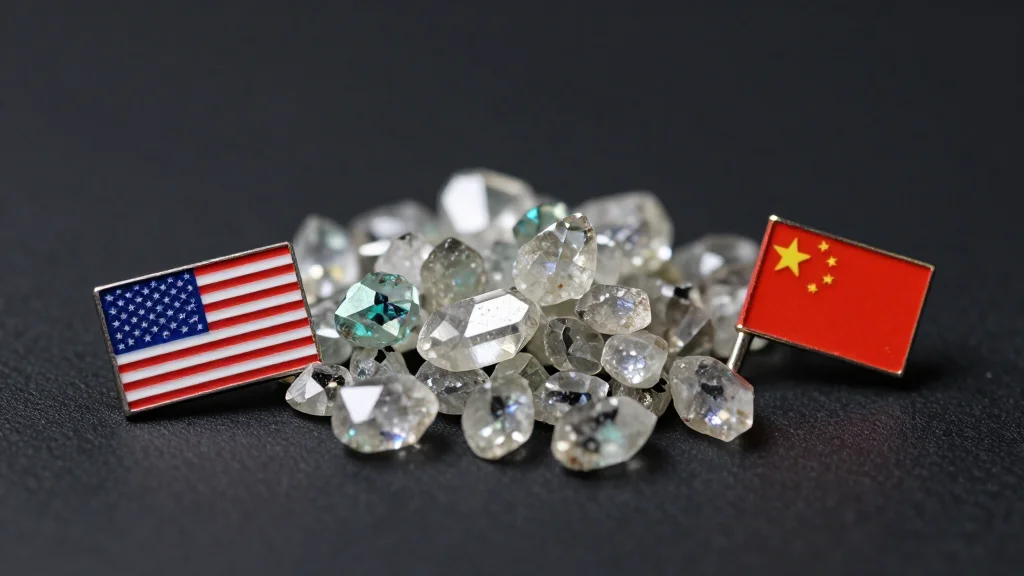
Trump‑Xi Summit Targets Extension of Critical Minerals Truce Amid Trade and Geopolitical Tensions

Companies Mentioned
Why It Matters
Extending the critical‑minerals truce is pivotal for the United States’ energy transition and defense readiness. Rare‑earths are indispensable for electric‑vehicle batteries, wind‑turbine generators and missile guidance systems; any disruption could force manufacturers to seek costly alternatives or accelerate domestic mining, reshaping global supply chains. Moreover, the summit’s broader agenda—trade, AI cooperation and geopolitical flashpoints—offers a barometer of how the two largest economies will manage competition while avoiding escalation that could destabilize markets. A successful extension would also signal to allied nations that the U.S. can still negotiate favorable terms with China, potentially encouraging coordinated policies on supply‑chain resilience. Conversely, a stalemate could accelerate diversification efforts, boosting mining projects in the United States, Canada, Australia and Africa, and prompting investors to re‑price rare‑earth equities based on heightened risk.
Key Takeaways
- •Trump arrives in Beijing for a two‑day summit focused on extending the critical‑minerals truce.
- •U.S. officials say the existing rare‑earth agreement "doesn't expire yet" and expect an extension announcement.
- •Busan meeting last October established a temporary trade truce that eased tariffs up to 145 % on Chinese goods.
- •Potential new Board of Trade and Board of Investment could institutionalize U.S.–China economic dialogue.
- •Extension of the minerals deal would stabilize prices for EV batteries and defense magnets, reducing supply‑chain risk.
Pulse Analysis
The Trump‑Xi summit arrives at a crossroads where geopolitical rivalry meets pragmatic interdependence. Rare‑earth minerals have become the new oil of the 21st‑century supply chain, and both Washington and Beijing recognize that a total breakdown would hurt their own industrial bases. By framing the minerals truce as a negotiable item rather than a concession, the United States signals a willingness to engage on mutually beneficial terms while still leveraging its broader strategic agenda—namely, pressuring China on Iran, Taiwan and AI.
Historically, U.S. attempts to diversify away from Chinese rare‑earths have been hampered by high capital costs and environmental opposition. An extended truce buys time for domestic projects to mature, but it also entrenches China’s bargaining power in future negotiations. The proposed Boards of Trade and Investment could serve as diplomatic scaffolding, allowing both sides to compartmentalize contentious issues while keeping commercial channels open. However, the effectiveness of such mechanisms will depend on their institutional independence and the political will to enforce them beyond the summit’s immediate aftermath.
Looking ahead, investors should monitor the summit’s communiqué for language that hints at the duration of any minerals extension and the scope of new trade forums. A clear, time‑bound renewal would likely buoy rare‑earth stocks and reduce volatility in EV‑related equities. In contrast, vague commitments or a decision to let the truce lapse could trigger a rush toward alternative sources, benefitting mining projects in the United States, Australia and Africa while inflating commodity prices. The summit’s outcome will therefore shape not only bilateral trade but also the strategic calculus of the entire global mining sector.
Trump‑Xi Summit Targets Extension of Critical Minerals Truce Amid Trade and Geopolitical Tensions
Comments
Want to join the conversation?
Loading comments...