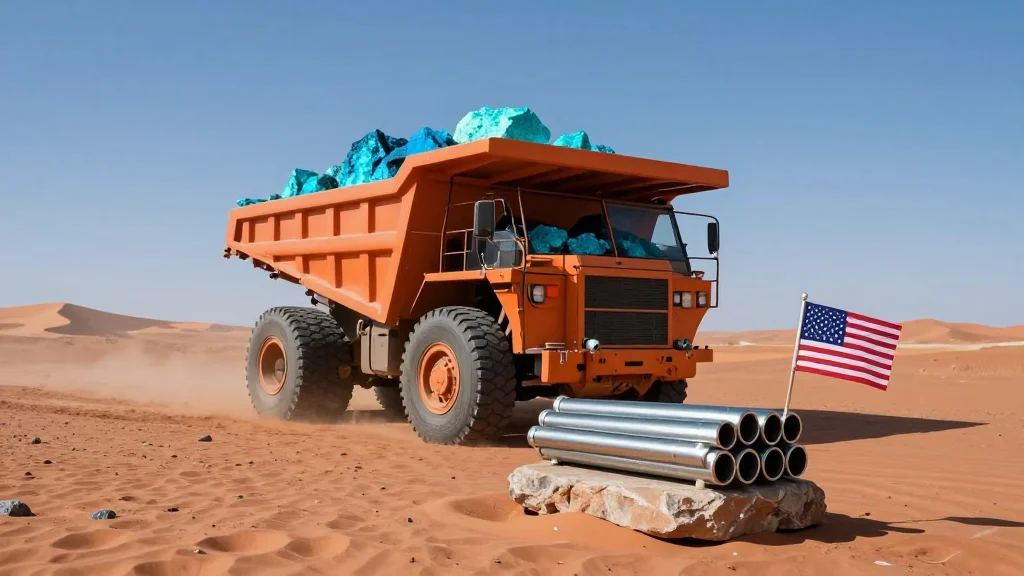
U.S. Pushes for More Namibian Uranium to Power AI-Driven Nuclear Plants

Why It Matters
Securing additional uranium from Namibia could give the United States a strategic foothold in the emerging market for AI‑powered nuclear power, reducing reliance on Chinese‑controlled supply chains. The initiative also highlights the intersection of high‑tech AI demand with traditional resource extraction, forcing policymakers to balance energy security, geopolitical considerations, and environmental sustainability. Water scarcity in Namibia adds a layer of complexity, as any expansion in mining must contend with limited freshwater resources, potentially driving innovation in desalination or prompting stricter environmental regulations. If successful, the U.S. strategy may accelerate the deployment of small modular reactors (SMRs) tailored for data center clusters, reshaping the energy landscape for the tech sector. Conversely, failure to address water constraints or Chinese market dominance could stall the project, leaving AI data centers dependent on less reliable or more carbon‑intensive power sources.
Key Takeaways
- •U.S. aims to increase uranium imports from Namibia beyond the 633 metric tons bought in 2024.
- •China imported 8,413 metric tons of Namibian uranium in 2024, dominating the market.
- •Chinese firms control Husab (majority) and Rössing (68.6%) mines, the two largest in Namibia.
- •Uranium mining in Erongo uses ~53 million cubic meters of water annually, near the national supply of 67 million cubic meters.
- •U.S. officials propose government‑backed financing for American companies to develop new mining output.
Pulse Analysis
The United States’ push to source more Namibian uranium reflects a broader shift toward securing critical minerals for AI and clean‑energy applications. Historically, uranium supply has been a geopolitical lever, with the Cold War era seeing similar maneuvers to ensure domestic fuel for nuclear reactors. Today, the AI boom adds urgency: data centers are energy‑intensive, and nuclear power offers a low‑carbon alternative that can operate continuously, unlike intermittent renewables.
China’s entrenched position in Namibia underscores the challenge of rebalancing supply. While U.S. financing could incentivize new entrants, the timeline for developing mines, securing permits, and building infrastructure is lengthy—often a decade or more. In the interim, the United States may need to rely on spot market purchases, which could keep prices volatile. Moreover, water scarcity could become a bargaining chip for Namibia, allowing the government to demand higher royalties or stricter environmental safeguards, potentially raising the cost of uranium for U.S. buyers.
If the U.S. successfully diversifies its uranium supply, it could accelerate the rollout of small modular reactors (SMRs) designed for AI data centers, creating a niche market that blends high‑tech and heavy industry. This would not only reduce carbon emissions from the tech sector but also stimulate investment in mining, desalination, and nuclear technology. However, the initiative’s success hinges on diplomatic coordination, transparent financing, and sustainable water management—factors that will shape the next decade of both the mining and AI energy ecosystems.
U.S. Pushes for More Namibian Uranium to Power AI-Driven Nuclear Plants
Comments
Want to join the conversation?
Loading comments...