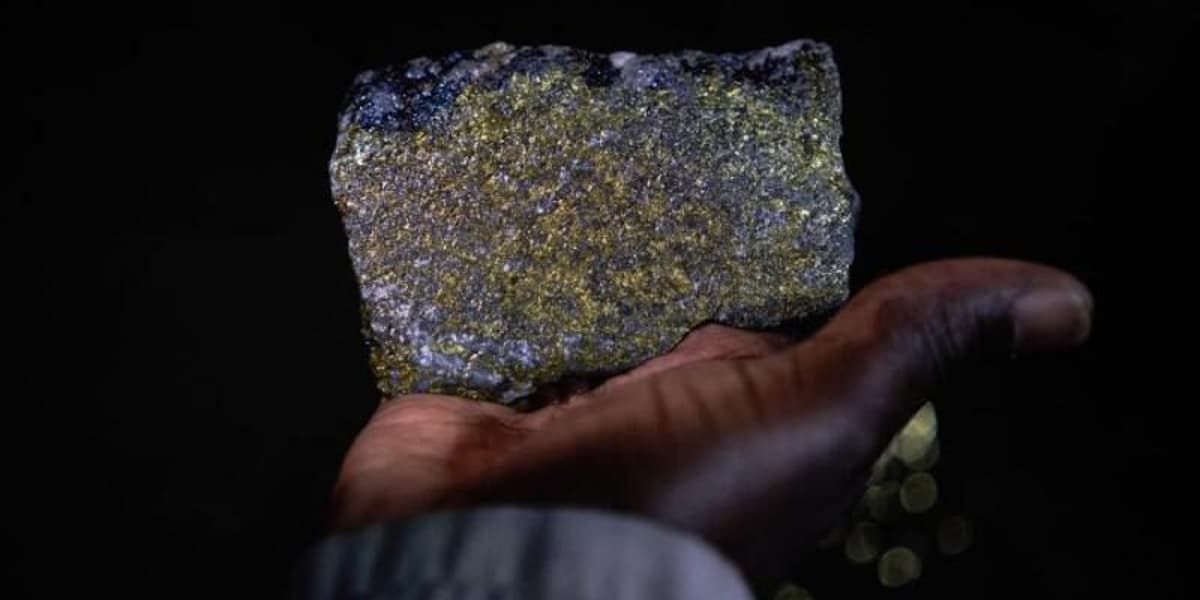
U.S. Turns to Africa for Critical Minerals as Supply Chain Risks Grow
Why It Matters
Diversifying supply chains reduces geopolitical risk and supports the U.S. clean‑energy transition, while Africa’s involvement could reshape global mineral markets.
Key Takeaways
- •Gabon supplies 100% of U.S. manganese imports.
- •South Africa provides 89% of U.S. platinum, 79% chromium.
- •U.S. aims to cut China reliance for critical minerals.
- •Africa holds roughly 30% of global critical mineral reserves.
- •Local processing in Africa remains limited, reducing value capture.
Pulse Analysis
The United States’ push to source critical minerals from Africa reflects mounting concerns over supply‑chain fragility. Recent data shows that Gabon accounts for the entire U.S. manganese import bill, and South Africa delivers the bulk of platinum, chromium and palladium used in batteries, catalytic converters and military hardware. By anchoring these imports in politically stable partners, Washington hopes to insulate key industries from trade disruptions and the leverage that China currently wields over graphite, rare earths and other processed materials.
Policy makers view the African pivot as a cornerstone of a broader decoupling strategy. China’s dominance in mineral processing has prompted the U.S. to draft incentives for domestic refining and to negotiate bilateral agreements that secure raw‑material flows while limiting Chinese market share. The approach aligns with the Inflation Reduction Act’s clean‑energy goals, which demand reliable access to metals that power electric vehicles and grid‑scale storage. As the nation tracks 37 critical minerals for 2025, eleven remain fully import‑dependent, underscoring the urgency of diversifying sources.
For Africa, the surge in demand presents both economic opportunity and a strategic dilemma. Holding an estimated 30% of the world’s critical‑mineral reserves, the continent could attract billions in foreign investment, spurring job creation and industrialization. Yet without robust local refining capacity, most of the added value stays abroad. Governments are therefore under pressure to negotiate better terms, develop processing infrastructure, and implement policies that ensure mineral wealth translates into sustainable growth rather than a resource curse. Successful collaboration could reshape global supply chains while delivering tangible benefits to African economies.
U.S. Turns to Africa for Critical Minerals as Supply Chain Risks Grow
Comments
Want to join the conversation?
Loading comments...