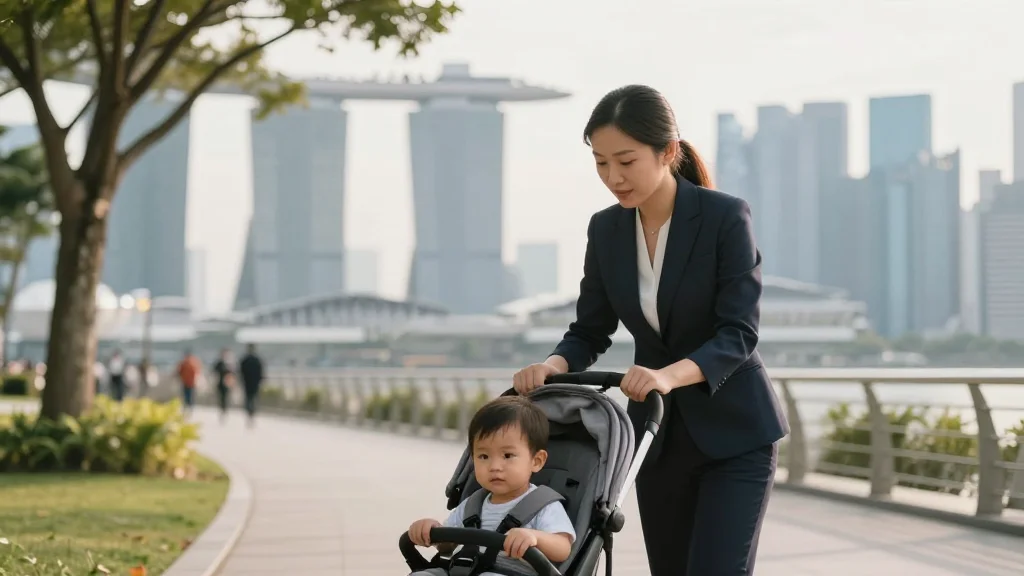
AsiaOne Report Highlights Struggles of Singapore’s Working Mothers

Why It Matters
The AsiaOne report crystallises a growing disconnect between Singapore’s policy rhetoric and the lived experience of working mothers. By foregrounding real‑world accounts, it forces stakeholders to confront the hidden costs of long hours, mental load and fragmented caregiving. If unaddressed, these pressures risk eroding female labour‑force participation, widening gender gaps in senior leadership, and undermining the nation’s broader economic competitiveness. Moreover, the feature feeds into a regional dialogue on parental‑leave standards, where Singapore is often benchmarked against neighbours like Malaysia and Indonesia. The insights could catalyse cross‑border policy learning, prompting a re‑evaluation of how flexible work, childcare support and cultural expectations intersect in high‑income Asian economies.
Key Takeaways
- •AsiaOne’s new report spotlights daily trade‑offs faced by Singaporean working mothers.
- •Lawyer Kam Kai Qi works 42 hours weekly yet feels she can only give "scraps of herself" to family.
- •Entrepreneur Aruna Daniel cites constant mental load, juggling business and childcare.
- •Physician Elizabeth Chan continues breastfeeding twice daily while working part‑time.
- •Report links personal stories to broader debates on parental‑leave policy and workplace flexibility.
Pulse Analysis
The AsiaOne feature arrives at a moment when Singapore’s labor market is under pressure to retain talent amid a tightening talent pool. Historically, the city‑state has relied on a compact, high‑productivity work culture, but the rising visibility of maternal burnout signals a potential inflection point. Employers that proactively embed flexible‑working arrangements—beyond ad‑hoc remote days—stand to gain loyalty from a demographic that currently feels forced to choose between career advancement and family wellbeing.
From a policy perspective, Singapore’s statutory maternity leave (currently 16 weeks) is generous by regional standards, yet the report reveals that statutory leave alone does not address the post‑leave reality. The shift of mothers like Elizabeth Chan to part‑time roles suggests a hidden attrition risk that could dilute the pipeline of women in senior medical and corporate positions. Policymakers might consider expanding paternity leave, incentivising shared caregiving, and mandating flexible‑work options to distribute the caregiving burden more evenly.
Finally, the cultural narrative around motherhood in Singapore—often framed as a personal sacrifice—needs recalibration. By amplifying voices that articulate the mental load and emotional toll, the report challenges the myth of the "super‑mom" who can flawlessly compartmentalise. If businesses and the government respond with concrete, data‑driven interventions, Singapore could set a new benchmark for balancing economic ambition with family wellbeing, turning the current tension into a competitive advantage rather than a systemic flaw.
AsiaOne Report Highlights Struggles of Singapore’s Working Mothers
Comments
Want to join the conversation?
Loading comments...