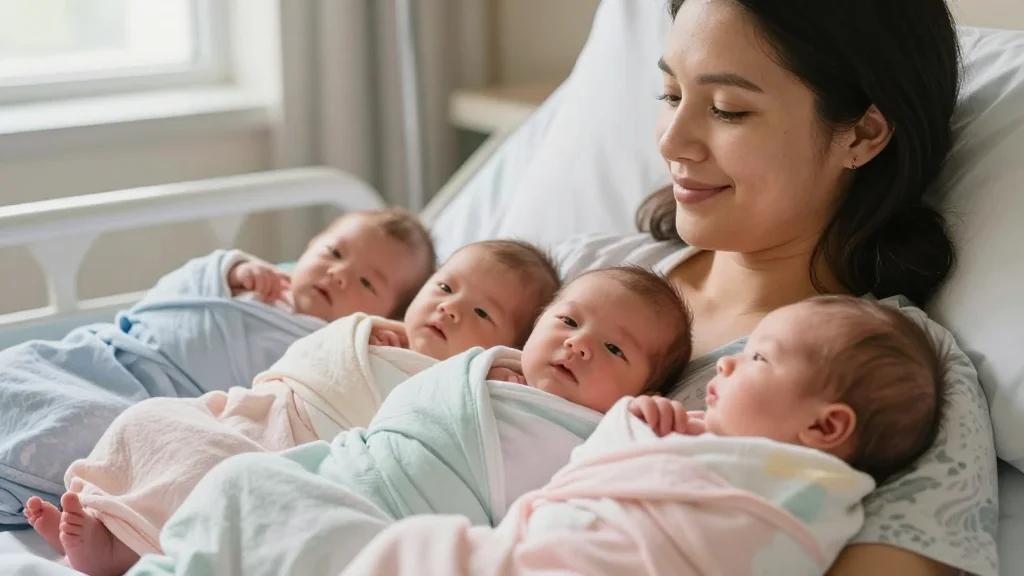
Couple Delivers Rare Identical Quadruplet Girls, All Named With ‘A’

Companies Mentioned
Why It Matters
The birth of identical quadruplets shines a spotlight on the medical complexities of high‑order multiple pregnancies, which require intensive monitoring, specialized neonatal care, and extended hospital stays. As families like the Lerma‑Lunas navigate unprecedented logistical and financial pressures, the story underscores gaps in insurance coverage and the need for broader social support mechanisms. Moreover, the public fascination with rare births can drive awareness and funding for research into the causes and prevention of such high‑risk pregnancies. Beyond the immediate health concerns, the case raises cultural questions about naming conventions and identity formation within large families. By choosing coordinated names that reflect their own initials, the parents signal a desire for unity while also highlighting the personal agency families have in shaping their narratives amid extraordinary circumstances.
Key Takeaways
- •Identical quadruplet girls born on Feb. 14 at Corpus Christi Medical Center
- •Doctors estimate odds of spontaneous identical quadruplets at 1 in 15 million
- •Each baby weighed just over three pounds and required NICU care
- •Parents named all four girls Amora, Analia, Arya and A'zura, sharing the letter ‘A’
- •GoFundMe launched to help cover the quadruplets' medical and daily expenses
Pulse Analysis
The Lerma‑Luna birth illustrates a convergence of medical rarity and modern parenting challenges. Historically, identical quadruplets have been documented only a handful of times, often in the context of assisted reproductive technologies. This natural occurrence, however, forces the healthcare system to mobilize resources quickly, testing the capacity of neonatal intensive care units that are already stretched thin in many regions. The successful outcomes for Amora, Analia, Arya and A'zura suggest that, when coordinated care is available, even the most extreme multiple births can result in healthy infants.
From a socioeconomic perspective, the family's reliance on crowdfunding reflects a broader trend: families with high‑order multiples increasingly turn to public generosity to bridge gaps left by insurance. This raises policy questions about whether existing health plans adequately address the costs associated with multiple births, especially when complications arise. As more stories like this gain media attention, legislators may feel pressure to revisit coverage mandates for prenatal and postnatal care.
Culturally, the coordinated naming strategy taps into a growing desire among parents to create cohesive family branding, especially in an age of social media where family narratives are shared widely. While the names provide a sense of unity, they also invite scrutiny about individuality and the psychological impact on children growing up under a shared identity. Future research could explore how such naming conventions affect sibling dynamics and personal development in large families.
Overall, the Lerma‑Luna case serves as a microcosm of the medical, financial, and cultural dimensions of rare multiple births, offering a template for how communities, healthcare providers, and policymakers might better support families facing similar extraordinary circumstances.
Couple Delivers Rare Identical Quadruplet Girls, All Named With ‘A’
Comments
Want to join the conversation?
Loading comments...