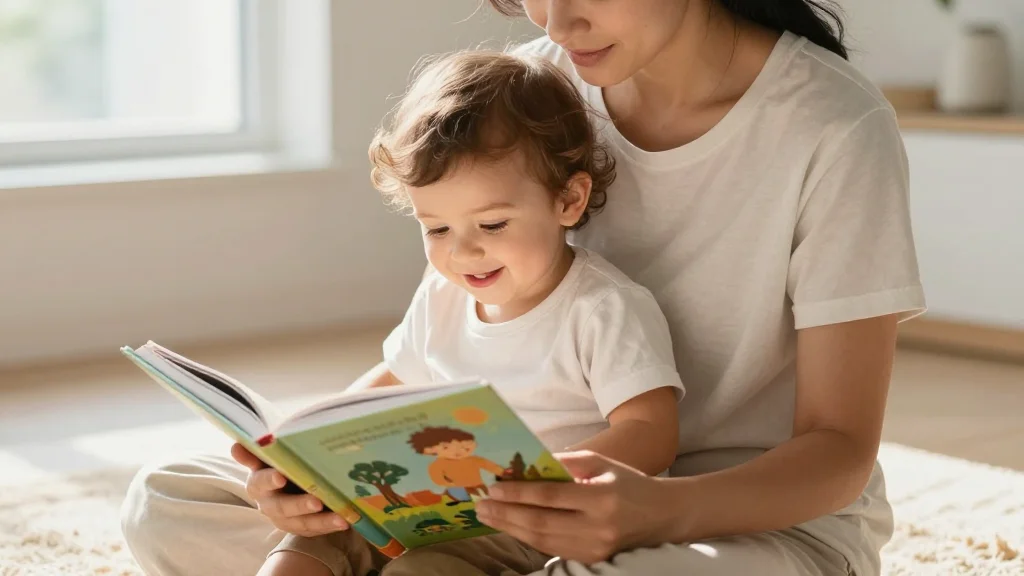
I'm a Literacy Specialist and a Mom. One Simple Habit Helps Preschoolers Build Reading Skills Long Before Kindergarten.

Why It Matters
Early oral language and comprehension are stronger indicators of future literacy than letter recognition, so parents can meaningfully boost academic outcomes with a low‑cost, high‑impact habit.
Key Takeaways
- •Letter memorization alone doesn’t predict reading success
- •Interactive storytelling builds oral language and critical thinking
- •One nightly book with a few questions suffices
- •Open‑ended questions foster prediction, inference, vocabulary growth
- •Parents can boost literacy without extra materials
Pulse Analysis
Research in early childhood education consistently shows that oral language development outpaces letter identification as a predictor of later reading proficiency. Children who engage in rich verbal interactions acquire larger vocabularies and stronger narrative comprehension, laying the groundwork for decoding skills once they enter formal schooling. By shifting focus from rote alphabet drills to meaningful dialogue, parents tap into the brain’s natural language pathways, fostering neural connections that support phonemic awareness and reading fluency.
Interactive storytelling—pausing to ask questions like "What might happen next?" or "How does the character feel?"—creates a two‑way exchange that reinforces attention, memory, and inferential reasoning. This technique aligns with the "dialogic reading" model endorsed by literacy researchers, which links frequent, purposeful questioning to gains in expressive language and critical thinking. Practically, parents need only select a favorite book, read aloud, and intersperse a handful of open‑ended prompts. The approach is scalable: even brief, nightly sessions yield measurable improvements in vocabulary acquisition and story‑structure understanding, without requiring costly programs or specialized materials.
For educators and policymakers, the implications are clear. Encouraging families to adopt conversational reading can complement school‑based curricula, especially in underserved communities where early exposure to books may be limited. Market players in early‑learning apps and preschool resources are already integrating question‑generation features, reflecting a growing demand for evidence‑based, parent‑friendly literacy tools. By normalizing interactive reading at home, society can close readiness gaps, reduce future remediation costs, and nurture a generation of confident, competent readers.
I'm a literacy specialist and a mom. One simple habit helps preschoolers build reading skills long before kindergarten.
Comments
Want to join the conversation?
Loading comments...