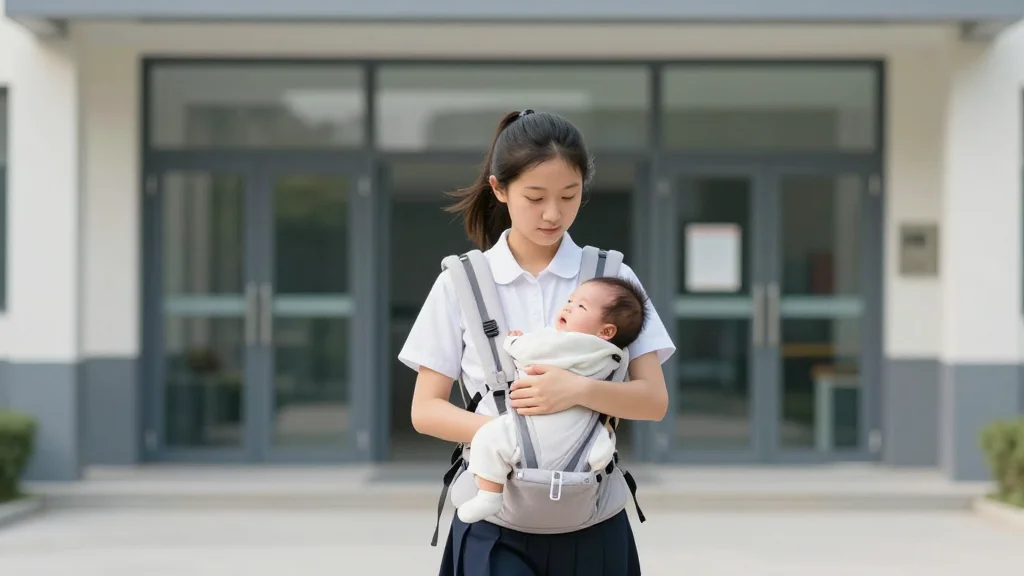
Malaysia's Education Minister Orders Teen Mothers Back to School for SPM Exams

Why It Matters
The directive signals a shift from punitive attitudes toward teenage pregnancy to a rights‑based framework that prioritizes education and health. By mandating school re‑entry, the Malaysian government aims to curb the intergenerational transmission of poverty and reduce dropout rates among a demographic historically marginalized. Successful implementation could serve as a model for other countries grappling with teenage motherhood, illustrating how coordinated education, health, and social welfare policies can foster long‑term socioeconomic inclusion. Moreover, the policy intersects with broader debates on gender equity, reproductive rights, and child protection. It forces policymakers to balance cultural sensitivities with evidence‑based interventions, potentially reshaping public discourse around out‑of‑wedding pregnancies and the role of the state in supporting vulnerable families.
Key Takeaways
- •Education Minister Fadhlina Sidek orders teenage mothers to return to school for SPM exams.
- •Policy emphasizes rehabilitation, health care, and long‑term empowerment over punishment.
- •Government agencies (Ministry of Education, Health, Social Welfare) will coordinate support services.
- •First cohort of teen mothers will sit for the June 2026 SPM examination.
- •The move aims to reduce dropout rates and break cycles of poverty among young mothers.
Pulse Analysis
Malaysia’s decision to require teenage mothers to sit for the SPM exam reflects a broader regional trend of integrating education into social protection strategies. Historically, Southeast Asian nations have treated out‑of‑wedding pregnancy as a moral issue, often resulting in school expulsions and social ostracism. By framing education as a non‑negotiable right, the ministry aligns with global best practices that link schooling to reduced child mortality, higher earnings, and lower crime rates.
The policy’s success hinges on execution. Rural schools may lack the resources to provide tailored counselling, childcare, or flexible scheduling, risking a disparity between policy intent and on‑the‑ground reality. Partnerships with NGOs like Bayt Al‑Rahmah could fill gaps, but sustained funding and clear accountability mechanisms will be essential. If the government can demonstrate measurable improvements in enrollment and exam performance, it may catalyze similar reforms in Indonesia, the Philippines, and Thailand, where teenage pregnancy remains a public health challenge.
Politically, the announcement also serves to bolster the ruling coalition’s image ahead of upcoming local elections. By positioning the ministry as a champion of vulnerable youth, the government can claim progress on gender equity while deflecting criticism over broader socioeconomic issues. However, opposition parties may seize on any implementation failures, turning the policy into a litmus test for the administration’s capacity to deliver on social promises.
Malaysia's Education Minister Orders Teen Mothers Back to School for SPM Exams
Comments
Want to join the conversation?
Loading comments...