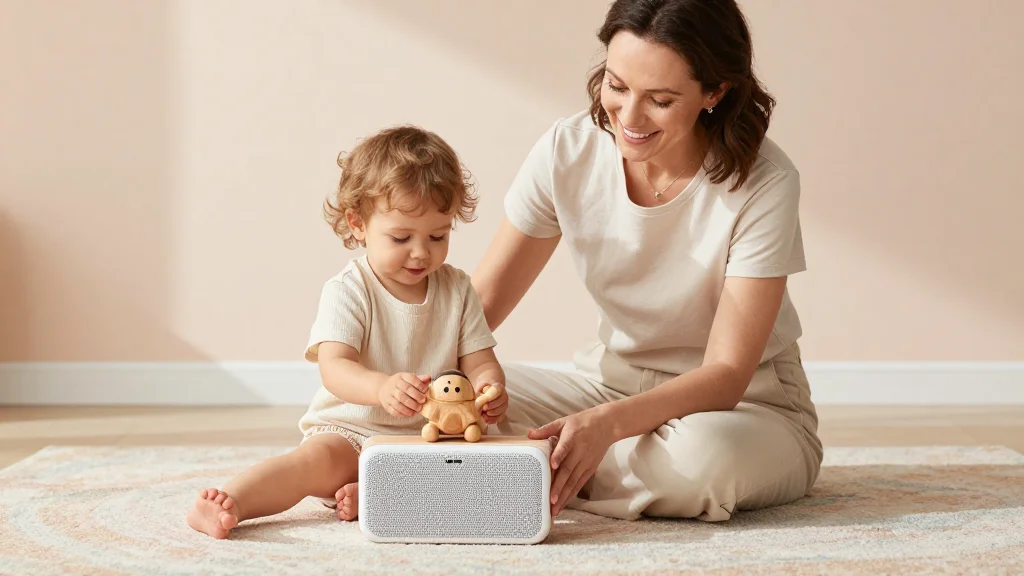
Parents Shift to Audio‑Only Toys as Screen Time Concerns Surge

Why It Matters
The pivot toward audio‑only toys reflects a broader societal reevaluation of children's digital consumption, with implications for health, education, and the future of the toy market. By channeling parental spending into sound‑based products, companies like Tonies and Yoto are reshaping how early‑childhood learning content is delivered, potentially influencing curriculum design and media regulation. Moreover, the trend underscores a cultural shift that could pressure tech giants to develop more screen‑free solutions for young users. If the audio‑toy market continues to expand, it may set new standards for data privacy, content curation, and parental control in children's media. Policymakers and educators will likely monitor these developments to ensure that the benefits of reduced screen time are not offset by other unintended consequences, such as reduced visual literacy or over‑reliance on proprietary ecosystems.
Key Takeaways
- •Parents are swapping screens for audio‑only toys like Yoto and Tonies.
- •Tonies generated €630 million ($731 million) in 2025 revenue, up 29% YoY in Q1.
- •Yoto reported 2024 revenue of just under £95 million ($128 million).
- •Children spend roughly 40 minutes daily on audio‑only devices, according to Tonies data.
- •Industry leaders cite German radio‑play heritage as a cultural driver for audio toys.
Pulse Analysis
The surge in audio‑only toys is more than a fleeting consumer fad; it signals a structural reallocation of parental budgets away from visual media toward auditory experiences. Historically, children's entertainment has oscillated between visual and auditory dominance—radio in the mid‑20th century, television in the latter half, and now a hybrid of screen‑based apps and sound‑only devices. The current wave leverages nostalgia for radio plays while capitalizing on modern streaming infrastructure, allowing manufacturers to offer curated, ad‑free content that aligns with parental safety concerns.
From a competitive standpoint, Tonies' entrenched brand and extensive figurine ecosystem give it a moat that Yoto, a newer entrant, must overcome through pricing, content diversity, and subscription services. Both firms are likely to invest heavily in AI‑driven recommendation engines, raising the stakes for data governance. As regulators tighten rules around children's data, transparency will become a differentiator; Tonies' claim that its data is "never individualised" may be scrutinized under upcoming EU and US legislation.
Looking forward, the audio‑toy market could catalyze a broader industry shift toward multimodal learning tools that blend sound, tactile interaction, and limited visual cues. If successful, this could inspire traditional toy makers to integrate audio components into classic playsets, while tech companies might develop hybrid devices that toggle between screen‑free and screen‑enabled modes. The trajectory will hinge on empirical evidence of developmental benefits, parental trust, and the ability of audio‑only platforms to sustain engagement without the visual stimulus that dominates contemporary children's media.
Parents Shift to Audio‑Only Toys as Screen Time Concerns Surge
Comments
Want to join the conversation?
Loading comments...