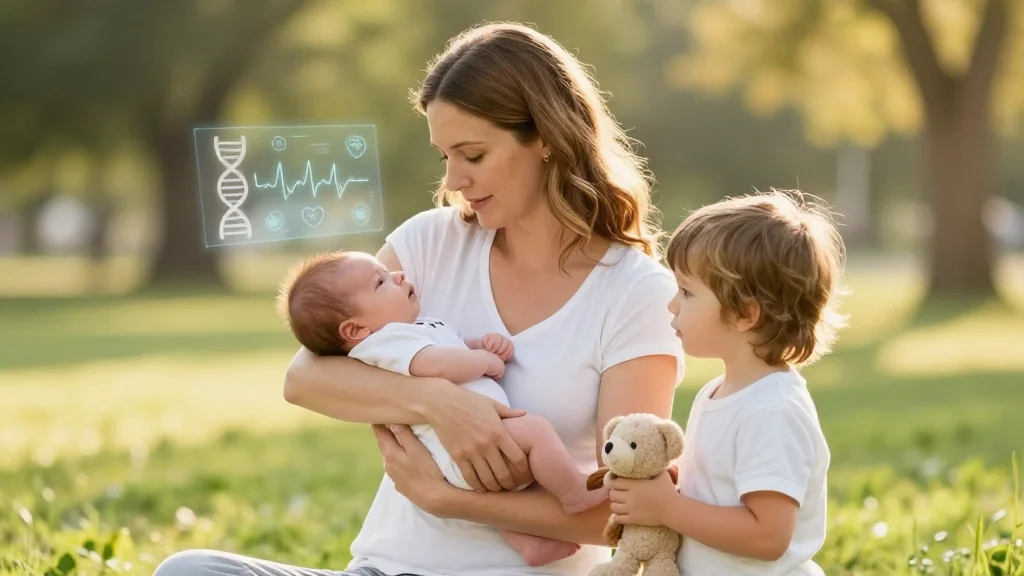
Study of 10 Million Siblings Links Birth Order to Autism, Migraines and More

Why It Matters
Understanding how birth order influences health outcomes adds a new dimension to maternal and child health strategies. If firstborns are indeed at higher risk for autism and allergies, early developmental screening could be prioritized for these children, potentially leading to earlier interventions and better long‑term outcomes. For later‑born children, heightened awareness of migraine and shingles risk may prompt clinicians to monitor neurological and immune markers more closely, reducing the burden of chronic pain and infection later in life. Beyond individual care, the study could inform public‑health policy around resource allocation for early‑childhood services. As families continue to have fewer children, the proportion of firstborns rises, potentially amplifying the overall prevalence of conditions linked to birth order. Policymakers might need to adjust funding for autism support services and allergy prevention programs accordingly, ensuring that health systems remain responsive to shifting demographic patterns.
Key Takeaways
- •Study analyzed health records of >10 million siblings, the largest dataset of its kind.
- •Firstborns are up to 15% more likely to be diagnosed with autism and have higher allergy rates.
- •Second‑born and later children show a 12% higher risk of migraine and increased shingles incidence.
- •Researchers controlled for socioeconomic status, parental age and other confounders.
- •Findings could reshape pediatric screening guidelines and public‑health resource planning.
Pulse Analysis
The birth‑order study arrives at a crossroads of epidemiology and family sociology, offering quantifiable evidence that sibling position is more than a cultural curiosity. Historically, birth‑order theories have been mired in anecdote and methodological flaws; this analysis, leveraging massive administrative datasets, sidesteps many of those pitfalls. By isolating birth order from socioeconomic and parental‑age variables, the researchers provide a clearer signal that could recalibrate risk models used by pediatricians.
From a market perspective, the results may stimulate demand for personalized health‑monitoring solutions tailored to family structure. Companies that offer genetic testing, early‑developmental assessments, or wearable migraine trackers could market products specifically to firstborn or later‑born cohorts, leveraging the study’s headline findings. Meanwhile, insurers might adjust underwriting criteria or preventive‑care incentives based on birth‑order risk profiles, a shift that could ripple through pricing and coverage decisions.
Looking ahead, the study’s authors intend to dissect the biological mechanisms behind these associations. If prenatal hormone exposure, microbiome development, or parental attention differentials prove causal, interventions could be designed to mitigate risk regardless of birth order. Until then, the practical takeaway for parents is nuanced: while birth order appears to tilt the odds for certain conditions, it is one of many factors shaping a child’s health trajectory. In the era of data‑driven parenting, such insights empower families to make more informed decisions about monitoring, early intervention, and resource allocation.
Study of 10 Million Siblings Links Birth Order to Autism, Migraines and More
Comments
Want to join the conversation?
Loading comments...