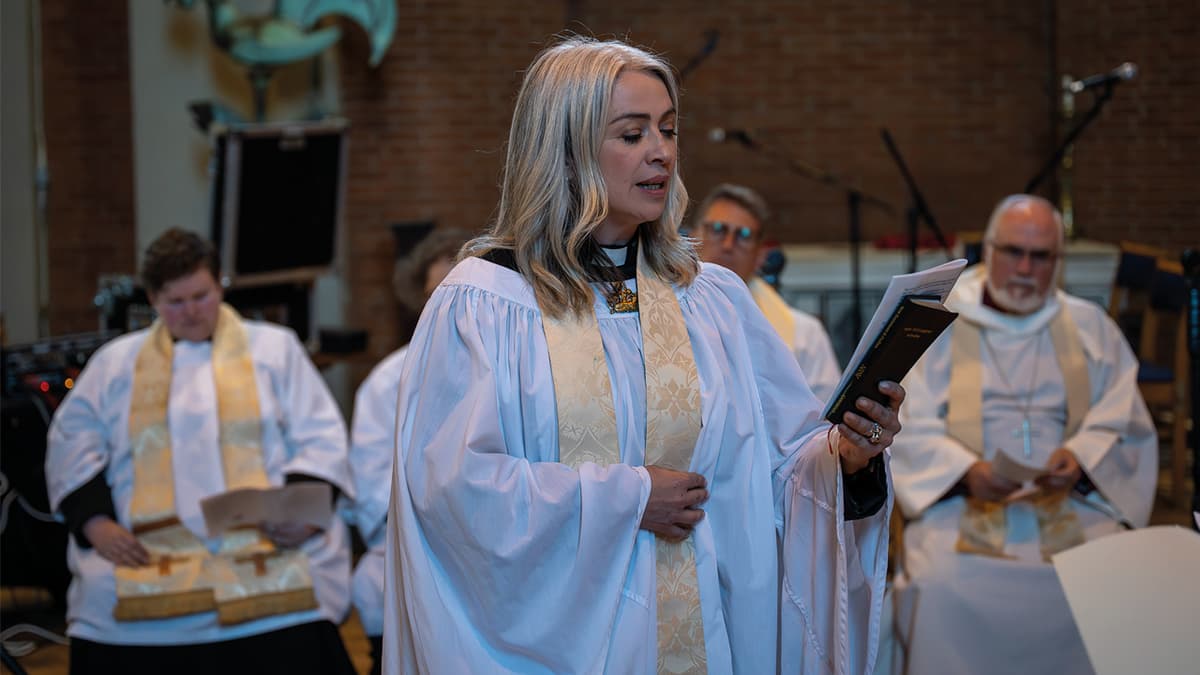
"There’s This Idea that Metal Is the Devil’s Music and All that Kind of Nonsense." Meet the Metal Singer-Turned Vicar Who Wants Iron Maiden to Play Her Church
Companies Mentioned
Why It Matters
Her ambition challenges the stereotype that metal is anti‑religious, showing how churches can engage younger audiences through shared cultural touchstones.
Key Takeaways
- •Former metal frontwoman now serves as vicar at St Jude’s
- •Lifelong Iron Maiden fan after teenage TV magic‑assistant experience
- •Continues metal work, backing vocals for Dragonforce
- •Believes metal’s biblical imagery aligns with faith themes
- •Aims to book Iron Maiden for a church performance
Pulse Analysis
In recent years, a growing number of churches have turned to non‑traditional music genres to attract younger congregants and break down cultural barriers. Heavy metal, long stigmatized as ‘the Devil’s music,’ is increasingly being reassessed as a vehicle for storytelling, emotional catharsis, and even spiritual metaphor. Scholars note that many metal lyrics draw on biblical narratives, apocalyptic imagery, and moral conflict, creating a natural bridge to faith‑based discussions. This re‑evaluation has opened doors for clergy who grew up with the genre to integrate it into worship without alienating long‑time parishioners.
Emily Kolltveit embodies that crossover. A teenage drama student in London, she first encountered Iron Maiden when a magician’s TV special required a minor assistant—an opportunity that sparked a lifelong obsession. She later fronted the symphonic metal outfit Pythia, sang with the medieval‑inspired Mediæval Bæbes, and contributed backing vocals to Dragonforce’s power‑metal anthems. Throughout, she describes music as the conduit through which she heard God’s voice, eventually leading her to ordination at St Jude’s. Her dual identity as a vicar and metal vocalist gives her a unique platform to speak on faith and fandom.
Kolltveit’s dream of booking Iron Maiden for a set inside St Jude’s could become a landmark moment for both the church and the metal community. A concert in a sacred space would challenge entrenched stereotypes, generate media buzz, and potentially draw new visitors to the parish. It also underscores a broader industry trend: artists and institutions alike are leveraging cross‑cultural collaborations to expand reach and relevance. Whether the band accepts the invitation or not, the conversation sparked by Kolltveit’s proposal signals a shift toward more inclusive, music‑driven outreach strategies in modern ministry.
"There’s this idea that metal is the Devil’s music and all that kind of nonsense." Meet the metal singer-turned vicar who wants Iron Maiden to play her church
Comments
Want to join the conversation?
Loading comments...