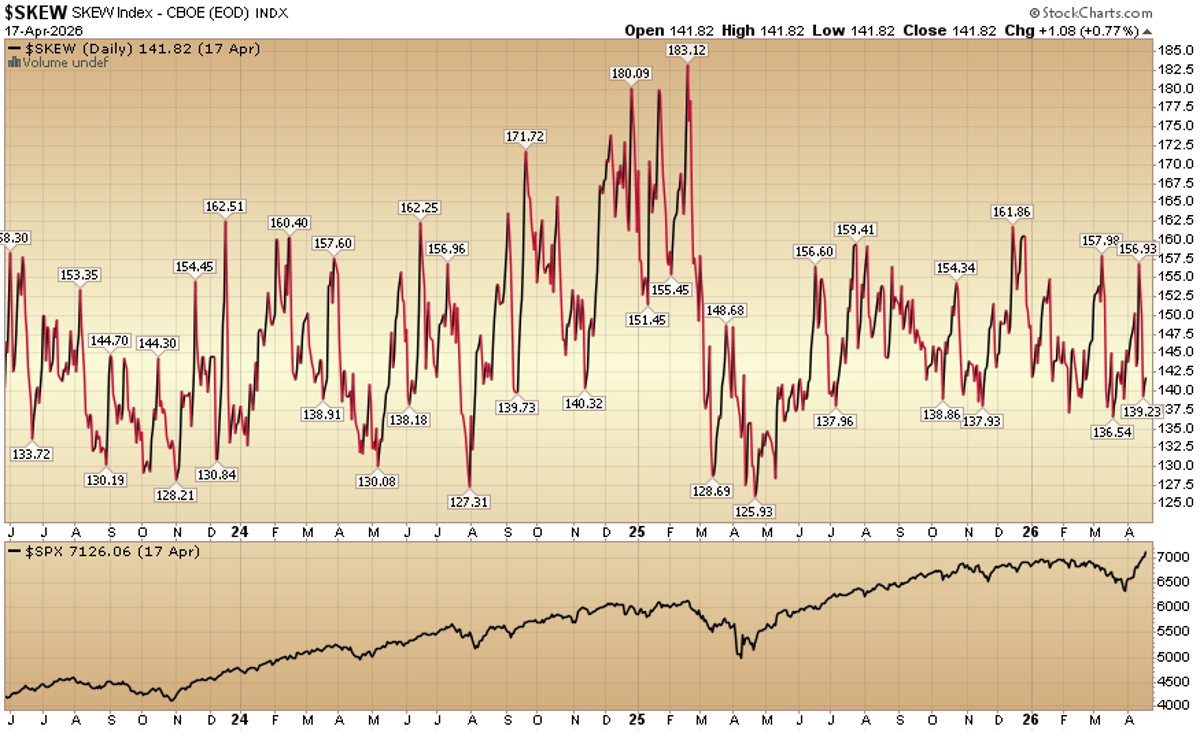
Indicator of the Day (Video): CBOE Skew Index
Key Takeaways
- •Skew index oscillates between 125 and 185 amid rising S&P 500.
- •High skew values suggest investors demand premium for downside protection.
- •Sharp skew swings often precede market corrections or heightened volatility.
- •Traders use skew to gauge tail‑risk and adjust options positions.
- •Persistent elevated skew can compress equity rally momentum.
Pulse Analysis
The CBOE Skew Index measures the price disparity between out‑of‑the‑money puts and calls, effectively quantifying how much market participants are willing to pay for protection against extreme downside moves. A higher reading indicates that investors are pricing in a greater probability of a sharp market drop, even when the broader equity market appears stable. By tracking this metric, analysts gain insight into the hidden tail‑risk sentiment that traditional volatility gauges like VIX may overlook.
Recent readings have shown the Skew Index bouncing between 125 and 185, a range that is unusually volatile given the S&P 500’s steady climb over the past months. Such swings suggest that while equities are rallying, a sizable cohort of traders remains uneasy about potential tail events, prompting them to buy protective puts at a premium. This tension often precedes periods of heightened market turbulence, as history shows that spikes in skew can foreshadow corrections or sudden spikes in realized volatility.
For investors, the practical takeaway is clear: an elevated or erratically moving skew warrants a reassessment of risk exposure. Options strategies such as buying out‑of‑the‑money puts, constructing skew‑based spreads, or tightening stop‑loss levels can mitigate the impact of an unexpected downturn. Moreover, portfolio managers may use the Skew Index as a leading indicator to adjust asset allocations, especially in sectors sensitive to market sentiment. Monitoring skew alongside traditional metrics equips market participants with a more nuanced view of risk, helping them navigate the fine line between capitalizing on bullish trends and guarding against tail‑risk surprises.
Indicator of the Day (video): CBOE Skew Index
Comments
Want to join the conversation?