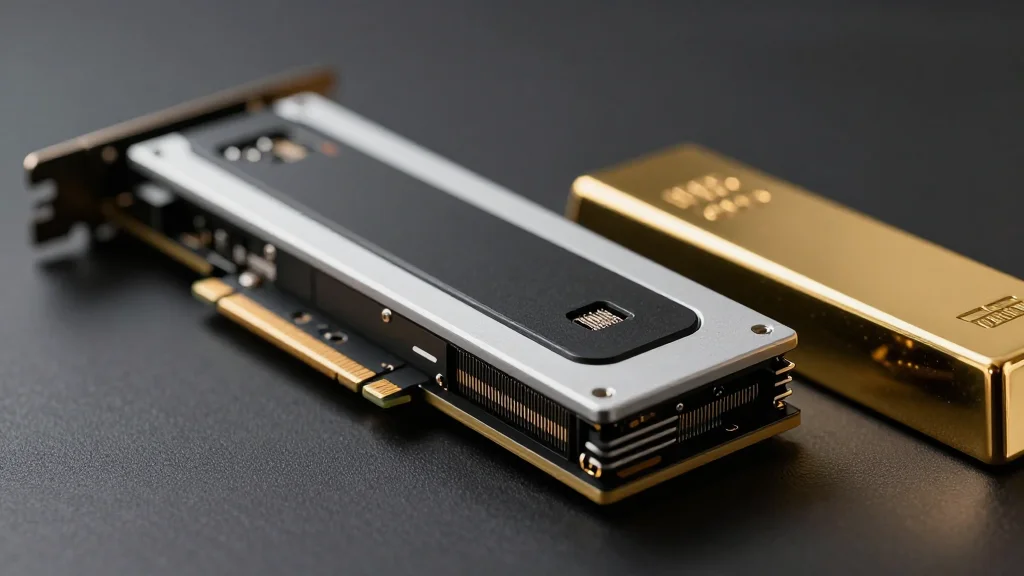
CME Group and Silicon Data Unveil First Compute Futures Tied to GPU Benchmarks

Companies Mentioned


Why It Matters
The compute futures market gives investors a concrete way to price and hedge the volatile cost of AI infrastructure, a cost that currently lacks standardized financial instruments. By turning GPU rental rates into a tradable benchmark, CME and Silicon Data are creating a new risk‑management layer for the AI ecosystem, potentially smoothing capital‑allocation decisions for cloud providers and AI startups. Beyond immediate hedging benefits, the product could catalyze deeper financialization of the AI supply chain. As more participants adopt the contracts, price discovery for GPU capacity will improve, informing procurement strategies and possibly tempering speculative price spikes that have plagued the semiconductor market in recent years.
Key Takeaways
- •CME Group and Silicon Data announced a compute futures market based on GPU benchmark indexes.
- •Contracts will allow hedging of on‑demand GPU rental rates, addressing price volatility in AI compute.
- •Terry Duffy (CME CEO) called compute the "new oil of the 21st century" and emphasized the need for transparent futures.
- •Carmen Li (Silicon Data CEO) highlighted the lack of standardized pricing in GPU markets.
- •Launch expected in Q4 2026 pending regulatory approval.
Pulse Analysis
CME’s entry into the AI compute space marks a strategic diversification beyond its traditional commodities and financial futures. The firm is leveraging its market‑making expertise to capture a nascent demand curve that is growing faster than any single hardware segment. Historically, CME has been an early mover in commoditizing emerging assets—think natural gas in the 1970s and electricity in the 1990s. Compute futures follow that playbook, turning a technology cost into a tradable risk factor.
The partnership also underscores the growing importance of data‑center economics in macro‑financial markets. As AI workloads expand, the cost of GPU capacity becomes a leading indicator of corporate spending, similar to how oil prices once signaled industrial activity. By providing a transparent price signal, compute futures could reduce the information asymmetry that currently favors large cloud operators with internal pricing models.
Looking ahead, the success of this product will hinge on regulatory clearance and the depth of liquidity that CME can attract. If the market gains traction, we may see a cascade of derivative products—options on compute futures, spread contracts linking GPU and CPU indices, and even credit instruments tied to data‑center revenue streams. Such innovation would further embed AI infrastructure into the core of global capital markets, making compute a true financial asset class.
CME Group and Silicon Data Unveil First Compute Futures Tied to GPU Benchmarks
Comments
Want to join the conversation?
Loading comments...