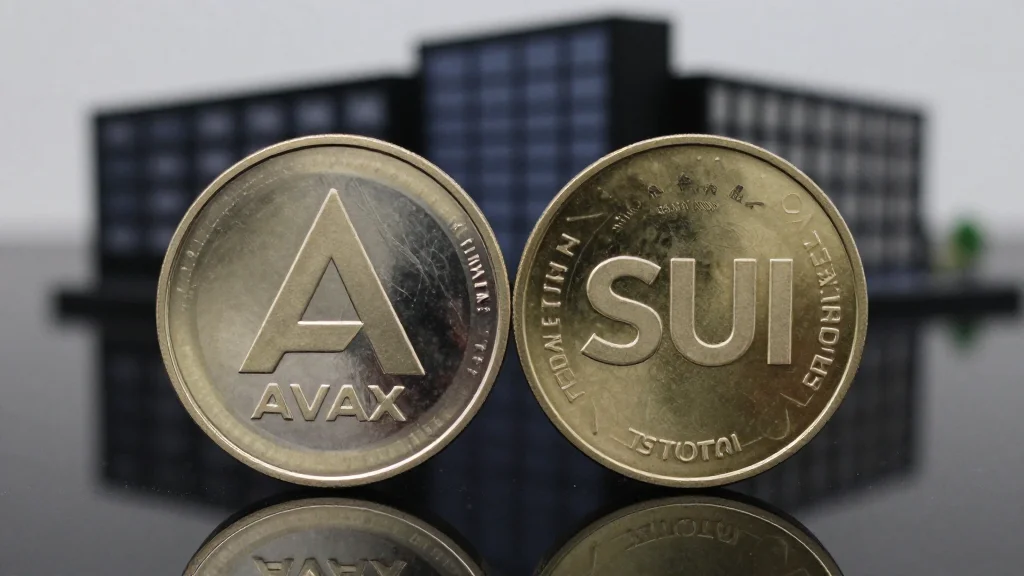
CME Launches AVAX and SUI Futures, Expanding Crypto Derivatives Portfolio

Companies Mentioned

Why It Matters
The introduction of AVAX and SUI futures gives institutional investors a regulated avenue to hedge and speculate on two fast‑growing layer‑1 blockchains, reducing reliance on unregulated perpetual swaps that carry higher counterparty risk. By offering micro‑sized contracts, CME lowers the capital barrier, enabling corporate treasuries and smaller hedge funds to access these markets without the large margin requirements of standard contracts. CME’s expansion also signals a broader shift toward mainstream acceptance of altcoins beyond Bitcoin and Ether. As more exchanges add regulated products for emerging digital assets, the overall market depth and price discovery for these tokens are likely to improve, potentially stabilizing volatility and attracting further institutional capital.
Key Takeaways
- •CME launched AVAX and SUI futures on May 29, with 24/7 trading.
- •Contracts include standard (5,000 AVAX, 50,000 SUI) and micro (500 AVAX, 5,000 SUI) sizes.
- •First trades executed between FalconX and G‑20 Group.
- •Adds to CME’s crypto suite that already includes Bitcoin, Ether, XRP, Solana, Cardano, Chainlink and Stellar.
- •CME aims to capture institutional demand for regulated altcoin exposure and improve market liquidity.
Pulse Analysis
CME’s decision to add Avalanche and Sui futures reflects a strategic bet that institutional appetite for diversified crypto exposure is moving beyond the traditional Bitcoin‑Ether duopoly. The exchange’s cleared, margin‑efficient framework offers a compelling alternative to the high‑leverage, counterparty‑heavy perpetual contracts that dominate many crypto exchanges. By introducing micro contracts, CME lowers the entry threshold, a move likely to attract corporate treasuries that have begun allocating a modest portion of their balance sheets to digital assets. This could create a virtuous cycle: increased participation drives tighter spreads, which in turn makes the contracts more attractive to a broader set of investors.
However, CME faces headwinds. Liquidity in the early days will be critical; without sufficient depth, spreads may remain wide, limiting the utility of the contracts for large‑scale hedging. Moreover, regulatory scrutiny of crypto derivatives remains intense, especially after recent SEC actions against unregistered platforms. CME’s established compliance infrastructure may mitigate some risk, but any adverse regulatory rulings could dampen the rollout of future altcoin products. Competitors like Binance and Bybit will likely respond with aggressive incentives, forcing CME to balance fee structures with the need to maintain a high‑quality, low‑risk offering.
In the longer term, the success of AVAX and SUI futures could set a template for CME to launch options on these contracts, further deepening the market. Options would provide additional risk‑management tools and could attract a new wave of institutional strategies, from delta‑neutral spreads to volatility trading. If CME can sustain liquidity and navigate the regulatory landscape, its expanded crypto derivatives suite may become a cornerstone of the institutional crypto market, shaping pricing dynamics for a broader set of digital assets.
CME Launches AVAX and SUI Futures, Expanding Crypto Derivatives Portfolio
Comments
Want to join the conversation?
Loading comments...