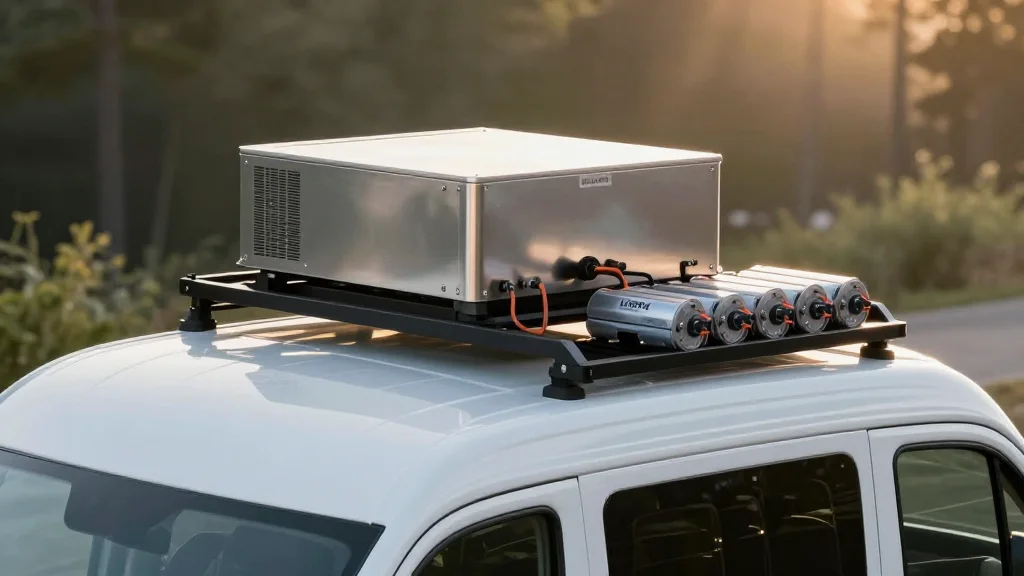
Battery-Powered Air Conditioners for Campervans: The Off-Grid Guide
Key Takeaways
- •DC rooftop AC skips inverter, improves efficiency.
- •Duty cycle varies 20‑90% based on outside temperature.
- •48 V systems cut amp draw, enable smaller wiring.
- •Dometic RTX 2000 offers best 12 V efficiency.
- •Proper insulation reduces cooling load more than larger AC.
Pulse Analysis
The off‑grid van segment has exploded as remote work and adventure travel converge, prompting builders to seek climate‑controlled interiors without sacrificing autonomy. Modern DC air‑conditioners capitalize on variable‑speed inverter compressors—originally developed for high‑efficiency home heat pumps—allowing the compressor to modulate power in real time. By running directly from the battery bank, these units avoid the 10‑15% loss associated with traditional 120 V inverters, delivering quieter operation and lower overall energy consumption, especially when paired with eco‑mode settings.
Choosing the right unit hinges on voltage architecture, cooling capacity, and feature set. For 12 V systems, the Dometic RTX 2000 stands out for its low eco‑draw per BTU, making it the most efficient option for modest vans. Builders favor the Velit 2000R for its flexible 12/24/48 V compatibility and solid BTU rating, while high‑end 48 V models like RecPro’s 13,500 BTU heat‑pump deliver the best BTU‑per‑dollar for larger, high‑roof conversions. Smart‑feature enthusiasts gravitate toward the Nomadic Helix X2, which offers app control and PWM compression, though its premium price reflects the added connectivity.
Electrical sizing remains the linchpin of a successful installation. Average draws of 25‑30 A translate to a minimum 200‑400 Ah LiFePO₄ bank, depending on usage intensity and climate. Elevating system voltage to 48 V quarters the amp draw, permitting smaller gauge wiring and reducing stress on busbars. Complementary solar arrays of 600‑800 W can offset daytime eco‑mode consumption, while a 40 A DC‑DC charger restores roughly 40 Ah per hour of driving. Proper insulation, reflective window covers, and strategic shading further diminish cooling load, ensuring that a modest temperature drop—often 10‑20 °F—delivers comfortable sleep without draining the battery.
Battery-Powered Air Conditioners for Campervans: The Off-Grid Guide
Comments
Want to join the conversation?