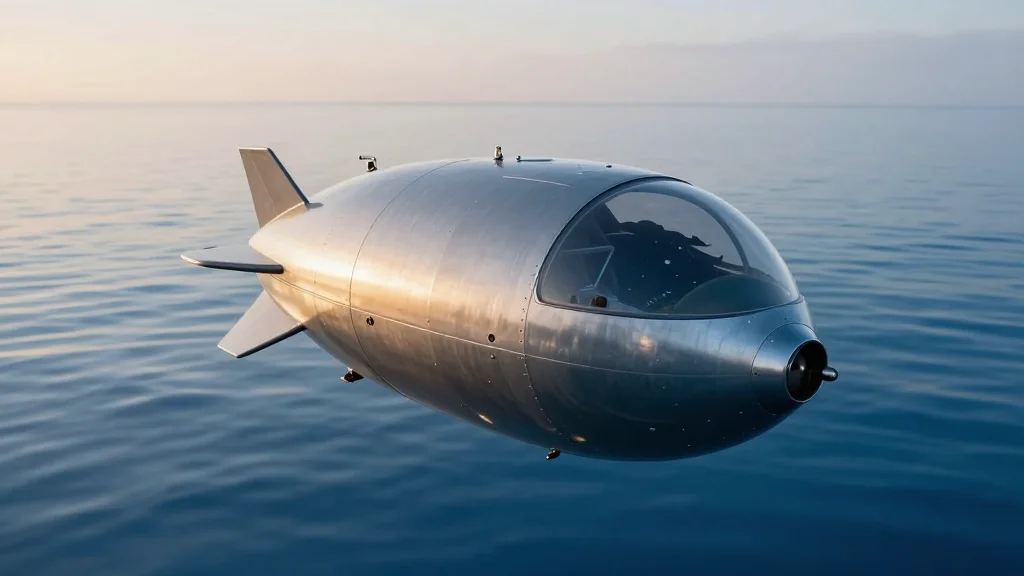
1,000 M Below the Sea: China Develops Its First Deep-Sea Tourist Submarine
Why It Matters
The project positions China as a pioneer in commercial deep‑sea tourism, opening a high‑value niche market while showcasing advanced marine engineering. It also raises industry‑wide safety standards as operators push beyond traditional shallow‑water tours.
Key Takeaways
- •China aims to launch 1,000‑m tourist sub by 2030
- •CSSRC leverages Jiaolong tech for commercial deep‑sea tours
- •Panoramic viewport offers unprecedented underwater sightseeing
- •Safety scrutiny intensifies after 2023 Titan tragedy
- •Composite buoyancy materials reduce weight and improve durability
Pulse Analysis
China’s deep‑sea tourism push reflects a broader strategic shift from pure scientific exploration to revenue‑generating marine ventures. By adapting the proven titanium pressure hull and syntactic‑foam buoyancy systems of the Jiaolong research sub, the China Ship Scientific Research Center can accelerate development while mitigating risk. The planned 1,000‑metre operating depth far exceeds the typical 200‑metre limit of existing tourist submarines, promising passengers a view of bioluminescent ecosystems and geological formations that have remained out of reach for most travelers. This technical leap could attract affluent adventure seekers and create a new premium segment within the global tourism market.
Safety remains the central narrative after the fatal Titan incident, prompting regulators and manufacturers worldwide to re‑evaluate design protocols. Chinese officials have emphasized that the new submersible will inherit the rigorous testing regimes of scientific vessels, including redundant life‑support systems and advanced hull monitoring. The inclusion of a large observation viewport introduces additional engineering challenges, such as maintaining structural integrity under 100‑plus atmospheres of pressure. By leveraging composite materials for secondary structures and buoyancy, the design aims to balance weight, corrosion resistance, and hydrodynamic efficiency, addressing many of the vulnerabilities highlighted by the Titan failure.
If successful, China could capture a sizable share of the nascent deep‑sea tourism market, which analysts estimate could reach several hundred million dollars annually within the next decade. The venture also serves as a showcase for domestic shipbuilding capabilities, reinforcing the nation’s ambition to lead in high‑tech maritime sectors. Competitors in Europe and the United States are watching closely, as the commercial viability of ultra‑deep submersibles may reshape luxury travel, marine research collaborations, and even offshore resource monitoring. The coming years will reveal whether China can translate its engineering prowess into a sustainable, safety‑first tourism model.
1,000 m below the sea: China develops its first deep-sea tourist submarine
Comments
Want to join the conversation?
Loading comments...