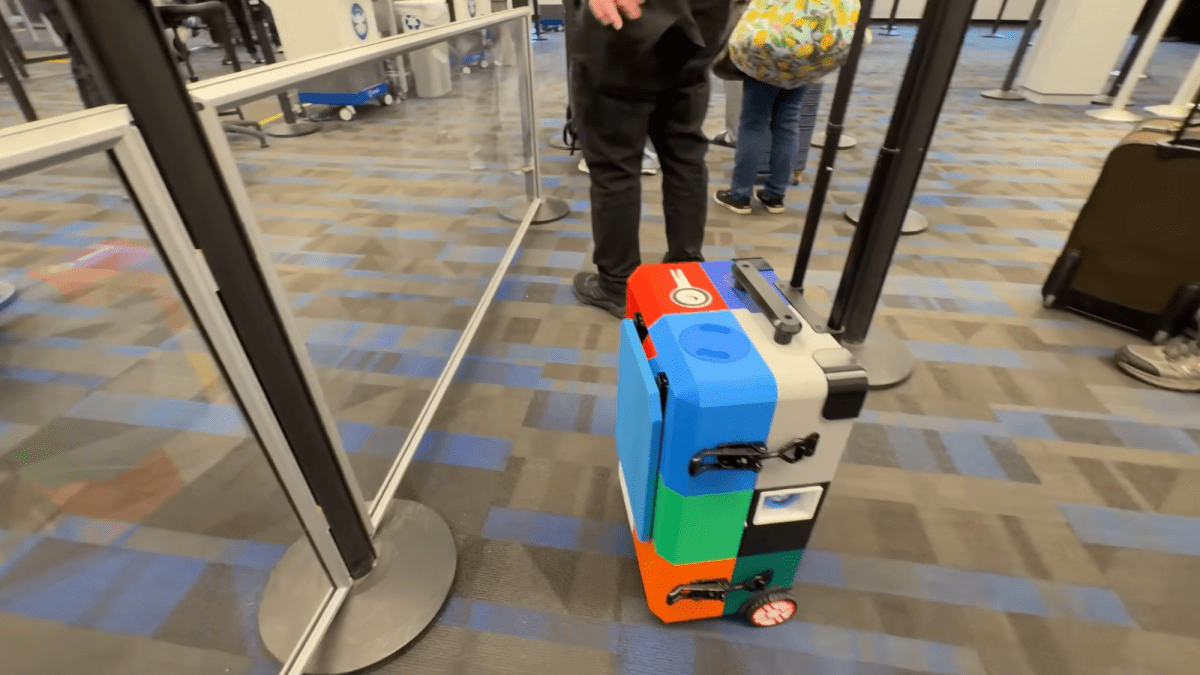
3D-Printed Suitcase Includes Foldout Table, Cup Holder, and a Secret Snack Compartment
Why It Matters
The project underscores both the creative potential of consumer‑grade 3D printing for personalized travel gear and the durability hurdles that must be overcome before such designs can compete with conventional luggage.
Key Takeaways
- •3D-printed suitcase features table, MagSafe holder, snack jar, gimbal cup holder
- •Builder used modular sections joined with metal dowels and adhesive
- •Prototype cracked and lost accessories during a short NY‑Burlington flight
- •Highlights durability challenges for custom‑made travel gear
Pulse Analysis
The rise of desktop and industrial 3D printing has opened the door for hobbyists and small creators to prototype highly customized products, and luggage is no exception. Benedetto’s design showcases how additive manufacturing can integrate niche features—like a fold‑out table or a self‑balancing cup holder—without the tooling costs that traditional manufacturers face. By combining printed polymer panels with off‑the‑shelf hardware, he achieved a sleek, tech‑laden aesthetic that would be difficult to mass‑produce through conventional injection molding.
However, the real test for any travel accessory is its ability to survive the rigors of airline handling. The suitcase’s hairline cracks and missing components after a short regional flight reveal a gap between design novelty and functional resilience. While the modular construction using metal dowels adds some structural integrity, the printed polymers lack the impact resistance of aerospace‑grade composites or reinforced thermoplastics commonly used in commercial luggage. This case highlights a broader industry challenge: translating rapid‑prototype flexibility into products that meet airline size, weight, and durability standards.
For the broader market, Benedetto’s experiment signals both opportunity and caution. Consumers increasingly demand personalized, “smart” travel solutions, and 3D printing can fulfill that niche, especially for limited‑run or bespoke items. Yet manufacturers must invest in material science—such as carbon‑filled nylon or polycarbonate blends—and rigorous testing to ensure reliability. As airlines tighten baggage regulations and travelers seek convenience, a hybrid approach that blends 3D‑printed customization with proven rugged components could become the next evolution in premium luggage design.
3D-printed suitcase includes foldout table, cup holder, and a secret snack compartment
Comments
Want to join the conversation?
Loading comments...