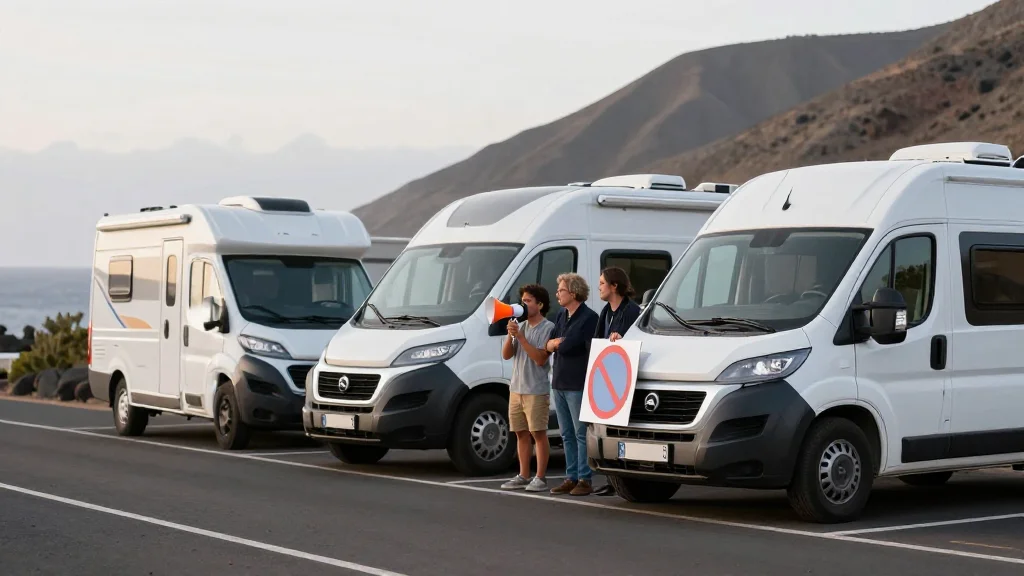
500 Motorhome Owners Protest Tenerife Over Parking Restrictions

Why It Matters
The protest spotlights a growing friction point in Spain’s outdoor‑tourism strategy: the need to reconcile rapid growth in mobile‑living vehicles with limited urban infrastructure. If Tenerife fails to provide legal parking and waste‑disposal solutions, it risks losing a lucrative segment of tourists who favor flexible, low‑impact travel. Moreover, the dispute could influence national policy, prompting the Spanish government to clarify the legal status of camper‑van parking under Article 93.2 of the General Traffic Regulation. Beyond Tenerife, the outcome may serve as a bellwether for other coastal regions across Europe where camper‑van numbers are soaring. Clear, enforceable guidelines could unlock investment in purpose‑built sites, reduce resident‑tourist tensions, and sustain the economic benefits of itinerant tourism while protecting local environments.
Key Takeaways
- •Approximately 500 motorhome owners protested in Tenerife on April 24‑25.
- •ACAT president Juan Martín cited illegal height‑restriction signs as discriminatory.
- •Only two grey‑water disposal facilities exist on the island, both in the north.
- •Tenerife hosts about 15,000 registered campervans and 12,000 annual arrivals.
- •Protest demands legal parking bays and “eco‑points” for waste disposal.
Pulse Analysis
The Tenerife protest is emblematic of a broader shift in outdoor recreation: mobile‑living tourism is moving from niche hobby to mainstream revenue driver. Historically, European municipalities have treated camper‑vans like any other vehicle, but the surge in registrations – driven by post‑pandemic flexibility and a desire for socially distanced travel – has exposed regulatory gaps. In Spain, the General Traffic Regulation provides a legal shield against arbitrary municipal bans, yet enforcement remains uneven, creating a patchwork of de‑facto restrictions that frustrate users and erode trust.
From a market perspective, the camper‑van segment contributes an estimated €150 million annually to the Canary Islands’ tourism economy, a figure that could rise sharply if infrastructure keeps pace. The ACAT’s push for “eco‑points” mirrors successful models in Germany and the Netherlands, where standardized waste‑disposal stations have become a staple of camper‑van routes. By investing in such facilities, Tenerife could not only retain existing visitors but also attract higher‑spending travelers who prioritize sustainability and convenience.
Looking ahead, the protest may catalyze legislative action at both the regional and national levels. If the Cabildo adopts a clear parking framework, it could set a template for other Spanish islands and coastal provinces facing similar pressures. Conversely, a stalemate could push owners toward legal challenges, potentially invoking EU free‑movement provisions for vehicles. Either outcome will shape the future of outdoor tourism in Spain, making the Tenerife protest a pivotal moment for policymakers, investors, and the growing community of mobile‑living enthusiasts.
500 Motorhome Owners Protest Tenerife Over Parking Restrictions
Comments
Want to join the conversation?
Loading comments...