700ft Underwater Camera Reveals Terrifying ‘Real-Life Monsters’ Off Indonesia (Video)
Why It Matters
Citizen‑driven deep‑sea imaging is revealing undocumented marine life, prompting new scientific inquiries and potential conservation actions. The data could fill critical gaps in biodiversity knowledge and inspire broader ocean‑exploration initiatives.
Key Takeaways
- •YouTuber drops night‑vision camera 700 ft off Nusa Penida
- •First wild footage of a rarely‑seen shark species captured
- •Giant stingaree observed at length comparable to human height
- •Findings highlight gaps in deep‑sea biodiversity knowledge
Pulse Analysis
The surge of affordable, high‑definition night‑vision rigs is democratizing ocean exploration, allowing independent creators to venture where research vessels rarely go. Dillarstone’s deployment off Indonesia’s Black Magic Island demonstrates how a single camera can operate for days at 700 feet, capturing clear, low‑light imagery that would have required costly submersibles a decade ago. This citizen‑science model not only expands the visual record of the abyss but also creates a repository of raw data that scientists can analyze for behavior, distribution, and morphology.
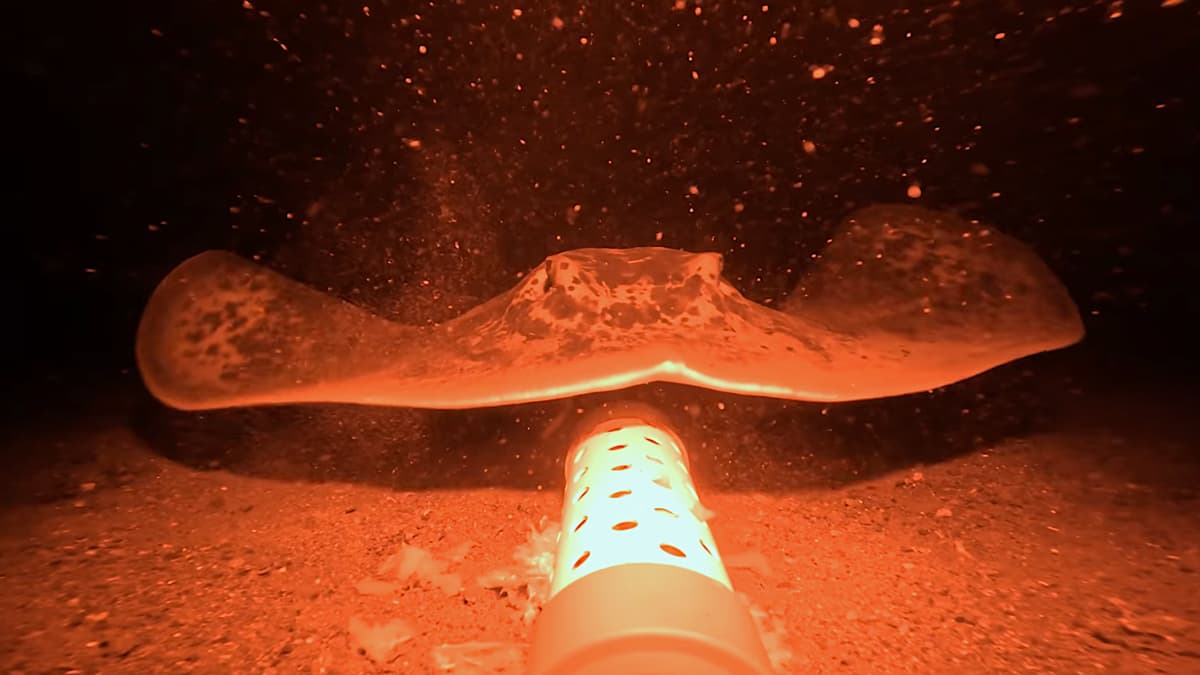
The footage reveals a surprising assemblage of predators and benthic specialists. Houndsharks and moray eels glide past the baited lens, while a massive stingaree—roughly the height of an adult human—glides majestically along the seafloor, its jaws adapted for crushing hard‑shelled prey. Notably, the video may contain the first ever in‑situ observation of a particular shark species, offering a baseline for taxonomic verification and ecological context. Such visual evidence is invaluable for confirming species’ depth ranges, feeding habits, and inter‑species interactions that are otherwise inferred from sparse trawl samples.
Beyond the spectacle, these recordings have tangible implications for marine science and policy. By exposing undocumented fauna, they highlight the urgency of protecting deep‑sea habitats from emerging threats like bottom‑trawling and mineral extraction. The data can inform biodiversity assessments, guide the designation of marine protected areas, and inspire collaborative research between hobbyists and academic institutions. As technology continues to lower the barrier to deep‑sea observation, the ocean’s hidden ecosystems may finally move from myth to measurable reality, reshaping our understanding of Earth’s largest biome.
700ft Underwater Camera Reveals Terrifying ‘Real-Life Monsters’ off Indonesia (Video)
Comments
Want to join the conversation?
Loading comments...