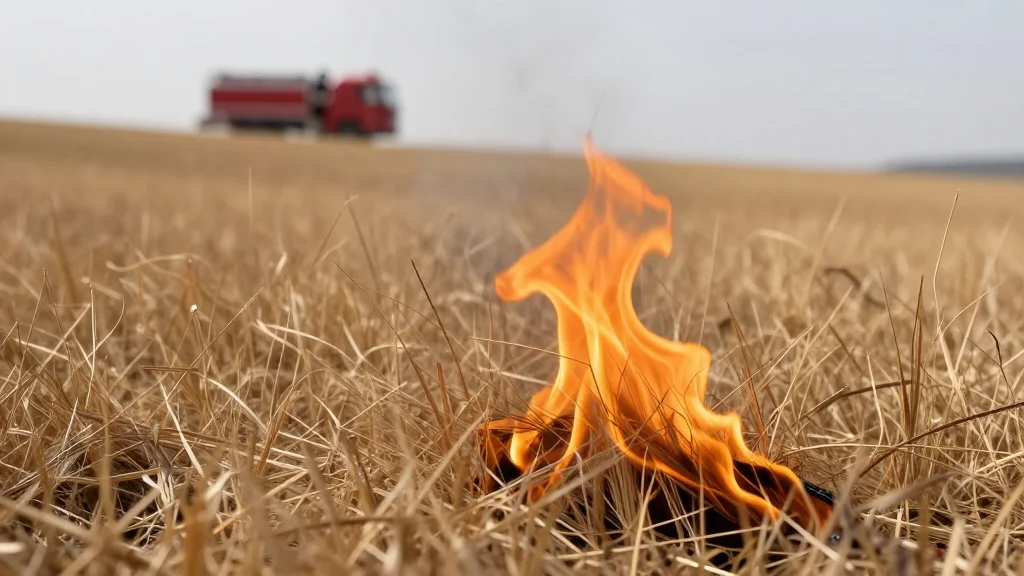
Aberdeen Grass Fire Ignites Extreme Wildfire Warning Across Scotland

Why It Matters
The Aberdeen grass fire illustrates how quickly a localized ignition can evolve into a regional emergency under climate‑induced dry conditions. For outdoor enthusiasts, land managers, and local economies that depend on Scotland's natural attractions, the incident underscores the urgent need for proactive fire risk mitigation, stricter enforcement of bans, and public awareness campaigns. Beyond immediate safety concerns, the fire contributes to broader environmental impacts, including the release of stored carbon from peat soils and the loss of biodiversity-rich habitats. These effects compound Scotland's climate goals and highlight the interconnectedness of outdoor recreation, land stewardship, and climate resilience.
Key Takeaways
- •Six fire appliances and specialist vehicles dispatched to Kincorth Hill grass fire
- •Scotland's wildfire risk upgraded to "extreme" for Friday‑Sunday
- •Dry, windy spell and dead vegetation identified as key fuel factors
- •Recent ban on campfires/barbecues in Cairngorms carries £500 fines
- •Experts warn that a single spark can cause widespread habitat loss and carbon emissions
Pulse Analysis
Scotland's recent spate of wildfire alerts signals a shift in the country's fire management paradigm. Historically, wildfires were rare in the UK, but rising temperatures and prolonged dry periods are redefining risk calculations for land agencies and emergency services. The Aberdeen incident, occurring just days after the extreme warning was issued, demonstrates that the new risk thresholds are not merely advisory—they are triggering tangible operational responses.
The enforcement of fire bans in high‑risk zones like the Cairngorms reflects a policy pivot toward preventive regulation. However, compliance remains a challenge, especially in remote areas where visitor oversight is limited. Integrating real‑time weather data with predictive modeling could enable more granular alerts, allowing authorities to allocate resources more efficiently and issue micro‑level restrictions before conditions become untenable.
Looking ahead, Scotland's outdoor sector must reconcile the dual imperatives of promoting access to its scenic landscapes while safeguarding them against fire. Investment in community education, fire‑resistant infrastructure, and rapid‑response capabilities will be essential. If the current trajectory continues, we can expect more frequent extreme warnings, prompting a reevaluation of how outdoor recreation is managed in a warming climate.
Aberdeen Grass Fire Ignites Extreme Wildfire Warning Across Scotland
Comments
Want to join the conversation?
Loading comments...