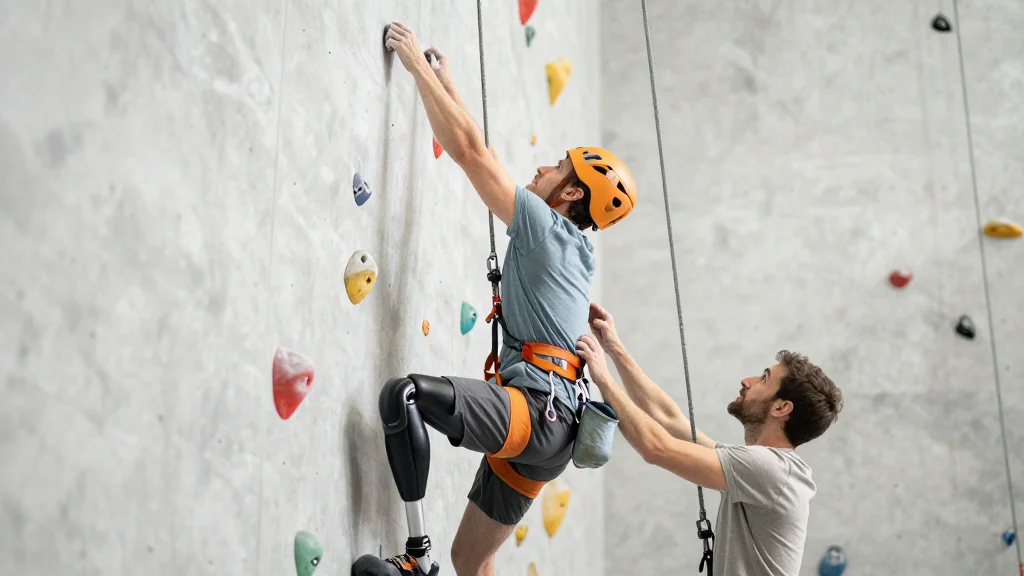
Adaptive Climbing Program Launches in Échirolles, France, with €10 Fee

Why It Matters
The Échirolles adaptive climbing launch illustrates how grassroots organizations can fill gaps left by larger sport institutions, delivering inclusive experiences directly to underserved communities. By lowering financial and logistical barriers, the program not only promotes physical health but also fosters social integration for people with disabilities, a core objective of modern outdoor recreation policy. As climate‑friendly, low‑impact activities gain popularity, adaptive climbing offers a replicable template for other towns across Europe and North America. Its success could encourage municipal budgets to allocate resources toward similar low‑cost, high‑impact projects, accelerating the mainstreaming of inclusive outdoor sports.
Key Takeaways
- •Ale Escalade opened an adaptive climbing session in Échirolles on April 26, 2026
- •Participation fee set at €10 (≈$11) per person
- •Program includes equipment loan, instruction and a small refreshment service
- •Hosted at gymnase Lionel Terray, registration via HelloAsso
- •Part of a regional trend toward adaptive outdoor sports in the Rhône‑Alps
Pulse Analysis
The adaptive climbing initiative in Échirolles arrives at a moment when inclusive outdoor recreation is shifting from niche to mainstream. Historically, adaptive sports have relied on specialized facilities and high‑cost equipment, limiting reach. By embedding the program within an existing municipal gym and charging a modest fee, Ale Escalade sidesteps the capital‑intensive model that has constrained growth elsewhere. This approach mirrors successful adaptive cycling and rowing projects that leveraged public infrastructure to achieve scale.
From a market perspective, the €10 price point positions the program competitively against private climbing gyms that charge upwards of €20 for standard sessions. The lower cost not only widens participation but also creates a pipeline for future membership in mainstream climbing clubs, potentially boosting long‑term revenue for the sector. Moreover, the program’s visibility on HelloAsso—a platform known for community fundraising—opens avenues for corporate sponsorships and grant funding, which could further reduce fees and expand capacity.
Looking forward, the key challenge will be maintaining quality instruction and safety standards as demand rises. Scaling the model will likely require formal coach certification pathways and stronger partnerships with disability advocacy groups. If Ale Escalade can navigate these operational hurdles, the Échirolles program could become a blueprint for municipalities worldwide seeking to democratize access to adventure sports while delivering measurable health and social benefits.
Adaptive Climbing Program Launches in Échirolles, France, with €10 Fee
Comments
Want to join the conversation?
Loading comments...