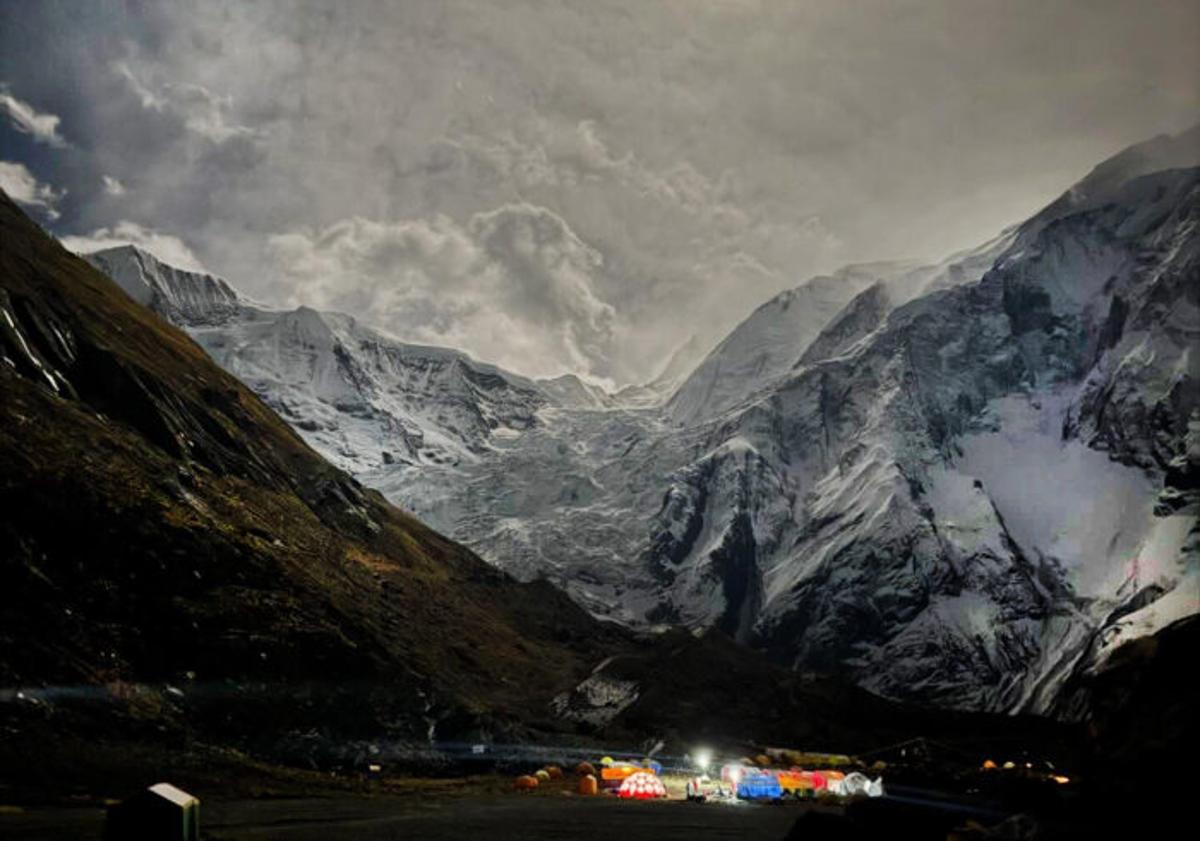
Annapurna Climbers Are Ready for the Summit, But the Weather Is Not
Why It Matters
The storm postpones potential summit successes, impacting guiding operators’ revenue and highlighting the critical role of weather forecasting in high‑altitude commercial expeditions.
Key Takeaways
- •Climbers completed final acclimatization at 6,420 m.
- •Major storm forces retreat to lower villages and base camp.
- •Fixed ropes only reach short distance above Camp 3.
- •Route condition post‑storm will dictate next summit attempt.
- •Similar high‑wind issues affect Dhaulagiri season.
Pulse Analysis
Annapurna’s 7,000‑meter ridge remains a magnet for commercial expeditions, but the window for safe summit attempts is razor‑thin. Teams that completed the second acclimatization cycle this week demonstrated the physiological readiness required for high‑altitude climbs, including night stays at Camp 3 and the placement of fixed ropes between Camp 2 and Camp 3. Yet the logistical reality of operating at 6,700 m hinges on reliable anchor points; currently, the rope system only reaches a short distance above Camp 3, meaning any post‑storm damage could force a costly re‑fixing effort before climbers can even consider a push.
The impending storm, described by guide Charles Page as “big,” has already triggered a coordinated retreat. Sherpas and clients alike are descending to the village of Tatopani or evacuating by helicopter to Pokhara, prioritizing safety over summit ambition. High‑altitude weather is notoriously volatile, and a prolonged period of heavy snowfall and winds exceeding 50 kph, as reported on neighboring Dhaulagiri, can quickly erode fixed lines and increase avalanche risk. This cautious approach reflects an industry‑wide shift toward risk‑averse decision‑making, especially for guided groups that bear liability for client safety.
For the commercial guiding sector, delayed summit windows translate directly into revenue loss and operational challenges. Companies must now factor increasingly unpredictable weather patterns into expedition calendars, invest in more robust rope‑fixing strategies, and maintain flexible staffing to accommodate sudden evacuations. The Annapurna scenario, mirrored on Dhaulagiri, underscores a broader trend: climate variability is reshaping high‑altitude tourism, compelling operators to adopt adaptive planning, enhanced forecasting tools, and diversified route options to sustain profitability while safeguarding lives.
Annapurna Climbers Are Ready for the Summit, But the Weather Is Not
Comments
Want to join the conversation?
Loading comments...