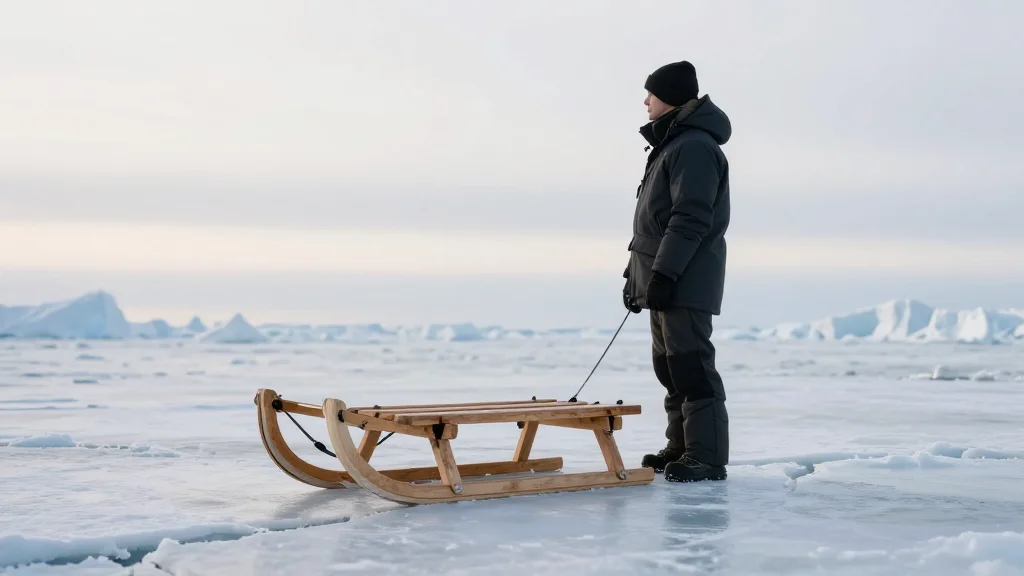
Arctic Setbacks: Two Svalbard Sled Expeditions Canceled, Greenland Trek in Doubt

Why It Matters
The abrupt cancellations and route revisions signal that Arctic expeditions are becoming increasingly vulnerable to climate variability. As sea‑ice thins and melt‑water channels open, traditional sled routes grow riskier, demanding more real‑time satellite monitoring and flexible support plans. For the adventure tourism industry, these developments could raise insurance costs and limit the season window for guided trips, while also prompting a reassessment of environmental impact and safety standards. Beyond recreation, the setbacks have scientific implications. Many expeditions double as data‑gathering missions, collecting ice core samples, wildlife observations, and climate metrics. Delays or aborts reduce the volume of on‑ground data, potentially slowing our understanding of rapid Arctic change. Policymakers and conservation groups will need to factor these operational challenges into future Arctic research funding and regulatory frameworks.
Key Takeaways
- •Two Svalbard sled expeditions canceled: Norwegian women's 600km+ trek halted on day 28; Alexander Read's 600km Spitsbergen journey faces pickup failure.
- •Mike Keen's 320km Melville Bay sled plan in Greenland is under threat due to unstable sea‑ice conditions.
- •Four‑man kite team remains 12 days into a 1,700km crossing, covering over 80km in a day despite headwinds.
- •Finnish guide Nina Teirasvuo's team reached the abandoned DYE 2 radar after 15 days, covering 220km of a 550km crossing.
- •Expeditions now rely heavily on satellite imagery and social‑media updates to adjust routes in real time.
Pulse Analysis
The recent spate of Arctic expedition setbacks underscores a broader shift from the era of predictable ice corridors to a new reality where climate volatility dictates every move. Historically, sled routes across Svalbard and Greenland were mapped based on multi‑year ice stability data, allowing explorers to plan months in advance. Today, satellite feeds reveal rapid melt‑water channel formation and open‑water leads that can appear within days, eroding the reliability of those legacy pathways.
From a market perspective, the adventure‑travel sector must now embed contingency budgets into every Arctic itinerary. Insurance premiums are likely to rise as underwriters factor in the heightened probability of rescue operations and aborted trips. Companies that can offer real‑time ice‑monitoring services—leveraging AI‑driven image analysis—will gain a competitive edge, turning what was once a niche support function into a core revenue stream.
Looking ahead, the industry faces a paradox: the very allure of the Arctic—its pristine, untouched wilderness—is diminishing as climate change makes the environment more hazardous and less accessible. This could curtail the growth of high‑risk tourism, but it may also spur a new wave of scientific‑expedition hybrids, where funding is tied to data collection rather than pure adventure. Stakeholders—from guide operators to national park authorities—must collaborate on adaptive protocols, shared satellite resources, and flexible permitting processes to ensure that Arctic exploration remains both safe and sustainable in an era of rapid environmental change.
Arctic Setbacks: Two Svalbard Sled Expeditions Canceled, Greenland Trek in Doubt
Comments
Want to join the conversation?
Loading comments...