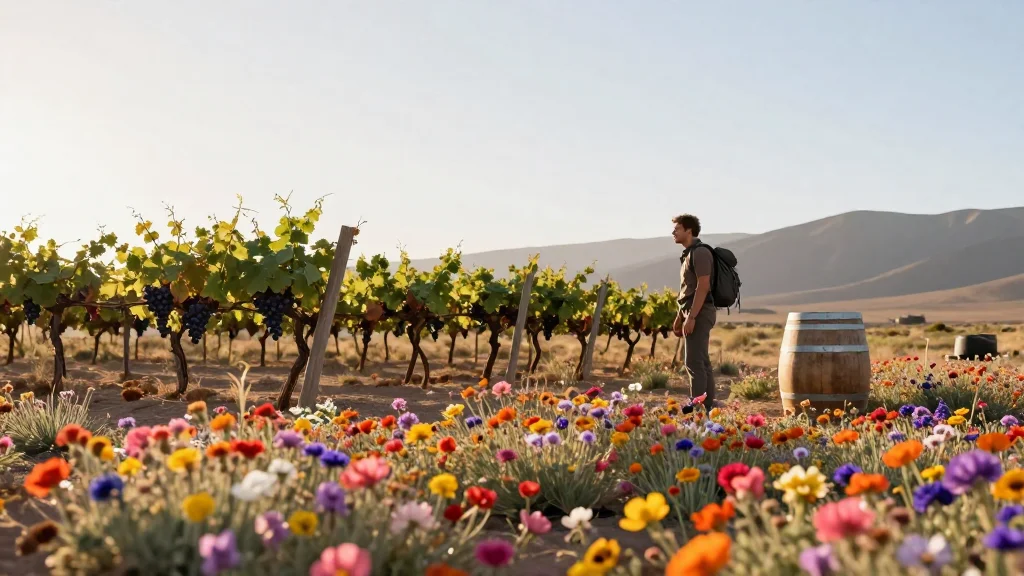
Atacama’s New Desert Bloom Park Lures Eco‑Adventurers to Super‑Bloom Trails and Sun Wine

Why It Matters
The emergence of Desierto Florido National Park as a destination for super‑bloom trekking and desert viticulture signals a shift toward eco‑centric tourism in one of the planet’s most extreme environments. By channeling visitor interest into low‑impact activities, the region can diversify its economy away from mining, preserve indigenous cultural practices, and protect a fragile biome that supports unique flora and fauna. The success—or failure—of this model will inform how other arid regions balance conservation with community livelihoods. Moreover, the park’s approach offers a template for managing sudden natural spectacles, such as superblooms, that can attract global media attention. Implementing visitor limits, community‑led guiding, and revenue‑sharing mechanisms could become best practices for protecting sensitive ecosystems while still delivering economic benefits to remote populations.
Key Takeaways
- •Desierto Florido National Park spans 220 sq mi and was designated in 2023.
- •Super‑bloom events occurred in 2022 and 2025, featuring over 200 flower species.
- •Less than 2 % of foreign tourists to the Atacama reach the southern region.
- •Local tour operator Alaya provides guided, low‑impact hikes and cultural tours.
- •Indigenous entrepreneur Paula Carvajal Bórquez advocates for respectful, small‑scale tourism.
Pulse Analysis
Chile’s push to market the Atacama’s super‑bloom and sun‑wine experiences reflects a broader trend of turning climate‑driven natural events into sustainable tourism assets. Historically, the Atacama’s fame has hinged on iconic sites like the Valley of the Moon, which now suffer from overtourism and infrastructure strain. By spotlighting a lesser‑known, protected area, the government and local operators are attempting to redistribute visitor pressure and generate income in communities that have been sidelined by the mining boom.
The strategy hinges on two interlocking forces: the rarity of the superbloom, which creates a sense of urgency and exclusivity, and the novelty of desert‑grown wine, which taps into global consumer curiosity for terroir‑driven products. Both appeal to affluent, experience‑seeking travelers who are willing to pay a premium for authenticity and environmental stewardship. If the park can enforce visitor caps and maintain high guide standards, it could become a benchmark for other fragile landscapes seeking to monetize natural spectacles without degrading them.
However, the model is not without risk. The same media coverage that draws attention can quickly swell demand beyond the capacity of small‑scale operators, leading to the very over‑tourism the community seeks to avoid. Continuous monitoring, adaptive management, and transparent revenue sharing will be essential to keep the ecosystem intact and the local economy resilient. The next super‑bloom season will be a litmus test for whether the Atacama can sustain this delicate equilibrium.
Atacama’s New Desert Bloom Park Lures Eco‑Adventurers to Super‑Bloom Trails and Sun Wine
Comments
Want to join the conversation?
Loading comments...