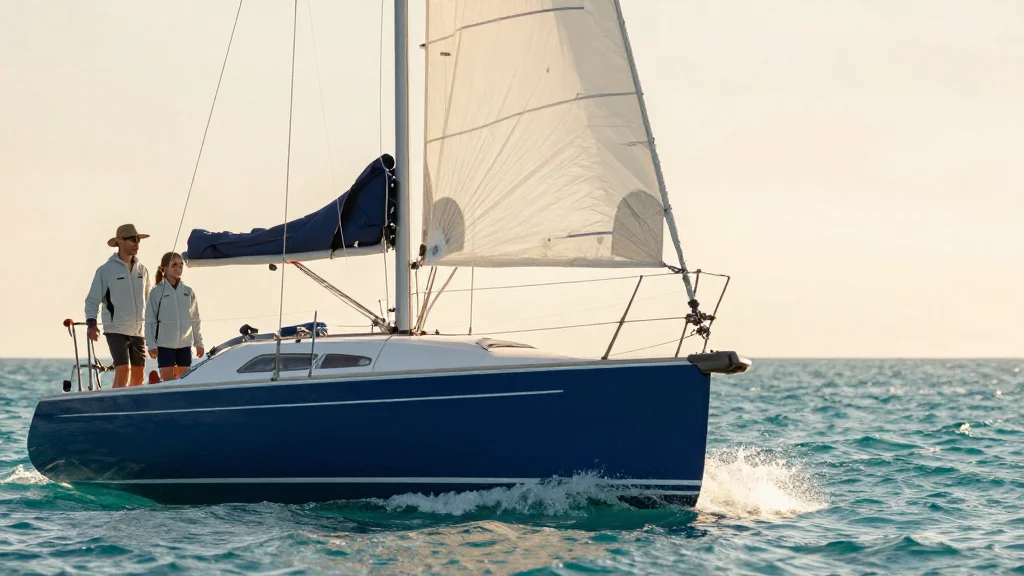
Australian Father and Daughter Finish 18,000‑Mile Global Sail After Cancer Diagnosis

Why It Matters
The successful completion of this family‑driven circumnavigation challenges the perception that long‑haul offshore sailing is solely the domain of seasoned solo professionals. It demonstrates that intergenerational teamwork, combined with modern medical support, can expand the demographic of sailors willing to attempt multi‑year voyages. This could spur a wave of similar projects, encouraging tourism operators, sailing schools, and equipment manufacturers to develop products and services tailored to family crews. Additionally, the voyage highlights the importance of mental health strategies on extended trips. Freya’s coping mechanisms—crocheting, movies, and structured personal space—provide a practical blueprint for managing isolation and cabin fever, issues that have become more visible in the broader adventure‑travel community.
Key Takeaways
- •Rob and Freya Donald logged 18,000 nautical miles over 15 months, finishing in Penzance, Cornwall.
- •Rob was diagnosed with prostate cancer in Cape Town and underwent single‑port robotic surgery before resuming the voyage.
- •The duo survived a tiger‑shark encounter that stole half of a yellowfin tuna they had caught.
- •Freya, 19, kept morale high by crocheting hats and watching movies, describing the trip as "weird" but unforgettable.
- •Their journey showcases the viability of historic wooden yachts for modern, extreme offshore sailing.
Pulse Analysis
The Donalds’ expedition arrives at a moment when adventure sailing is undergoing a cultural shift. Historically, multi‑year circumnavigations were the preserve of seasoned soloists or well‑funded expeditions. Today, the convergence of affordable high‑performance navigation tools, telemedicine, and a growing appetite for authentic, family‑centric experiences is democratizing the arena. The Donalds leveraged a 1937 wooden yacht, proving that heritage vessels can still meet the demands of modern oceanic routes when paired with meticulous upkeep and a clear risk‑management plan.
From a market perspective, their story is likely to influence three key segments. First, yacht manufacturers may see renewed interest in retro‑styled builds that combine classic aesthetics with contemporary safety features. Second, medical technology firms could market rapid‑deployment surgical solutions as essential gear for remote adventurers, turning a once‑rare anecdote into a selling point. Third, the adventure‑travel industry may develop curated family sailing programs, offering training, route planning, and support networks that mirror the Donalds’ self‑sufficient yet connected approach.
Looking ahead, the narrative sets a precedent for integrating scientific data collection into personal voyages. As climate change intensifies, sailors like the Donalds are uniquely positioned to gather oceanographic observations from under‑sampled regions. If they or future families partner with research institutions, the personal triumph of a father‑daughter duo could translate into valuable contributions to global climate monitoring, further blurring the line between adventure and citizen science.
Australian Father and Daughter Finish 18,000‑Mile Global Sail After Cancer Diagnosis
Comments
Want to join the conversation?
Loading comments...