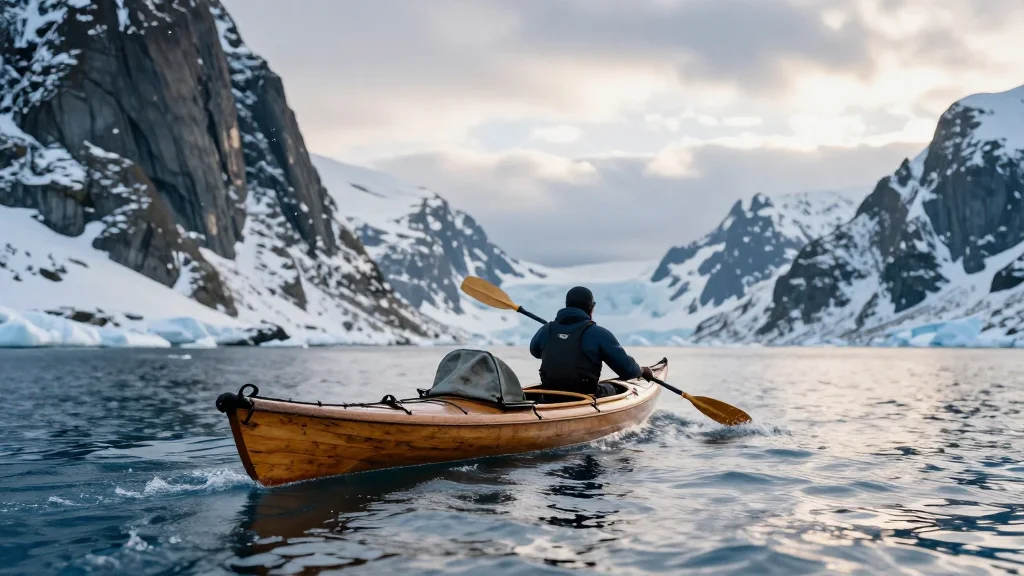
Back To Nordkapp: Retracing The Expedition That Launched The Modern Sea Kayak
Why It Matters
The retrace underscores how the Nordkapp’s design innovations still shape contemporary sea‑kayak performance and safety, while reminding adventurers that meticulous planning is essential despite technological advances.
Key Takeaways
- •1975 Nordkapp trip covered 500 miles along Norway’s coast
- •Frank Goodman’s Nordkapp kayak introduced bulkheads and watertight hatches
- •Priddis and crew paddled 231 miles in vintage Nordkapps this year
- •Force 9 winds forced survival paddling, highlighting weather risks
- •Modern gear didn’t prevent challenges; planning remains crucial for expeditions
Pulse Analysis
The 1975 Nordkapp expedition is a cornerstone of sea‑kayak history. When British paddlers set out to chart Norway’s rugged coastline, they lacked suitable vessels, prompting Valley Canoe founder Frank Goodman to engineer a purpose‑built kayak. His inclusion of bulkheads, watertight hatches, and a strap‑on skeg created a robust platform that would become the blueprint for modern sea kayaks, influencing designs from recreational touring to high‑performance expedition models.
Fast‑forward half a century, David Priddis, a seasoned kayak guide, and his companions embarked on a 231‑mile retracing of the original route, using three vintage Nordkapp variants. Their journey revealed subtle evolutions—cockpit shapes shifting from ocean to keyhole designs and hull volumes expanding to accommodate longer provisions—yet the core hull remained remarkably consistent. Even with satellite weather forecasts and advanced dry‑suits, the crew encountered Force 9 winds and treacherous seas, illustrating that technology cannot fully mitigate nature’s volatility.
For the broader paddling community, the expedition serves as both inspiration and caution. The Nordkapp’s proven durability continues to attract adventurers tackling remote coastlines, from Paul Caffyn’s Australian circumnavigation to polar voyages. Prospective explorers should prioritize comprehensive weather analysis, seasonal timing, and gear redundancy, mirroring the meticulous planning emphasized by Priddis. As sea‑kayak design evolves, the Nordkapp legacy reminds manufacturers and paddlers alike that timeless engineering, combined with informed preparation, remains the key to safe and memorable voyages.
Back To Nordkapp: Retracing The Expedition That Launched The Modern Sea Kayak
Comments
Want to join the conversation?
Loading comments...