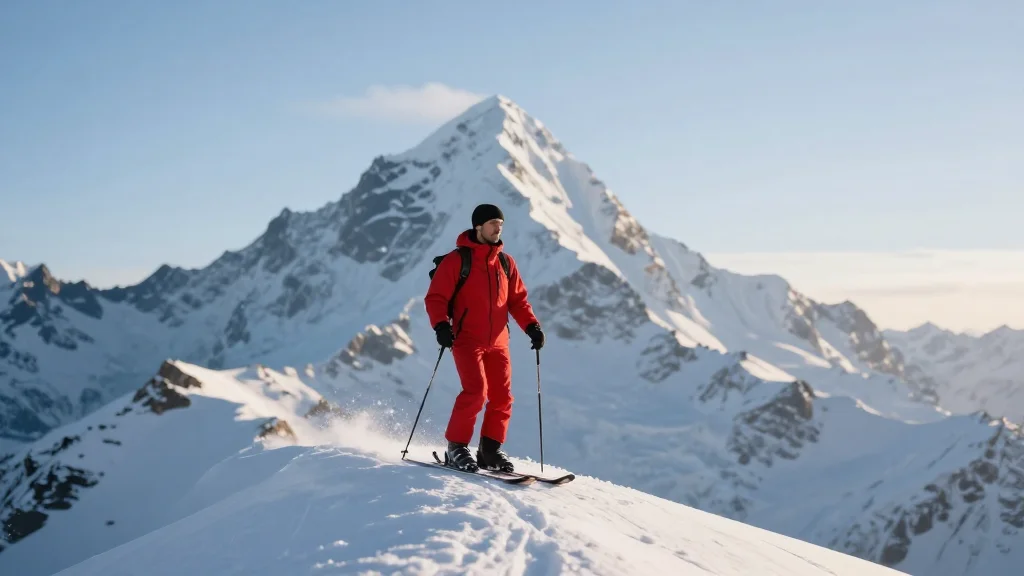
Bartek Ziemski Completes First Unroped, No‑Oxygen Ski Descent of Lhotse

Why It Matters
Ziemski’s unroped, no‑oxygen ski descent of Lhotse signals a shift in the adventure‑sports community toward ultra‑light, self‑reliant expeditions. By proving that a climber can safely navigate one of the world’s most demanding peaks without the traditional safety net of fixed ropes, the feat may encourage a new generation of mountaineers to prioritize speed, minimal gear, and personal skill over large support teams. This could reduce the environmental footprint of high‑altitude tourism while also prompting regulators and guiding companies to revisit safety protocols for extreme ski descents. At the same time, the achievement underscores the growing tension between pioneering ambition and the inherent dangers of high‑altitude environments. As more athletes attempt similar feats, the industry will need to balance the allure of record‑breaking performance with responsible risk mitigation, potentially leading to new standards for training, equipment certification, and emergency response on 8,000‑meter peaks.
Key Takeaways
- •Bartek Ziemski summited Lhotse without supplemental oxygen or fixed ropes on May 14, 2026.
- •He completed a full ski descent, becoming the first to do so unroped and oxygen‑free on Lhotse.
- •The ascent began from Camp 4 at 1 a.m.; summit reached at 12:14 p.m.; descent finished in under two hours.
- •Ziemski used GPX navigation and reported hard snow and minimal ice on the upper sections.
- •The feat may inspire a new wave of self‑supported high‑altitude ski expeditions.
Pulse Analysis
Ziemski’s Lhotse ski run arrives at a moment when the outdoor adventure market is increasingly fragmented between commercialized, Sherpa‑heavy expeditions and a growing cohort of ultra‑light, self‑sufficient climbers. Historically, the highest‑altitude ski descents have relied on extensive logistical support—fixed ropes, supplemental oxygen, and large guide teams—to mitigate the extreme risks of the Himalayas. Ziemski’s decision to forgo both ropes and oxygen reflects a broader cultural shift toward minimalist ethics, echoing trends seen in ultra‑marathon running and backcountry skiing where athletes prioritize speed and autonomy.
From a commercial perspective, the achievement could reshape how expedition operators market high‑altitude experiences. Companies may begin offering “light‑support” packages that provide essential safety gear and navigation tools while encouraging clients to take on more of the climbing and skiing themselves. This model could lower costs, reduce the carbon footprint of large support crews, and appeal to a younger, performance‑driven demographic. However, it also raises liability concerns; insurers and regulators will likely scrutinize the safety record of such self‑reliant attempts more closely.
Looking ahead, the key question is whether Ziemski’s success will be an outlier or the harbinger of a new norm. If more elite athletes replicate his approach, we could see a rapid evolution in equipment design—lighter, high‑altitude‑optimized skis, boots, and oxygen‑free breathing systems—alongside a cultural redefinition of what constitutes acceptable risk in the world’s most unforgiving mountains.
Bartek Ziemski Completes First Unroped, No‑Oxygen Ski Descent of Lhotse
Comments
Want to join the conversation?
Loading comments...