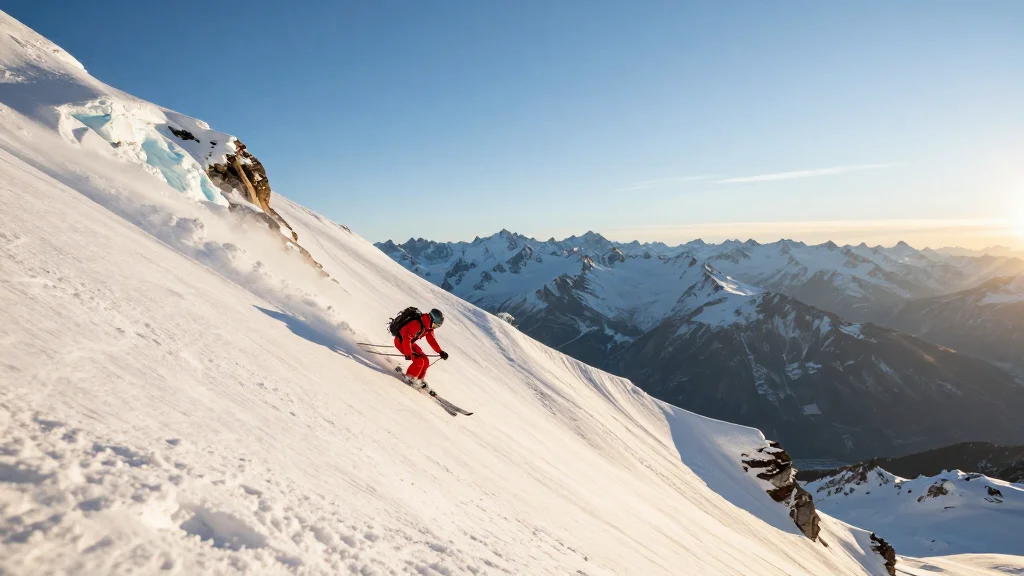
British Alpinist Fay Manners Skis World‑first Route on Peru’s Mt Ranrapalca

Why It Matters
The first ski descent of Mt Ranrapalca proves that even the most forbidding glacial terrain can be accessed with careful preparation, potentially reshaping the adventure‑tourism landscape in the Andes. It also raises awareness of how climate change is altering high‑altitude routes, forcing mountaineers to adapt quickly to evolving conditions. Finally, the achievement showcases the increasing presence of women in elite ski mountaineering, challenging long‑standing gender norms in extreme sports. For the broader outdoors industry, the feat signals new market opportunities for guided high‑altitude ski trips, equipment manufacturers targeting extreme conditions, and data‑driven route planning services. As more athletes like Manners bring analytical expertise to the field, the sector may see a surge in scientifically informed expedition design, improving safety and expanding the range of viable ski lines.
Key Takeaways
- •Fay Manners and Marco Malcangi completed the first ski descent of Mt Ranrapalca’s southwest ridge.
- •The route, named Acceso Momentáneo, had not been climbed since 1980 and was considered inaccessible for over 40 years.
- •Local guide Cesar Vicuña confirmed the line’s history and previous failed attempts.
- •The descent involved trail‑breaking, crevasse jumps, a 30‑metre ski‑abseil, and continuous navigation of unstable glacier terrain.
- •The achievement may open new high‑altitude ski tourism opportunities in the Andes.
Pulse Analysis
Manners’ and Malcangi’s breakthrough reflects a convergence of technical skill, data‑driven planning, and a willingness to push boundaries in a rapidly changing environment. Historically, the Andes have been less explored for ski mountaineering compared with the European Alps, largely due to logistical challenges and unpredictable glacier behavior. This successful descent could act as a catalyst, encouraging operators to develop guided packages that blend cultural immersion with extreme skiing, provided they invest in rigorous safety training and real‑time glacier monitoring.
From a market perspective, equipment manufacturers stand to benefit from demand for lightweight, high‑performance gear capable of withstanding crevasse jumps and steep abseils at altitude. Companies that can integrate sensor technology—such as avalanche transceivers linked to satellite data—into their product lines may capture a niche segment of elite athletes seeking an edge in safety and performance.
Looking ahead, the sustainability of such routes will hinge on climate trends. As Andean glaciers recede, some lines may become more accessible, while others could disappear entirely. Stakeholders—guides, insurers, and tourism boards—must collaborate on adaptive strategies, including dynamic risk assessments and flexible itinerary planning. Manners’ achievement not only adds a new chapter to mountaineering history but also underscores the urgency of integrating climate resilience into the future of high‑altitude adventure sports.
British alpinist Fay Manners skis world‑first route on Peru’s Mt Ranrapalca
Comments
Want to join the conversation?
Loading comments...