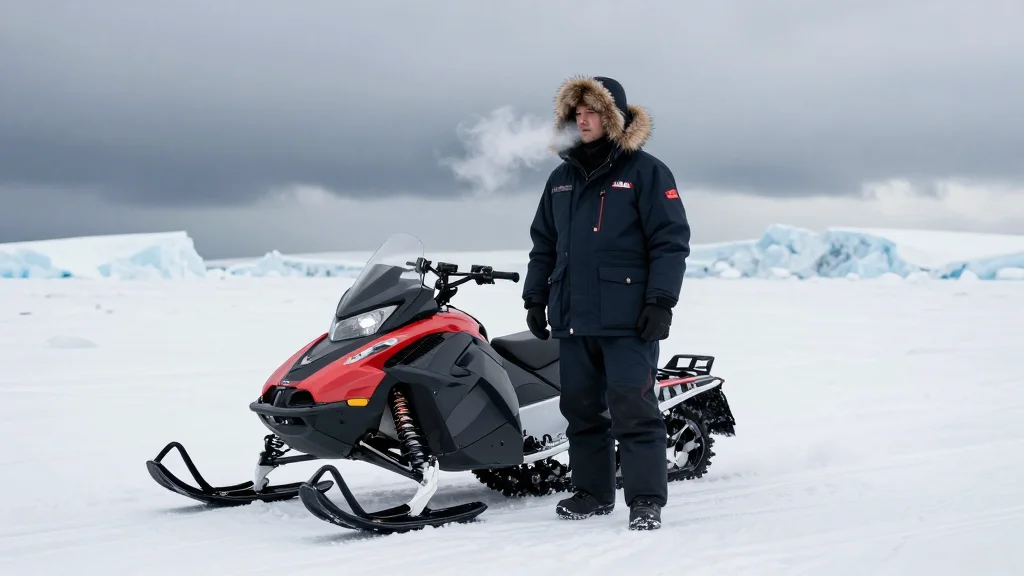
Canadian Rangers Endure ‘Nightmare’ Storm on Arctic Snowmobile Trek During Operation Nanook

Why It Matters
The Rangers’ ordeal underscores the growing importance of indigenous‑led, low‑tech capabilities in a region where climate change is reshaping the strategic calculus. As nations vie for access to new shipping lanes and resource deposits, the ability to sustain operations in environments that defeat high‑tech systems becomes a decisive factor. Canada’s demonstration of a functional, community‑based security model not only bolsters its own sovereignty claims but also offers a template for allies seeking to project presence without the expense of permanent bases. Furthermore, the storm highlighted gaps in current equipment and communication infrastructure, prompting a reassessment of procurement and training priorities. Addressing these gaps will be critical as Operation Nanook transitions to a biennial, multinational format, ensuring that Canada and its partners can respond swiftly to both security threats and humanitarian emergencies in the Arctic.
Key Takeaways
- •Canadian Rangers faced a severe blizzard during a 150‑km snowmobile trek on Feb. 18 as part of Operation Nanook.
- •Brig‑Gen. Daniel Rivière emphasized the Rangers’ role as a backbone in Canada’s three‑pillar Arctic security system.
- •Denmark sent a delegation to observe the Rangers, signaling interest in adopting the Canadian model for Greenland.
- •Operation Nanook will become a biennial multinational exercise starting in 2027, with expanded capabilities planned by 2030.
- •The storm exposed equipment and communication challenges that will shape future Arctic readiness investments.
Pulse Analysis
Operation Nanook’s latest iteration reveals a pivot in Arctic strategy from sheer force projection to resilience through community integration. The Canadian Rangers, equipped with modest snowmobiles and deep local knowledge, proved that low‑tech solutions can outmatch high‑tech systems when infrastructure is absent. This lesson resonates beyond Canada; NATO’s Arctic Sentry initiative is likely to incorporate similar models, blending indigenous expertise with advanced surveillance to cover vast, under‑populated zones.
Historically, Arctic militaries have relied on large bases and heavy equipment, a model increasingly unsustainable as melting ice erodes traditional supply lines. Canada’s emphasis on a decentralized, partnership‑driven approach could set a new standard, prompting other Arctic states to invest in training and recruitment of local populations rather than solely expanding hardware. The Danish delegation’s interest validates this shift, suggesting that the Canadian blueprint may become a reference point for Greenland’s defense planning.
Looking ahead, the upcoming 2027 multinational version of Operation Nanook will test the scalability of this model. Success will depend on addressing the logistical shortcomings exposed by the storm—particularly vehicle reliability on hidden water and robust, low‑bandwidth communications. If Canada can resolve these issues, it will not only reinforce its sovereignty but also position itself as the de‑facto coordinator of a collaborative Arctic security network, shaping the geopolitical balance in the High North for the next decade.
Canadian Rangers Endure ‘Nightmare’ Storm on Arctic Snowmobile Trek During Operation Nanook
Comments
Want to join the conversation?
Loading comments...