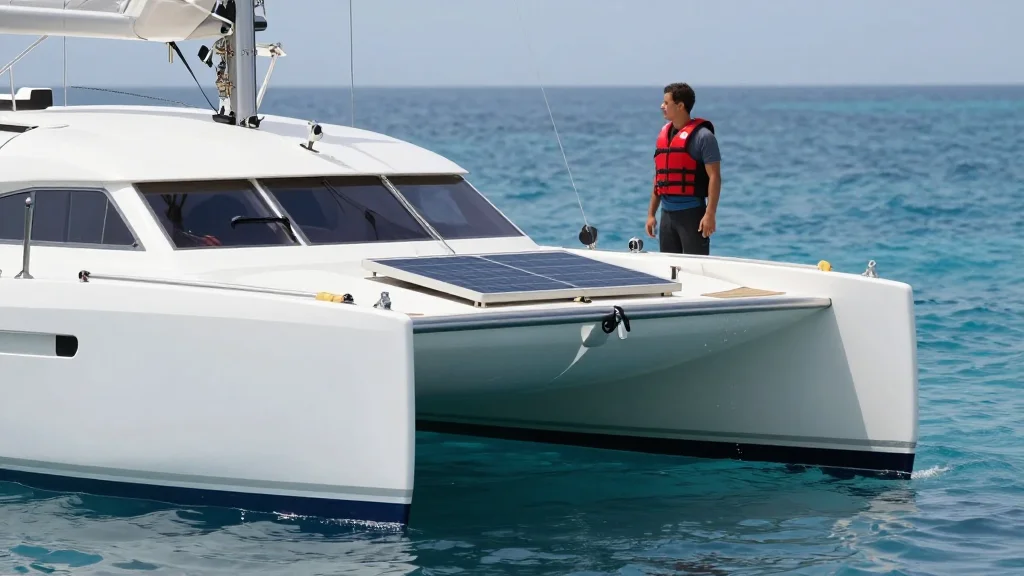
Chris Bertish to Sail Cabin‑Less Catamaran Solo Across Pacific in Record‑Setting TransCat Expedition

Why It Matters
The TransCat Expedition sits at the intersection of extreme sports, renewable‑energy technology, and ocean advocacy. By attempting a solo, cabin‑less crossing powered only by wind and solar, Bertish challenges conventional notions of safety and comfort in open‑ocean sailing, potentially expanding the design space for lightweight, sustainable vessels. The high‑profile nature of the attempt also amplifies messages about ocean stewardship, leveraging adventure storytelling to engage a global audience in climate and conservation dialogues. Beyond the immediate record‑setting ambition, the expedition could influence funding models for adventure projects. Sponsors may increasingly prioritize initiatives that combine measurable environmental impact with compelling narratives, reshaping how extreme‑sport athletes secure resources and how audiences consume adventure content.
Key Takeaways
- •Chris Bertish will launch the TransCat Expedition from San Diego in mid‑June 2026
- •The 20‑foot Wildcat catamaran has no cabin, kitchen, or toilet, relying solely on wind and solar power
- •The planned route covers ~2,600 nautical miles to Oahu, Hawaii, in 23‑28 days
- •Bertish’s 2025 attempt was aborted due to electronics and safety issues, prompting a year of redesign and testing
- •The expedition aims to raise awareness for ocean stewardship and inspire sustainable exploration
Pulse Analysis
Chris Bertish’s TransCat Expedition reflects a broader shift in the adventure community toward sustainability and storytelling as core components of high‑risk endeavors. Historically, record‑seeking voyages have emphasized sheer human endurance and technological bravado, often with limited attention to environmental footprints. Bertish’s decision to forgo a cabin and rely exclusively on renewable energy signals a new paradigm where the challenge itself becomes a platform for advocacy.
From a market perspective, a successful crossing could catalyze demand for production beach catamarans equipped for offshore use, nudging manufacturers to invest in sturdier hulls, advanced solar arrays, and autonomous safety systems. This would blur the line between recreational beach craft and serious offshore vessels, potentially opening new revenue streams for niche boatbuilders. Moreover, the expedition’s integrated digital engagement strategy—live tracking, real‑time updates, and educational outreach—demonstrates a scalable model for monetizing adventure content through sponsorships, merchandise, and direct audience contributions.
Looking ahead, the expedition’s outcome will likely influence how sponsors evaluate risk versus impact. A triumphant crossing would validate the commercial viability of eco‑focused expeditions, encouraging brands to align with athletes who can deliver both performance and purpose. Conversely, any setbacks could prompt a reassessment of safety protocols for ultra‑light, cabin‑less vessels, reinforcing the need for robust contingency planning. In either scenario, Bertish’s venture is poised to leave a lasting imprint on the intersection of extreme sport, sustainable technology, and environmental advocacy.
Chris Bertish to Sail Cabin‑Less Catamaran Solo Across Pacific in Record‑Setting TransCat Expedition
Comments
Want to join the conversation?
Loading comments...