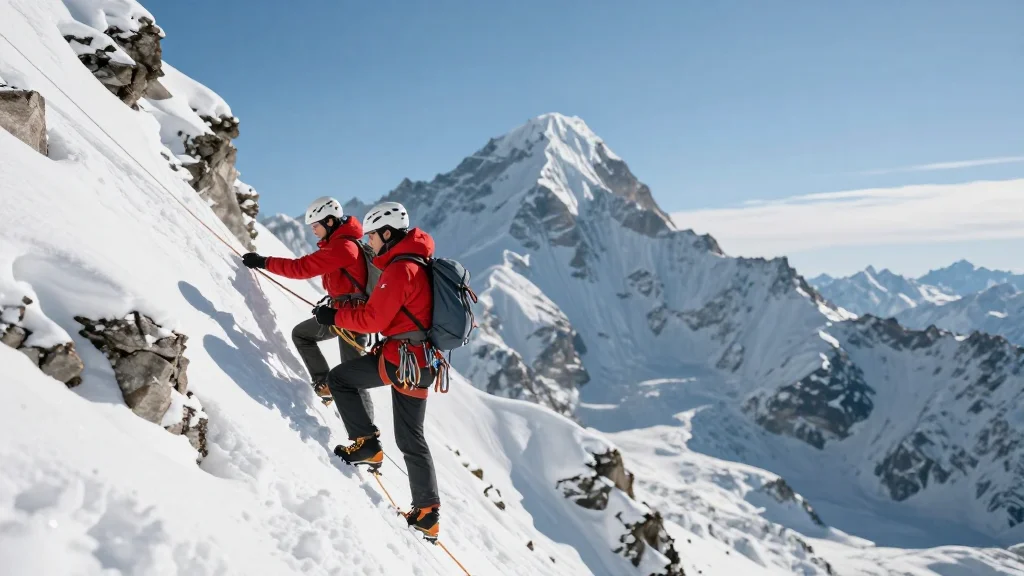
Colin Haley and David Goettler Open One-Day Alpine Route on Langshisa Ri, Nepal

Why It Matters
The new Langshisa Ri route demonstrates that high‑altitude alpine climbing can be both technically demanding and time‑efficient, potentially reshaping how expeditions are planned in the Himalayas. By proving a 1,000‑meter face can be climbed in a single day, Haley and Goettler lower the logistical and financial barriers for experienced alpinists, encouraging a shift toward lighter, faster ascents that reduce environmental impact and exposure to altitude‑related risks. If the route gains popularity, it could stimulate economic activity in the Langtang Valley, benefiting local lodges like the one in Kyanjin Gompa while prompting Nepal’s tourism authorities to refine permit policies for sub‑6,500‑meter peaks. The climb also adds to the growing body of alpine‑style achievements in the region, positioning Nepal as a premier destination for modern, fast‑and‑light mountaineering.
Key Takeaways
- •Colin Haley and David Goettler completed a new 1,000‑meter alpine route on Langshisa Ri’s north face on May 12.
- •The ascent was finished in a single day, contrasting with the 2014 six‑bivouac climb.
- •Route starts from Kyanjin Gompa, a village easily accessed from Kathmandu.
- •Technical sections include up to 75° snow/ice slopes and an M5 mixed crux.
- •Lower permit costs for sub‑6,500‑meter peaks make the route financially attractive.
Pulse Analysis
The Langshisa Ri ascent signals a broader trend toward alpine‑style, single‑day climbs in the high Himalaya, a niche previously dominated by multi‑day expeditions. Historically, Himalayan ascents have emphasized logistical depth—porters, fixed ropes, and extended bivouacs—to mitigate altitude exposure. Haley and Goettler’s success leverages advances in lightweight gear, high‑altitude conditioning, and precise weather forecasting, allowing climbers to compress days on the mountain while maintaining safety.
From a market perspective, the route could catalyze a new segment of premium, fast‑track expeditions that sit between traditional trekking and full‑scale Himalayan expeditions. Operators may develop specialized packages that include high‑altitude acclimatization, guided alpine techniques, and rapid descent logistics. This could diversify revenue streams for Nepal’s tourism sector, especially as the country seeks to balance visitor growth with environmental stewardship.
Looking forward, the climb may inspire a cascade of similar projects across the Langtang and adjacent ranges, where accessible valleys and moderate elevations present fertile ground for fast, technical routes. The challenge for regulators will be to adapt permit frameworks and conservation policies to accommodate increased traffic on previously low‑impact faces, ensuring that the allure of rapid alpine ascents does not compromise the fragile high‑altitude ecosystems.
Colin Haley and David Goettler Open One-Day Alpine Route on Langshisa Ri, Nepal
Comments
Want to join the conversation?
Loading comments...