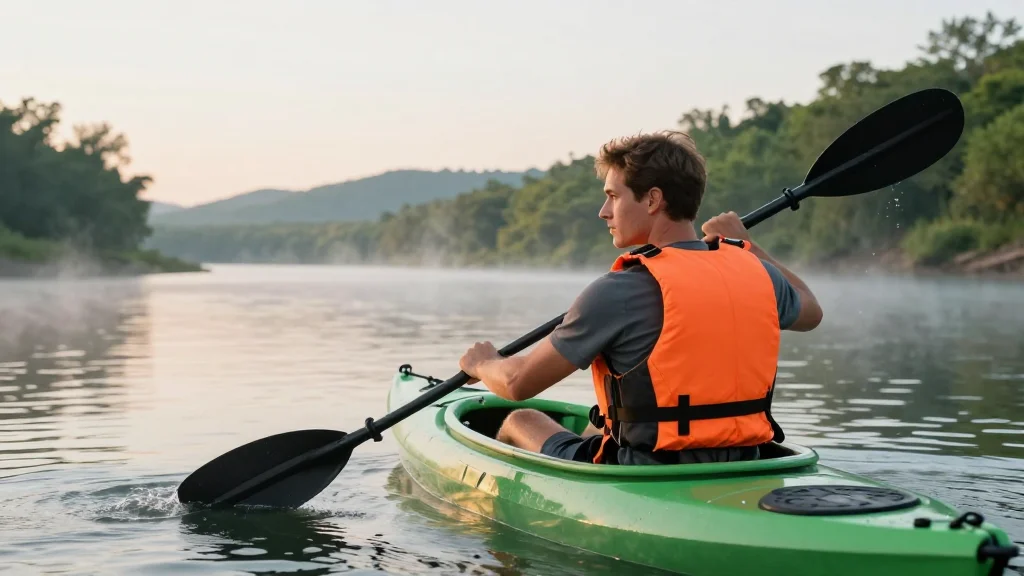
Conservationist Completes 652‑Mile Kayak Trek, Redefines Tennessee River Vision

Why It Matters
Johnson’s 652‑mile paddle illustrates how immersive outdoor experiences can translate into concrete conservation advocacy, a model that could be replicated across other river systems. By highlighting the Tennessee RiverLine’s integrated approach—linking recreation, tourism, and habitat protection—the story underscores a growing trend in the outdoors sector: leveraging adventure travel to build community support for environmental initiatives. If successful, the RiverLine could become a blueprint for multi‑state river corridors seeking to balance economic growth with ecological stewardship. The expedition also spotlights the social dimension of river stewardship. Johnson’s interactions with local residents demonstrate that personal connections forged on the water can foster grassroots support for policy measures such as improved water quality standards and expanded public access. In an era where outdoor participation is rebounding post‑pandemic, stories like this can galvanize both volunteers and funders to invest in river‑centric projects that deliver health, economic, and environmental dividends.
Key Takeaways
- •TJ Johnson paddled the full 652 miles of the Tennessee River in 38 days, ending in Paducah, Kentucky.
- •The journey was tied to the Tennessee RiverLine, a 1.2 million‑acre regional recreation and conservation initiative.
- •Johnson reported distinct river sections—from urban waterfronts to remote bluffs—highlighting the river’s role as a community connector.
- •He encountered generous locals who provided meals and shelter, reinforcing the social fabric along the river corridor.
- •The RiverLine plans community paddling events later this year to expand tourism and conservation awareness.
Pulse Analysis
Johnson’s trek arrives at a pivotal moment for the outdoor recreation industry, which is increasingly seeking to align adventure experiences with measurable conservation outcomes. Historically, river‑based tourism has been fragmented, with individual states promoting their own stretches without a coordinated vision. The Tennessee RiverLine’s cross‑state framework represents a strategic shift toward ecosystem‑scale planning, echoing successful models like the Pacific Northwest’s Cascadia Trail Network. By embedding a 652‑mile narrative into the initiative, the RiverLine gains a compelling human story that can attract media attention, donor dollars, and policy support.
From a market perspective, the expedition underscores a demand for immersive, multi‑day paddling trips that go beyond day‑use recreation. Operators that can package guided segments of the RiverLine, provide logistical support, and partner with local businesses stand to capture a growing segment of the adventure‑travel market, which Bloomberg estimates will exceed $300 billion globally by 2028. However, scaling up must be balanced against ecological limits; increased traffic could stress fragile habitats if not managed with robust stewardship protocols.
Looking forward, the success of Johnson’s narrative will likely influence how other river corridors position themselves. If the RiverLine can translate this momentum into tangible infrastructure upgrades—such as new launch sites, safety training programs, and water‑quality monitoring—it could set a new standard for public‑private partnerships in outdoor recreation. The key will be maintaining the authenticity of the experience while delivering the economic and environmental benefits promised by the initiative.
Conservationist Completes 652‑Mile Kayak Trek, Redefines Tennessee River Vision
Comments
Want to join the conversation?
Loading comments...