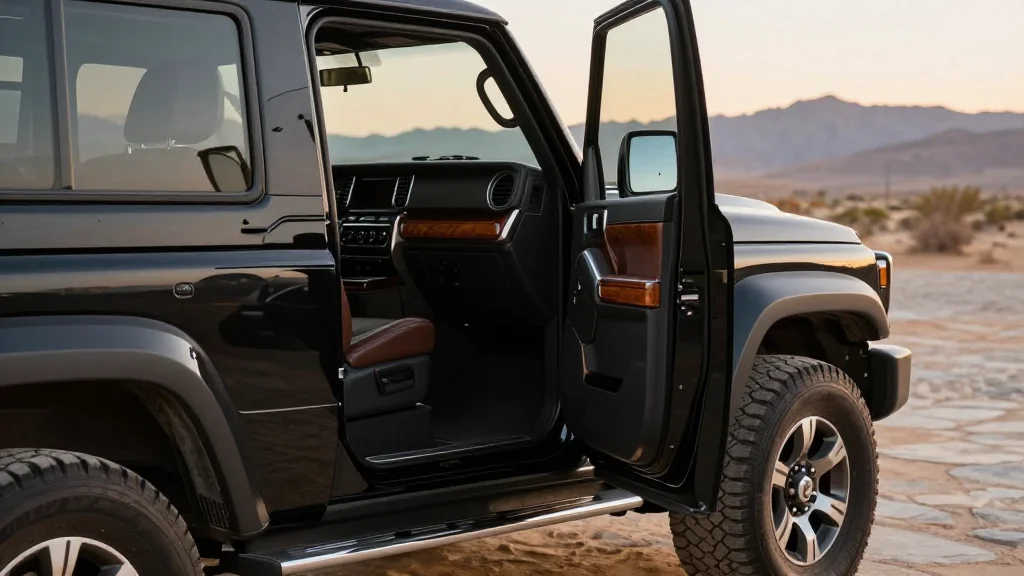
EarthRoamer Unveils Luxury Off‑Road Living, Redefining Expedition Vehicles

Why It Matters
EarthRoamer’s focus on high‑end, self‑sufficient rigs reshapes expectations for wilderness travel, proving that comfort and durability can coexist in remote environments. By demonstrating that expedition vehicles can retain value over decades, the brand encourages a shift toward longer‑lasting, lower‑turnover product cycles, which could reduce waste in the outdoor recreation market. Moreover, the bespoke ordering model creates a new benchmark for personalization, prompting other manufacturers to invest in customer‑centric design processes. The company’s growing community of owners also fuels a networked overland culture, where shared knowledge and coordinated expeditions amplify safety and environmental stewardship. As affluent adventurers gravitate toward EarthRoamer’s offerings, the ripple effect may accelerate the premium segment of the outdoors industry, influencing everything from campsite infrastructure to high‑performance off‑grid power solutions.
Key Takeaways
- •Founded in 1998 by wildlife photographer Bill Swails
- •Over 27 years in business with more than 450 vehicles produced
- •Only a handful of rigs out of service, all due to accidents
- •Custom order begins with a deposit and a personalized design phase
- •Vehicles hold strong resale value, often considered long‑term assets
Pulse Analysis
EarthRoamer’s Q&A underscores a maturation of the overland market that mirrors trends seen in luxury automotive and high‑performance outdoor gear. Historically, expedition vehicles were utilitarian, built for function over form. EarthRoamer flips that paradigm, delivering a product that commands a premium price point while promising decades of service. This approach aligns with a broader consumer shift toward experiential luxury—travel that is both immersive and comfortable. By anchoring its value proposition in durability and resale strength, EarthRoamer mitigates the depreciation risk that typically deters affluent buyers from investing in large, mobile assets.
From a competitive standpoint, EarthRoamer’s low‑volume, hand‑crafted strategy differentiates it from mass‑market RV manufacturers that are beginning to add off‑grid capabilities. While companies like Airstream and Winnebago are introducing solar‑ready models, they lack the deep engineering pedigree and bespoke experience that EarthRoamer offers. This creates a clear segmentation: EarthRoamer occupies the ultra‑luxury niche, while mainstream brands chase the growing demand for more capable, but still affordable, off‑grid rigs. The brand’s emphasis on a strong owner community also builds network effects that can lock in customers and generate organic marketing.
Looking forward, the key risk for EarthRoamer lies in scaling its bespoke model without diluting quality. As demand for high‑end overlanding grows, the company will need to balance limited production capacity with the expectations of a discerning clientele. Success will hinge on maintaining its engineering standards, expanding its power‑train innovations, and continuing to nurture the owner ecosystem. If it can do so, EarthRoamer may set the template for a new class of luxury, sustainable adventure vehicles that redefine how the affluent experience the wild.
EarthRoamer Unveils Luxury Off‑Road Living, Redefining Expedition Vehicles
Comments
Want to join the conversation?
Loading comments...