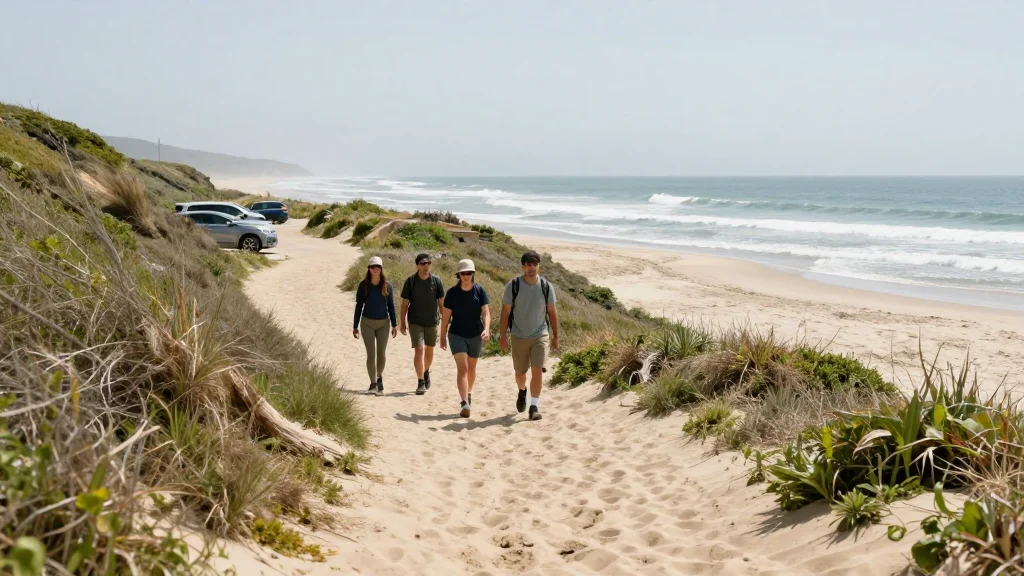
Estero Americano Coast Preserve Draws 1,200 Hikers, Prompting Parking Crackdown

Why It Matters
The rapid influx of visitors to Estero Americano underscores the growing demand for accessible outdoor recreation in post‑pandemic America. As more protected lands open to the public, municipalities must anticipate and fund infrastructure that supports both ecological stewardship and community well‑being. Failure to address parking and access issues could deter future visitors, erode public support for conservation funding, and strain relations between residents and recreation advocates. Moreover, the preserve’s challenges reflect a national trend where small‑scale natural sites become viral attractions, often outpacing the capacity of local governments to respond. The outcomes of Sonoma County’s decisions will inform policy frameworks for balancing open‑space access with sustainable land‑use planning, influencing how state and federal agencies allocate resources for trailhead improvements, parking, and public transit options.
Key Takeaways
- •~1,200 hikers visited the preserve on a single Sunday in January
- •Sonoma County supervisors installed dozens of No Parking signs in response
- •Resident John Loughlin warned the traffic has "completely paralyzed" nearby neighborhoods
- •Fire district raised concerns about delayed emergency access
- •A public hearing in May will explore parking lot or shuttle options
Pulse Analysis
The Estero Americano episode is a microcosm of the friction between expanding outdoor recreation and legacy infrastructure. Historically, many coastal preserves were designed primarily for conservation, with limited visitor amenities. The surge in demand—driven by social media exposure and a cultural shift toward nature‑based leisure—has forced localities to retrofit access solutions on the fly. In this case, the county’s rapid deployment of No Parking signage is a stopgap that mitigates immediate congestion but does little to address the root cause: insufficient capacity for a high‑traffic destination.
From a market perspective, the preserve’s popularity could be leveraged to generate revenue for infrastructure upgrades, such as a modestly sized parking lot funded through a visitor fee or partnership with local businesses. However, any monetization strategy must be carefully calibrated to avoid alienating the very public that fuels the preserve’s appeal. A seasonal shuttle, for example, could reduce car volumes while providing an ancillary service that supports local tourism operators.
Looking forward, the county’s upcoming public hearing will be a litmus test for collaborative governance. If stakeholders—residents, conservationists, and recreation groups—can co‑create a balanced plan, the model may be replicated along California’s 840‑mile coastline, where similar pressures are mounting. Conversely, a failure to resolve the parking dilemma could spark broader resistance to opening new natural areas, potentially slowing the momentum of outdoor recreation initiatives that have become economic drivers for many rural communities.
Estero Americano Coast Preserve draws 1,200 hikers, prompting parking crackdown
Comments
Want to join the conversation?
Loading comments...