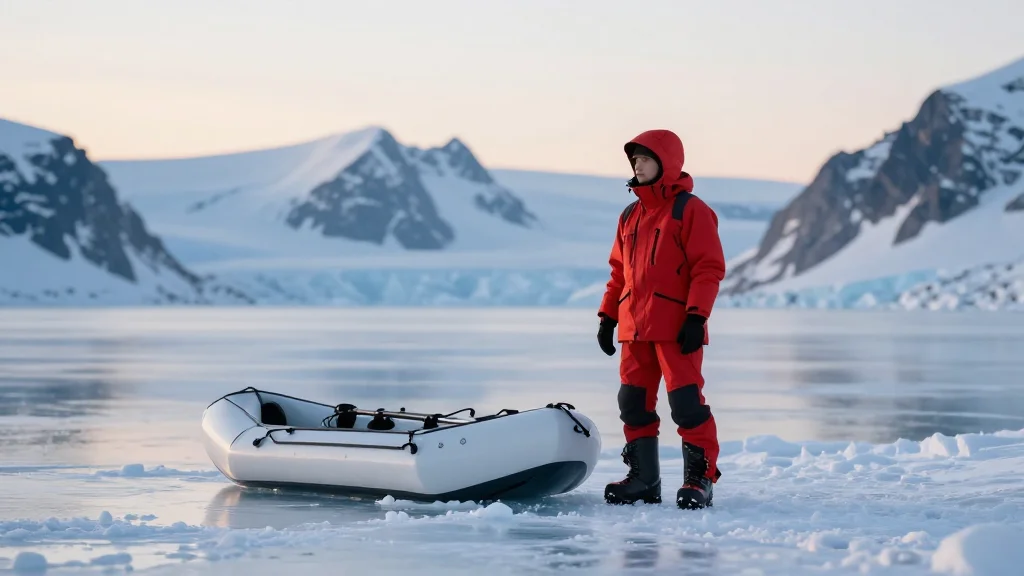
Explorers Penfold, McDaniels Set to Tackle 2,300‑km Human‑Powered Baffin Island Loop

Why It Matters
The planned Baffin Island trek spotlights the growing appetite for extreme, low‑impact adventures that push human endurance while minimizing environmental footprints. By relying solely on human power and lightweight gear, Penfold and McDaniels demonstrate a model for future expeditions that aligns with broader sustainability goals in the outdoor industry. Their reliance on remote Inuit communities for resupply also underscores the importance of Indigenous partnerships in Arctic travel, offering a template for respectful, collaborative exploration. Additionally, the expedition provides a live case study of how rapidly changing sea‑ice conditions affect route planning and safety in the high Arctic. Data gathered from the journey—such as ice thickness, melt timing and wildlife observations—could prove valuable to climate researchers and policymakers monitoring the impacts of warming temperatures on Arctic ecosystems.
Key Takeaways
- •Henry Penfold and Caleb McDaniels will launch a 2,300 km human‑powered trek around Baffin Island in late May.
- •The seven‑leg route combines skiing, hiking and packrafting, with resupply points in remote Inuit communities.
- •The expedition builds on a prior 1,200 km Greenland journey, testing gear durability and logistics in extreme cold.
- •Travel will depend heavily on sea‑ice conditions, especially during the final 1,130 km leg across Foxe Basin.
- •The trek highlights sustainable, low‑impact exploration and the role of Indigenous partnerships in Arctic travel.
Pulse Analysis
Penfold and McDaniels are entering a niche of adventure tourism that prioritizes human power over mechanized support, a trend gaining traction as outdoor enthusiasts seek authentic, environmentally conscious experiences. Their Baffin Island route is ambitious not only for its distance but for the logistical complexity of navigating a landscape where ice can appear and disappear within weeks. Success will hinge on precise timing, especially during the transition phases from ski to hike and from paddling to foot travel, underscoring the importance of real‑time environmental intelligence.
From a market perspective, gear manufacturers stand to benefit from the exposure of equipment that can survive prolonged exposure to sub‑zero temperatures, high winds and variable terrain. The packrafts, pulks and insulated clothing used by the duo will likely become reference points for product development, driving innovation in lightweight, high‑performance materials. Outdoor retailers can leverage the expedition’s narrative to market similar gear sets, positioning themselves at the intersection of performance and sustainability.
Finally, the expedition arrives at a moment when Arctic accessibility is both a lure and a liability. As climate change thins sea ice, routes that were once reliable become unpredictable, raising safety concerns and ethical questions about the impact of increased human presence. Penfold and McDaniels’ reliance on Inuit resupply points offers a model of collaborative stewardship, but it also places additional responsibility on those communities to support high‑risk ventures. Their journey will likely spark dialogue within the outdoor community about balancing the thrill of exploration with the duty to protect fragile polar environments.
Explorers Penfold, McDaniels Set to Tackle 2,300‑km Human‑Powered Baffin Island Loop
Comments
Want to join the conversation?
Loading comments...