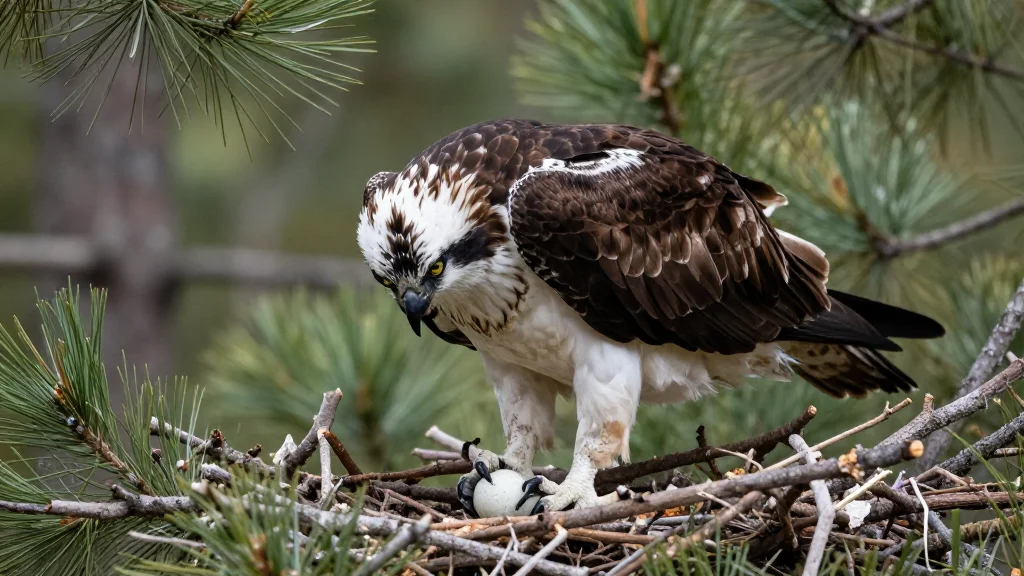
First Osprey Egg of 2026 Laid at Kielder Forest Amid Hopes for Better Breeding Season

Why It Matters
The successful laying of the first osprey egg in 2026 at Kielder Forest signals a potential rebound for a species that vanished from England over a century ago. Ospreys are apex predators that help maintain healthy fish populations, and their recovery reflects broader ecosystem resilience. Moreover, the colony's performance influences national biodiversity strategies, funding allocations, and public engagement with wildlife conservation. Continued success at Kielder could encourage similar reintroduction efforts in other regions, demonstrating that targeted habitat protection, predator control, and community involvement can overcome historic declines. Conversely, a repeat of storm‑driven failures would underscore the vulnerability of reintroduced species to climate variability, prompting a reassessment of conservation priorities and resource distribution.
Key Takeaways
- •First osprey egg of 2026 laid in nest 7 at Kielder Forest on Monday
- •Eight nests are occupied; two host single males seeking partners
- •2025 produced only six fledglings from eight nests, down from 16 in 2021
- •Storms and goshawk predation identified as primary causes of recent losses
- •Joanna Dailey, Forestry England, expressed cautious optimism for a better season
Pulse Analysis
Kielder Forest's osprey colony illustrates the fragile equilibrium between species recovery and climate risk. Since the 2009 reintroduction, the population has grown steadily, but the last two years have exposed how extreme weather can truncate that progress. The current egg is more than a biological event; it is a litmus test for the effectiveness of adaptive management strategies that combine predator mitigation, habitat enhancement, and real‑time weather monitoring.
Historically, successful raptor reintroductions have hinged on sustained funding and public support. The media attention surrounding the first egg of the season can galvanize local stakeholders and attract additional resources, reinforcing a positive feedback loop. However, reliance on favorable weather is a structural weakness. As climate models predict more frequent June storms in northern England, conservation planners must integrate climate resilience into their protocols—perhaps by creating additional nesting platforms in sheltered micro‑habitats or by expanding buffer zones that reduce wind exposure.
Looking forward, the 2026 breeding outcome will likely influence policy decisions at the national level. A robust fledgling count could validate current funding streams for the UK Biodiversity Action Plan, while a poor result may trigger calls for increased investment in climate‑adaptation measures. In either scenario, Kielder Forest remains a critical barometer for the UK's broader ambition to restore native apex predators and achieve long‑term ecological balance.
First Osprey Egg of 2026 Laid at Kielder Forest Amid Hopes for Better Breeding Season
Comments
Want to join the conversation?
Loading comments...